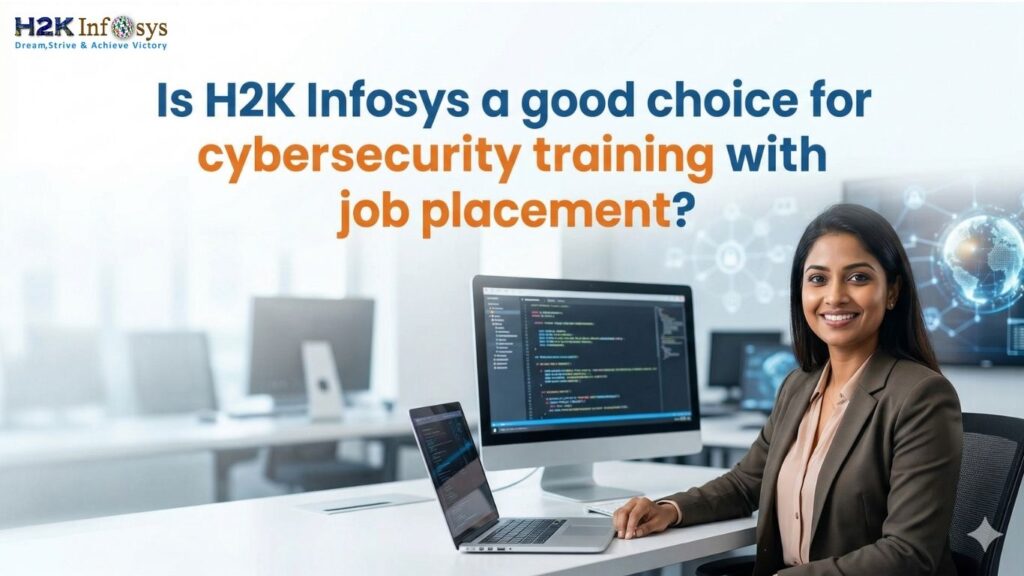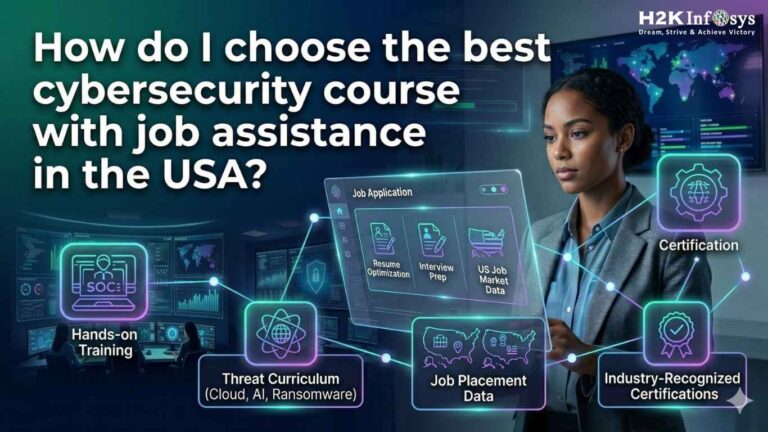
The best cybersecurity course with job assistance in the USA? It’s usually not the one with the most impressive name. It’s the one that quietly does the real work getting you job-ready through hands-on labs, realistic simulations, and placement support that actually feels real, not just something added at the end and that’s where providers like H2K Infosys often come into the picture as part of the conversation.
Why “cybersecurity course with job assistance” matters more than the course title
This is where things tend to go sideways for a lot of people. I’ve seen it happen more than once. A course sounds great, “advanced,” “expert-level,” maybe even “industry-leading” and it feels like a smart choice at the time.
Then the course ends. And there’s this weird pause.
You’ve learned things, sure. But translating that into a job? That’s where it gets messy.
In 2026, employers are pretty clear about what they want. It’s not just certifications anymore. They’re looking for people who can step in and actually do the work, handle alerts, navigate a SIEM dashboard, and respond to incidents without needing constant hand-holding.
That’s why choosing a cyber security training with job placement program tends to make more sense than chasing whatever certification is trending on LinkedIn that month. A good course should push you a little. Not overwhelm you but definitely not feel like passive learning either. If it feels too smooth the whole way through, I’d question how much you’re really being challenged.
What to look for in a high-quality program
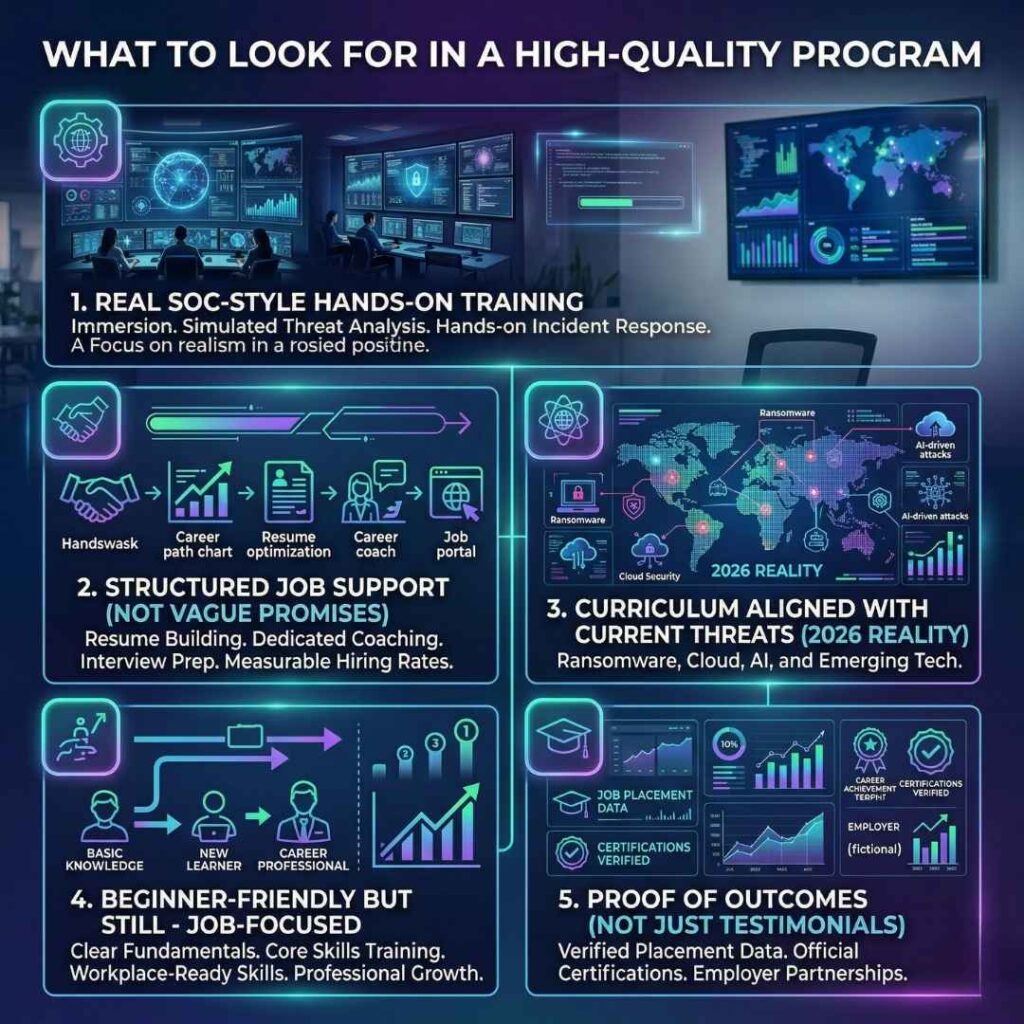
1. Real SOC-style hands-on training
This one’s pretty straightforward you need to practice, not just watch.
Ideally, you’ll be working with tools like:
- Splunk or similar SIEM platforms
- Wireshark for analyzing network traffic
- Endpoint detection tools
I remember enrolling in a course that looked solid from the outside. But once I got in, it was mostly recorded videos and slides. It honestly felt like reading a manual with extra clicks. Compare that to cybersecurity course with job assistance training where you’re actually investigating simulated attacks; it’s a completely different experience. You start thinking like an analyst, not just a student.
2. Structured job support (not vague promises)
“Job assistance” is one of those phrases that sounds great… until you ask what it actually includes.
Sometimes it’s just:
- A generic resume template
- Maybe one or two interview tips
- And then you’re on your own
What you should be looking for is more hands-on support:
- Resume tailored specifically for cybersecurity roles
- Mock interviews that feel like real SOC interviews
- Some kind of recruiter access or hiring network
Some providers, like H2K Infosys, approach cyber security training and job placement in a more grounded way aligning training with actual cybersecurity course with job assistance workflows. That kind of structure makes things feel less intimidating. It’s not like starting from zero anymore.
3. Curriculum aligned with current threats (2026 reality)
Cybersecurity changes fast. Faster than most courses keep up, to be honest.
If the curriculum doesn’t touch on things like:
- AI-driven phishing attacks
- Cloud misconfigurations (AWS, Azure, that whole space)
- Ransomware-as-a-service
…there’s a good chance it’s outdated.
Lately, I’ve noticed better programs are including threat-hunting exercises and some level of automation. cybersecurity course with job assistanceThat’s a good sign they’re adapting to how the field is actually evolving, not how it looked a few years ago.
4. Beginner-friendly but still job-focused
A lot of people rush into advanced certifications too quickly. It’s understandable you want to move fast but it can backfire.
A solid cyber security training and placement program should:
- Start with fundamentals (networking, basic security concepts)
- Build up gradually into real-world scenarios
- Not assume you already have experience
It’s kind of like trying to learn driving by jumping straight onto a busy highway. cybersecurity course with job assistance Not the best idea.
5. Proof of outcomes (not just testimonials)
This is one area where a bit of skepticism helps.
Instead of just reading reviews, try to look for:
- Actual placement numbers
- Real student profiles on LinkedIn
- Clear examples of roles people moved into after completing the course
If that information is hard to find, I’d at least pause and dig a little deeper. cybersecurity course with job assistance Not saying it’s a dealbreaker but it’s worth paying attention to.
A quick real-world scenario
Think about it this way:
- Candidate A: Has a certification like Security+, mostly theoretical knowledge
- Candidate B: Has hands-on experience worked through labs, handled simulated incidents, used SIEM tools
Who stands out more?
Most of the time, it’s Candidate B. Not because certifications don’t matter but because practical experience shows you can actually function in the role. That’s why cybersecurity course with job assistance placement programs are getting more attention lately. They help bridge that awkward gap between learning and doing.
Questions you should ask before enrolling
If you’re considering a course, don’t just rely on the website. Ask questions direct ones:
- “Will I be working on real-world attack simulations?”
- “What tools will I actually use during training?”
- “How does your placement support work in practice?”
- “Can you show examples of past student outcomes?”
And listen carefully to the answers. If they feel too polished or a bit vague, that’s usually a sign to be cautious.
Final thoughts
Choosing a cybersecurity course with job assistance in the USA isn’t really about picking the most popular name or the cheapest option. It’s more about how closely the program reflects the actual job.
If it gives you real hands-on experience, stays updated with current threats, and genuinely supports your job search, you’re probably making a good call. If not… you might just walk away with another certificate and the same uncertainty you started with.
And from what I’ve seen over and over again practical experience tends to win. Almost every time.