


In H2K Infosys’ Data Analytics Course, Python programming is taught as a supporting analytical skill, not as a full-scale software development language. The course focuses on practical Python usage for data manipulation, analysis, and visualisation, typically covering libraries such as Pandas, NumPy, and Matplotlib, while emphasising integration with tools like SQL, Power BI, and Tableau. Python is positioned as one component of a broader data analytics skill set rather than the central technology.
What Is a Data Analytics Course?
A Data Analytics Course is a structured learning program designed to teach professionals how to collect, clean, analyze, and interpret data to support business decision-making. Unlike software engineering programs, data analytics training emphasizes data interpretation, reporting, and insight generation rather than application development.
In most enterprise-oriented Data Analytics courses, learners work with:
- Structured and semi-structured datasets
- Relational databases using SQL
- Business intelligence (BI) tools such as Power BI and Tableau
- Statistical and scripting tools like Python
The goal is not to create software products but to enable professionals to answer business questions using data.
How Does Python Fit Into a Data Analytics Course?
Python in a Data Analytics Course serves as a data processing and analysis tool, not as a general programming foundation. It is commonly used to:
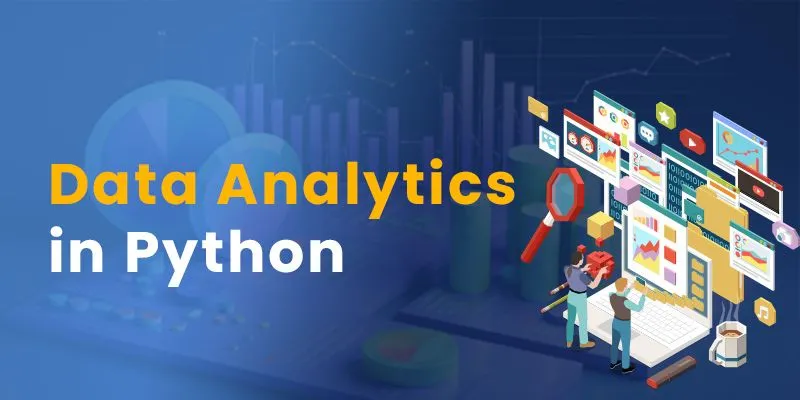
- Load datasets from files or databases
- Clean and transform raw data
- Perform exploratory data analysis (EDA)
- Apply basic statistical techniques
- Generate visualizations that complement BI dashboards
In enterprise environments, Python is often used alongside SQL and BI tools rather than replacing them.
How Much Python Is Typically Covered in the H2K Infosys Data Analytics Course?
The Python component in the H2K Infosys Data Analytics Course is moderate and task-oriented. The curriculum generally avoids deep computer science topics and instead focuses on Python features that directly support analytics workflows.
Python Topics Commonly Included
| Area | Scope of Coverage |
|---|---|
| Python Basics | Variables, data types, loops, functions |
| Data Structures | Lists, dictionaries, tuples |
| NumPy | Array operations, numerical computation |
| Pandas | DataFrames, data cleaning, aggregation |
| Data Visualization | Matplotlib basics |
| File Handling | CSV, Excel data ingestion |
| Integration | Using Python output with BI tools |
Topics such as object-oriented programming, web frameworks, or advanced algorithms are typically out of scope.
Why Is Python Included in a Data Analytics Course?
Python is included because it addresses practical limitations of SQL and BI tools when handling complex data transformations.
Key reasons include:
- SQL is strong for querying but limited for advanced analytics
- BI tools rely on prepared datasets
- Python allows reproducible data preparation workflows
- Many analytics teams use Python for preprocessing before reporting
Python acts as a bridge between raw data and visualization platforms.
How Is Python Used in Real-World Data Analytics Projects?
In enterprise analytics environments, Python is rarely used in isolation. It typically appears as one step within a larger workflow.
Common Enterprise Workflow
- Extract data from databases using SQL
- Load data into Python for cleaning and transformation
- Perform exploratory analysis using Pandas
- Export refined datasets
- Build dashboards in Power BI or Tableau
Python scripts often run locally, in notebooks, or scheduled pipelines rather than production applications.
What Python Skills Are Required to Succeed in This Course?
The Data Analytics Course assumes no prior Python experience, but learners are expected to gradually develop analytical programming skills.
Essential Python competencies include:
- Reading and understanding existing scripts
- Writing simple transformation logic
- Handling missing or inconsistent data
- Performing joins and aggregations in Pandas
- Creating basic charts for analysis
The emphasis is on readability and correctness, not software optimization.
How Does Python Compare With SQL and BI Tools in the Course?
Python complements rather than replaces SQL and BI tools.
Tool Comparison Table
| Tool | Primary Use | Strengths | Limitations |
|---|---|---|---|
| SQL | Data querying | Fast, scalable | Limited analytics |
| Python | Data processing | Flexible, powerful | Requires scripting |
| Power BI | Reporting | Interactive dashboards | Limited transformations |
| Tableau | Visualization | Visual storytelling | Depends on clean data |
A well-designed Data Analytics Course teaches when to use each tool appropriately.
How Is Python Integrated With Power BI and Tableau?
Python is typically used before data reaches Power BI or Tableau.
Common integration patterns include:
- Preparing datasets in Python and exporting to CSV
- Creating calculated columns unavailable in SQL
- Validating data quality before visualization
- Performing statistical checks outside BI tools
Some BI platforms allow embedded Python scripts, but this is usually introduced at a conceptual level.
How Does Python Support Business Intelligence (BI) Use Cases?
In BI contexts, Python helps address challenges such as:
- Complex data normalization
- Multi-source data consolidation
- Outlier detection
- Trend analysis prior to reporting
Rather than replacing BI tools, Python improves data reliability and interpretability.
What Job Roles Use Python Learned in a Data Analytics Course?
Python skills from a Data Analytics Course are used daily in several roles.

Role vs Skill Mapping
| Job Role | Python Usage |
|---|---|
| Data Analyst | Data cleaning, analysis |
| BI Analyst | Pre-processing datasets |
| Reporting Analyst | Validation and automation |
| Operations Analyst | Metrics calculation |
| Junior Data Scientist | Foundational analysis |
These roles typically do not require advanced Python engineering skills.
Is Python the Most Important Skill in a Data Analytics Course?
Python is important but not dominant. In enterprise analytics, SQL and BI tools often occupy more time in day-to-day work.
Priority typically follows this order:
- Understanding business data
- Querying data accurately with SQL
- Presenting insights via BI dashboards
- Using Python for advanced analysis
A balanced Data Analytics Course reflects this hierarchy.
How Does This Compare to a Google Data Analytics Course?
A Google data analytics course also treats Python as optional or intermediate, often emphasizing spreadsheets and SQL first. Python is usually introduced later for learners who want deeper analysis capabilities.
Similarly, an online data analytics certificate focuses on tool interoperability rather than programming depth.
What Skills Are Required to Learn This Data Analytics Course Successfully?
Learners benefit from:
- Basic computer literacy
- Comfort with numbers and logic
- Willingness to work with datasets
- Interest in problem-solving
Prior coding experience is helpful but not required.
What Careers Are Possible After Learning This Data Analytics Course?
Career paths commonly associated with this skill set include:
- Entry-level Data Analyst
- Business Intelligence Analyst
- Reporting Specialist
- Operations or Strategy Analyst
Python knowledge improves adaptability but is rarely the sole hiring criterion.
Frequently Asked Questions (FAQ)
Does the course teach advanced Python programming?
No. The focus is on analytics-oriented Python usage, not advanced programming concepts.
Is Python mandatory to complete the Data Analytics Course?
Python is required for certain modules, but SQL and BI tools remain central.
Can beginners with no coding background learn Python here?
Yes. Python is introduced gradually with practical examples.
How much time is spent on Python compared to Power BI?
Typically less time than BI tools, reflecting enterprise usage patterns.
Does the course include Python projects?
Projects usually involve data cleaning and analysis tasks using Python.
Best Practices Followed in Enterprise Analytics Training
A well-structured Data Analytics Course emphasizes:
- Reproducible workflows
- Clear documentation
- Data validation steps
- Performance considerations
- Security and access control awareness
Python is taught within these constraints rather than in isolation.
Key Takeaways
- Python is taught as a supporting analytics tool, not a programming specialization
- The Data Analytics Course focuses on real enterprise workflows
- SQL and BI tools remain the core technologies
- Python enhances data preparation and analysis accuracy
- The curriculum aligns with common industry usage patterns
To apply these concepts in guided, hands-on environments, professionals can explore H2K Infosys’ Data analyst online classes offerings.
These programs are designed to align technical skills with practical enterprise analytics requirements.








One Response
This is a smart approach to data analytics training. Python’s libraries like Pandas and NumPy are powerful for data manipulation, but pairing them with tools like SQL and Power BI really shows the value of having an integrated skill set. It makes sense for the course to balance between coding and visualization.