


Stability testing evaluates whether a software application can operate continuously for long periods without failure, degradation, or unexpected behavior.
Its purpose is to confirm that system performance, resource usage, and functional behavior remain consistent during extended execution. This form of validation is essential for applications expected to run uninterrupted in real-world environments such as enterprise platforms, cloud services, and transactional systems.
In professional Stability Testing education, this concept is a foundational topic within any QA software tester course because long-running systems are now the norm rather than the exception.
What Does This Type of Stability Testing Focus On?
This approach concentrates on software endurance, not short-term correctness. Instead of asking whether a feature works once, it answers a more practical question:
Can the application continue working reliably after hours or days of usage?
The evaluation typically involves:
- Continuous system execution
- Realistic workload simulation
- Resource consumption monitoring
- Trend analysis over time
Unlike functional checks, the goal is not to validate outputs but to confirm operational consistency.
Why Long-Duration Reliability Validation Matters
Many software failures occur after prolonged use, not during initial execution. Systems may pass functional and performance checks but still fail in production due to gradual resource exhaustion.
Key Reasons This Validation Is Critical
- Prevents Gradual System Degradation
Applications may slow down over time even if they start fast. - Identifies Hidden Memory and Resource Issues
Small leaks accumulate and eventually destabilize the system. - Supports Continuous Availability Requirements
Modern applications often run 24/7 with no restart window. - Improves Customer Experience
Consistent performance prevents user frustration and downtime. - Reduces Production Incidents
Early detection lowers post-release risk.
Because of these reasons, long-term reliability checks are emphasized in every industry-ready quality assurance tester course.
How This Differs From Other Stability Testing Approaches
Understanding distinctions helps clarify its unique value.
Compared to Load Evaluation
- Load evaluation checks short-term behavior under expected traffic.
- This method checks consistency under sustained conditions.
Compared to Stress Scenarios
- Stress scenarios push systems beyond limits.
- This approach stays within limits but runs longer.
Compared to Performance Measurement
- Performance measurement focuses on response time.
- Long-term validation focuses on stability trends.
A strong QA software tester course explains how these techniques complement each other rather than replace one another.
Issues Typically Uncovered During Extended Runtime
Problems found during prolonged execution are often invisible in standard test cycles.
Common Findings Include
- Increasing memory usage
- CPU utilization spikes over time
- Unreleased database connections
- Thread accumulation
- Cache overflow
- Response time drift
- Unexpected service restarts
These issues often pass regression Stability Testing but surface only during real usage patterns.
When Should This Validation Be Performed?
This activity is usually scheduled after functional correctness is confirmed.
Common Use Cases
- Before production deployment
- After major architecture changes
- For systems with continuous uptime requirements
- During infrastructure migrations
Testers trained through a quality assurance tester course learn how to plan such evaluations without delaying release cycles.
Step-by-Step Execution Process
A structured approach ensures meaningful results.
Step 1: Define Objectives
- Duration of execution
- Acceptable performance thresholds
- Key resources to monitor
Step 2: Prepare the Environment
- Use production-like infrastructure
- Enable system monitoring
- Populate realistic datasets
Step 3: Create Usage Scenarios
- Simulate typical user actions
- Maintain steady workload
- Avoid artificial spikes unless required
Step 4: Run Extended Sessions
- Execute continuously
- Avoid resets or restarts
- Capture logs and metrics
Step 5: Monitor System Behavior
- Memory trends
- CPU usage patterns
- Network and disk utilization
- Error rates
Step 6: Analyze Results
- Look for gradual changes
- Compare early vs late metrics
- Identify degradation patterns
This workflow is commonly practiced in hands-on labs within a QA software tester course.
Tools Used for Long-Duration Reliability Checks
Automation and monitoring tools are essential for continuous evaluation.
Commonly Used Tools
- Apache JMeter
- LoadRunner
- Gatling
- Dynatrace
- New Relic
- Prometheus
- Grafana
Learning to combine test execution with monitoring dashboards is a key skill taught in a professional quality assurance tester course.
Metrics That Matter Most
This form of Stability Testing focuses on trends, not isolated values.
Key Measurements
- Average response time drift
- Memory growth patterns
- CPU utilization consistency
- Database connection counts
- Error frequency changes
Even small upward trends can signal serious long-term issues.
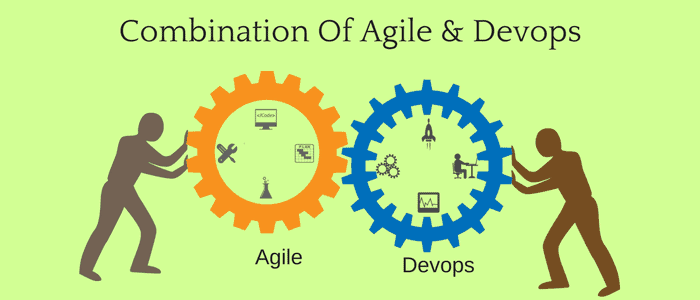
Relevance in Agile and DevOps Teams
Modern delivery models require fast feedback without sacrificing reliability.
In Agile Environments
- Conducted incrementally
- Focused on high-risk areas
- Time-boxed but repeated
In DevOps Pipelines
- Automated execution
- Integrated with CI/CD
- Continuous monitoring in staging environments
A modern QA software tester course covers how to adapt long-duration validation to rapid release cycles.
Real-World Scenarios
Enterprise Application
An ERP system showed increasing memory consumption after 36 hours. Early detection prevented production downtime.
Financial Platform
A transaction engine gradually exhausted database connections, identified before customer impact.
Cloud SaaS Product
API response times degraded slowly under constant usage, resolved through optimization.
These cases demonstrate the real business value of extended runtime evaluation.
Challenges Testers Commonly Face
Despite its importance, this activity presents practical difficulties.
Common Challenges
- Long execution windows
- Infrastructure costs
- Complex monitoring setups
- Large volumes of logs
- Difficult root cause analysis
Structured training through a quality assurance tester course helps testers overcome these challenges efficiently.
Best Practices for Reliable Results
Following proven practices improves accuracy and usefulness.
Recommended Guidelines
- Use realistic data volumes
- Monitor continuously, not periodically
- Automate execution and reporting
- Collaborate with DevOps teams
- Document trend-based findings clearly
Treating long-term reliability checks as a strategic quality activity significantly improves outcomes.
Career Importance for QA Professionals
Mastering this skill strengthens a tester’s professional profile.
Career Benefits
- Opens performance and reliability roles
- Builds production-level expertise
- Improves system-level understanding
- Enhances collaboration with engineers
This is why it remains a core topic in every advanced Quality assurance tester training.
Key Takeaways
- Long-duration validation ensures consistent system behavior
- It detects issues missed by short test cycles
- Monitoring trends is more important than isolated failures
- It supports high availability and production reliability
- The skill is essential for modern QA careers
Final Thought
In today’s always-on digital world, software must remain stable long after deployment. Stability testing plays a vital role in ensuring that applications continue to perform reliably, consistently, and safely over time. For aspiring and experienced testers alike, mastering stability testing is essential for delivering high-quality, production-ready software.

























9 Responses
Stability testing is the type of non functional testing which measures the performance of the application with load over period of few hours to stress test the application. It identifies the breaking point of the application and also effectiveness of the application.
Stability testing is a type of non functional testing which measures a software’s ability of maintaining over a normal use of time during the process of using the software’s features and capabilities over a period of time. Stability testing is done to provide confidence and the assurance of knowing that the software is stable at all times.
Stability Testing is performed to check the Efficiency of the software over a long period of time. It has put under lot of stress to see if the system slows down, create problems or crashes at any point. The greater importance is on error handling, software reliability, robustness and scalability of any product. It is a non functional technique that helps in gaining confidence that the software will work under the real work load and large programs can run on it without any issue.
STABILITY TESTING
Stability testing is a non-functional testing which is performed to measure efficiency and also ability of a software appliance to continuously function over a long period of time. The main purpose of stability testing is checking if the software application crashes or fails over a normal use any point of time by exercising its full range of use
An application under test Stability testing does for the following reason:
• The system slows down
• The system which encounters functionality problems
• Here the system crashes
Stability testing is important because it helps us to understand the ways real-life situations. So, stability testing allows the following steps:
• Provide confidence in the stability of the system which is under test.
• It makes sure that system can handle large programs.
• It monitors the effectiveness of our system.
• Test system stability which is under stress.
By performing stability testing. We the scope and objective of the stability testing to make sure that the application server will not crash during the load test executions.
Different test reports for stability testing:
• IT verifies the upper limit of the system.
• How system crashes or recovers.
• A total number of transactions response stays steady or increases over time
Stability Testing:
This is a non-functional testing to measure efficiency and stability of a software appliance over a long period of time. This testing strategy intends to stress the software component to the maximum level by exercising its full range of use and check the capacity as breakpoints.
To avoid different types of problems as system can be slow down, crashe or encounter functionality problems, doing system’s Stability testing is important.
Stability Testing is a type of non functional software testing performed to measure efficiency and ability of a software application over a long period of time. The purpose of Stability testing is checking if the software application crashes or fails at any point of time by its full range of use.
The greater importance is on error handling, software reliability, rather than checking the system behavior under normal circumstance
Stability testing is a software testing technique adopted to verify l if the application can perform well within or just above the expected level . In order to check the stability,this testing is primarily intended to stress the software at maximum.this testing is considered as a non functional software testing.
There are different problems occur if the stability testing didn’t carry out
1. system slow down
2. functionality problems
3. system crashes
Stability testing
Stability testing is the type of non functional testing which is performed to measure efficiency and also ability of a software appliance to continuously function over a long period of time. The main goal of stability testing is checking if the software application crashes or fails over a normal use any point of time by exercising its full range of use.
Different Test reports for stability testing:
IT verifies the upper limit of the system.
How system crashes or recovers.
A total number of transactions response stays steady or increases over time.
Stability testing is the type of non functional testing which is performed to measure efficiency and also ability of a software appliance to continuously function over a long period of time. The main goal of stability testing is checking if the software application crashes or fails over a normal use any point of time by exercising its full range of use.