
The best cyber security programs for career changers are the ones that focus on hands-on, job-ready skills, real-world tools, and guided pathways into actual roles, not just theory or certifications. If you’re switching careers, here’s the honest truth: you don’t need another degree, you need proof that you can do the work. That’s exactly why practical, industry-aligned programs like H2K Infosys tend to stand out, because they focus on real-world exposure rather than just concepts. And once you start thinking in terms of solving actual security problems instead of just learning definitions, the right program becomes pretty obvious. These cyber security programs for career changers will equip you with essential skills to thrive in this growing field.
When evaluating cyber security programs for career changers, consider the alignment with industry needs and job readiness.
What Actually Makes a Cyber Security Programs “Good” for Career Switchers?
Essential Cyber Security Programs for Career Changers
Many cyber security programs for career changers offer unique opportunities for real-world applications.
I’ve seen a lot of people get stuck here spending months comparing courses, reading reviews, overanalyzing syllabi. But when you strip it down, a good program for career switchers usually checks a few very practical boxes:
- It teaches tools used in real jobs (think SIEM platforms, Wireshark, endpoint security tools)
- It includes labs or simulations that feel like actual incidents not just quizzes
- It helps you build something you can show employers (projects, case studies, reports)
- It aligns with entry-level roles like SOC Analyst or Security Analyst
Because here’s the thing… hiring managers don’t really care if you “completed a course.” They care if you can investigate an alert at 2 a.m. without panicking.
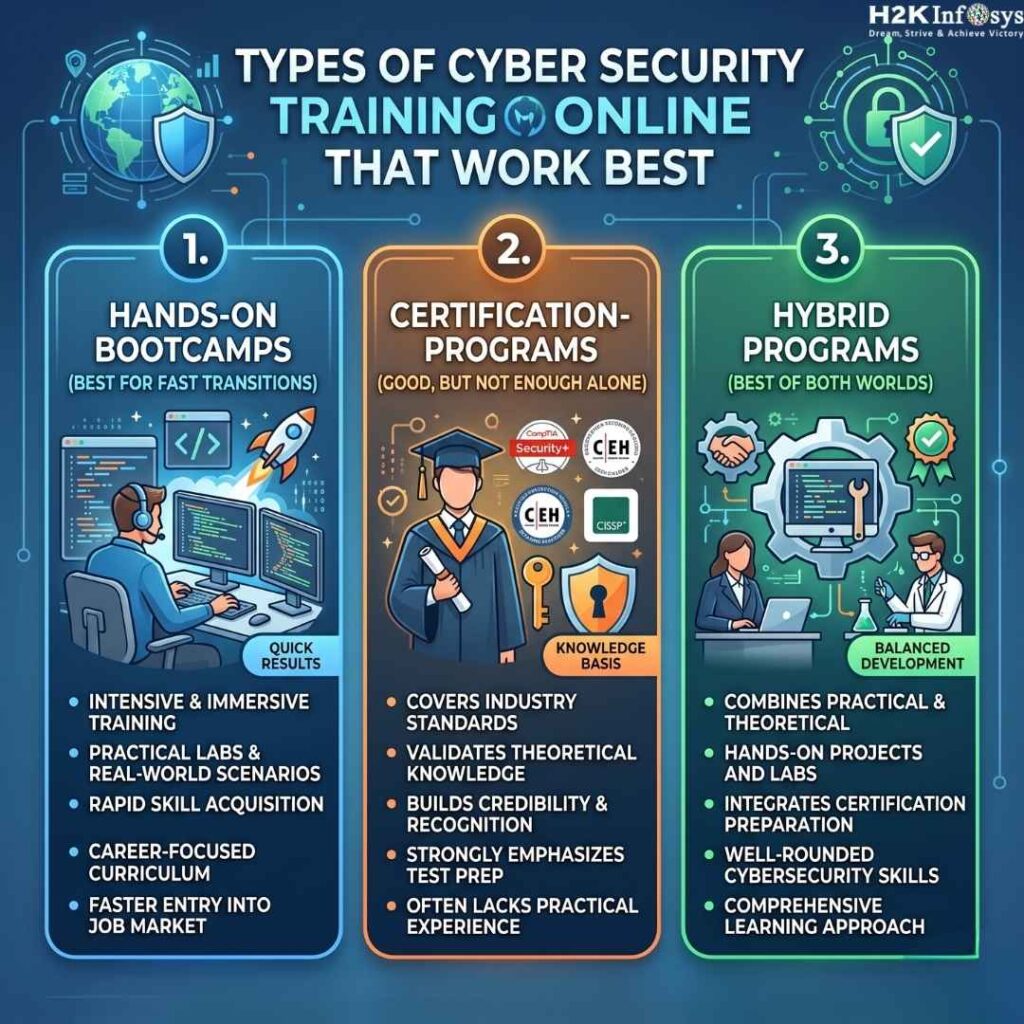
Types of Cyber Security Training Online That Work Best
The success stories of alumni from cyber security programs for career changers inspire new students.
Not all cyber security training online is built the same. Some are very certification-heavy, others are more practical. For career switchers, a mix usually works best.
1. Hands-On Bootcamps (Best for Fast Transitions)
These are probably the most effective if you’re serious about switching careers quickly.
Participating in reputable cyber security programs for career changers can significantly enhance your employability.
Hands-on experiences provided by cyber security programs for career changers help bridge the knowledge gap.
They simulate real environments log analysis, threat detection, and incident response. You’re not just learning concepts; you’re actually doing the job.
I’ve seen people from completely non-technical backgrounds teachers, sales reps, even healthcare workers break into cyber security programs through these kinds of programs. The key difference? They had something tangible to show.
Some structured cyber security programs, like those offered by H2K Infosys, tend to emphasize this practical angle with real-time project exposure and guided job preparation, which makes a noticeable difference when you start applying for cyber security programs jobs with training.
2. Certification-Focused Programs (Good, But Not Enough Alone)
Certifications like Security+, CEH, or even CISSP (later on) are valuable no doubt.
But relying only on them is… risky.
I’ve seen candidates with multiple certs struggle in interviews simply because they couldn’t explain how to investigate a phishing attack or analyze logs.
So yes, include certifications in your plan but pair them with real practice.
3. Hybrid Programs (Best of Both Worlds)
These combine structured learning, certifications, and hands-on labs.
Honestly, this is where things are heading in 2026. With the rise of AI-driven threats and cloud-based attacks, companies want people who can adapt, not just memorize.
Programs that teach things like:
- Cloud security basics (AWS, Azure environments)
- AI-related threat detection
- Real-time attack simulations
…are becoming much more relevant now than traditional textbook-style courses.
What Career Switchers Should Avoid (Based on Real Mistakes)
This part matters more than people expect.
A few things I’ve personally seen derail otherwise smart learners:
- Spending months on theory without touching tools
- Jumping between too many courses without finishing one
- Choosing cyber security programs with no real labs or project work
- Ignoring job preparation (resume, mock interviews, LinkedIn presence)
It’s easy to fall into the “learning trap” feeling productive without actually getting closer to a job.
Real-World Example (This Happens a Lot)
A friend of mine with a non-technical background, zero IT experience started with random YouTube tutorials. After 4 months, he knew a bit about cyber security programs… but couldn’t actually do anything.
He switched to a structured cyber security programs training online program that included SOC simulations and real incident scenarios.
Within a few months:
- He could analyze logs
- Respond to alerts
- Explain attack patterns clearly
Many professionals find their niche through targeted cyber security programs for career changers.
Many find that studying cyber security programs for career changers leads to fulfilling careers.
That’s what got him interviews. Not the videos.
The Job Market Reality in 2026
Interacting with peers in cyber security programs for career changers enhances networking opportunities.
Cyber security programs is still one of the fastest-growing fields, but expectations have changed.
Companies are dealing with:
- AI-powered phishing attacks
- Cloud misconfigurations
- Ransomware evolving faster than ever
So they’re not just hiring “learners.” They’re hiring people who can step in and contribute quickly.
Consider the long-term benefits of enrolling in cyber security programs for career changers.
That’s why cyber security jobs with training programs that include real-world exposure are gaining so much traction right now.
So, Which Programs Are Actually Best?
If I had to simplify it:
- Go for hands-on, lab-driven programs if you want speed
- Add certifications for credibility
- Choose structured cyber security programs training with job support if you want direction
And most importantly pick something you’ll actually stick with. Consistency beats the “perfect course” every time.
The key to success in cyber security programs for career changers is the practical skills gained.
Final Thought
Switching into cyber security sales training isn’t about being the smartest person in the room. It’s about becoming useful as quickly as possible.
In 2026, cyber security programs for career changers will need to address evolving threats.
The right program won’t just teach you, it’ll quietly push you into thinking like someone already in the job.
And once that shift happens, everything else interviews, confidence, opportunities starts to follow.
Ultimately, the choice of cyber security programs for career changers should align with your career goals.
Exploring cyber security programs for career changers can set you on a rewarding path.
Researching the best cyber security programs for career changers is essential for informed decision-making.
Seek out cyber security programs for career changers with strong job placement rates.