
Introduction
Cybersecurity is now one of the most sought-after jobs in the world. As businesses, governments, and people depend more and more on digital systems, the demand for skilled workers keeps growing quickly. H2K Infosys is one of the platforms that helps beginners learn the right skills through structured lessons and practice in the real world. The hardest part for beginners is deciding where to begin. That’s why it’s important to know the Entry Points into Cybersecurity.
One of the best ways to get started is to sign up for structured Online courses for cybersecurity that take you step by step from the basics to more advanced topics. Companies that train people offer programs that focus on the industry and include hands-on practice, Cybersecurity training and job placement. This helps beginners feel confident about entering the field. In this blog, we’ll talk about the best ways to get into cybersecurity, useful tips, and a step-by-step plan to help you start your career on the right foot.
Why Cybersecurity Is a Smart Career Choice
Before diving into the Entry Points into Cybersecurity, it’s important to understand why this field is so appealing:
- High demand across industries
- Attractive salary packages
- Strong career growth opportunities
- Global job availability
These benefits make cybersecurity one of the most future-proof career paths available today.
Understanding the Basics First
Every beginner must start with foundational knowledge. Learning concepts like networks, operating systems, and security principles is crucial before choosing among the various Entry Points into Cybersecurity.
This is where online courses for cybersecurity play a major role. They simplify complex topics and provide structured learning paths for beginners.
Top Proven Entry Points into Cybersecurity
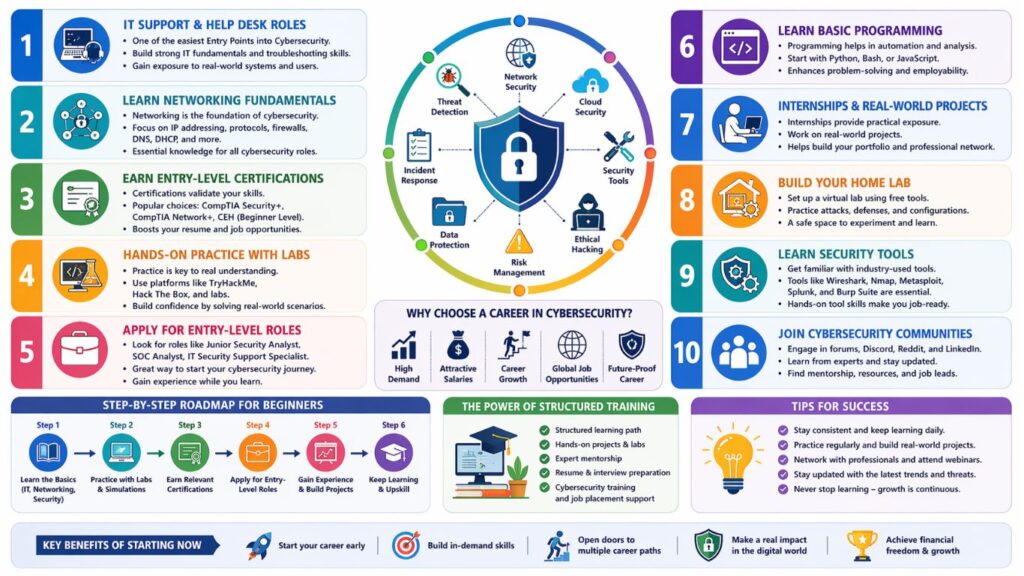
Let’s explore the most effective Entry Points into Cybersecurity that beginners can use to start their journey.
1. IT Support and Help Desk Roles
Starting in IT support is one of the most practical Entry Points into Cybersecurity.
Why it works:
- Builds strong technical foundations
- Provides real-world troubleshooting experience
- Offers exposure to enterprise systems
This role helps you understand how systems operate, which is essential before moving into security-focused positions.
2. Learning Networking Fundamentals
Networking is the backbone of cybersecurity. Understanding it is one of the key Entry Points into Cybersecurity.
Topics to focus on:
- IP addressing
- Network protocols
- Firewalls and routers
- DNS and DHCP
Many online courses for cybersecurity include networking modules to prepare beginners effectively.
3. Earning Entry-Level Certifications
Certifications are widely recognized Entry Points into Cybersecurity that validate your skills.
Popular certifications:
- CompTIA Security+
- CompTIA Network+
- Certified Ethical Hacker (CEH)
These certifications are often part of cybersecurity training and job placement programs, making it easier to land your first role.
4. Hands-On Practice with Labs
Practical experience is critical. Hands-on labs are among the most effective Entry Points into Cybersecurity.
Platforms to explore:
- TryHackMe
- Hack The Box
These platforms allow you to simulate real-world cyberattacks and defenses, strengthening your skills.
5. Applying for Entry-Level Roles
Many beginners overlook direct job applications, but entry-level roles are valid Entry Points into Cybersecurity.
Examples:
- Junior Security Analyst
- SOC Analyst
- IT Security Support Specialist
Programs offering cybersecurity training and job placement often guide candidates toward these opportunities.
6. Learning Basic Programming
Programming enhances your skillset and opens additional Entry Points into Cybersecurity.
Languages to consider:
- Python
- Bash
- JavaScript
Even basic coding knowledge can give you an edge in cybersecurity roles.
7. Internships and Real-World Projects
Internships are valuable Entry Points into Cybersecurity because they provide hands-on experience.
Benefits:
- Practical exposure
- Resume building
- Industry networking
Institutes often include project-based learning as part of their cybersecurity training and job placement programs.
8. Building a Home Lab
Creating a home lab is one of the most underrated Entry Points into Cybersecurity.
What you can do:
- Set up virtual machines
- Test vulnerabilities
- Practice penetration testing
This allows you to gain experience without needing a formal job.
9. Learning Security Tools
Understanding tools is another critical step among the Entry Points into Cybersecurity.
Common tools:
- Wireshark
- Nmap
- Metasploit
- Splunk
Many online courses for cybersecurity include tool-based training to make learners job-ready.
10. Joining Cybersecurity Communities
Engaging with communities is one of the most supportive Entry Points into Cybersecurity.
Benefits:
- Learn from experts
- Stay updated on trends
- Discover job opportunities
Communities help beginners stay motivated and informed.
Step-by-Step Roadmap for Beginners
To simplify your journey, follow this roadmap using the best Entry Points into Cybersecurity:
- Start with online courses for cybersecurity
- Learn networking and IT basics
- Practice using labs and simulations
- Earn certifications
- Apply for entry-level roles
- Continue learning and improving
This structured approach ensures steady progress.
Importance of Structured Training
Choosing structured programs is one of the smartest Entry Points into Cybersecurity.
Benefits include:
- Guided learning paths
- Hands-on projects
- Expert mentorship
- Resume preparation
- Job placement assistance
Programs offering cybersecurity training and job placement make it easier to transition from learning to employment.
Common Challenges Beginners Face
Even with the best Entry Points into Cybersecurity, beginners may face challenges:
- Information overload
- Lack of practical experience
- Unclear learning path
- Fear of technical complexity
The key is consistency and choosing the right guidance.
Tips for Success in Cybersecurity
To succeed using these Entry Points into Cybersecurity, follow these tips:
- Stay consistent in learning
- Practice regularly
- Build real-world projects
- Network with professionals
- Keep up with industry trends
Career Growth Opportunities
After entering through the right Entry Points into Cybersecurity, you can explore advanced roles such as:
- Ethical Hacker
- Security Engineer
- Cloud Security Specialist
- Digital Forensics Expert
Each role offers exciting opportunities for growth.
Why Online Learning Is Effective
Online learning has made Entry Points into Cybersecurity more accessible than ever.
Advantages:
- Flexible learning schedules
- Affordable education
- Access to global instructors
- Hands-on training
Choosing the right online courses for cybersecurity can accelerate your career journey.
Role of Job Placement Programs
Breaking into the job market becomes easier when you use structured Entry Points into Cybersecurity supported by placement programs.
They help by:
- Providing real-world projects
- Preparing you for interviews
- Connecting you with recruiters
- Offering career guidance
Institutes specialize in cybersecurity training and job placement, helping learners secure their first job.
Conclusion
Starting a career in cybersecurity may feel overwhelming, but with the right approach, it’s completely achievable. By focusing on proven Entry Points into Cybersecurity, you can build a strong foundation and grow step by step.
Whether you begin with IT support, certifications, or hands-on labs, each step moves you closer to your goal. Leveraging Online courses for cybersecurity and enrolling in programs that offer cybersecurity training and job placement can significantly speed up your progress.
Stay consistent, keep practicing, and remain curious. Cybersecurity is a journey, and with the right mindset and strategy, you can build a rewarding and successful career.