
If you’re trying to pick a cybersecurity training program that actually includes placement support, here’s the honest truth: focus on hands-on labs, real job alignment, and actual placement help not just big promises on a landing page. Somewhere in the middle of all your research, you’ll probably come across providers like H2KInfosys that try to combine cybersecurity training with placement-focused support, and that’s the kind of direction you want to pay attention to. Everything else is kind of… optional.
Let me walk you through this the same way I usually explain it to people who are just getting into cybersecurity.
What Really Matters in Cybersecurity Training with Placement
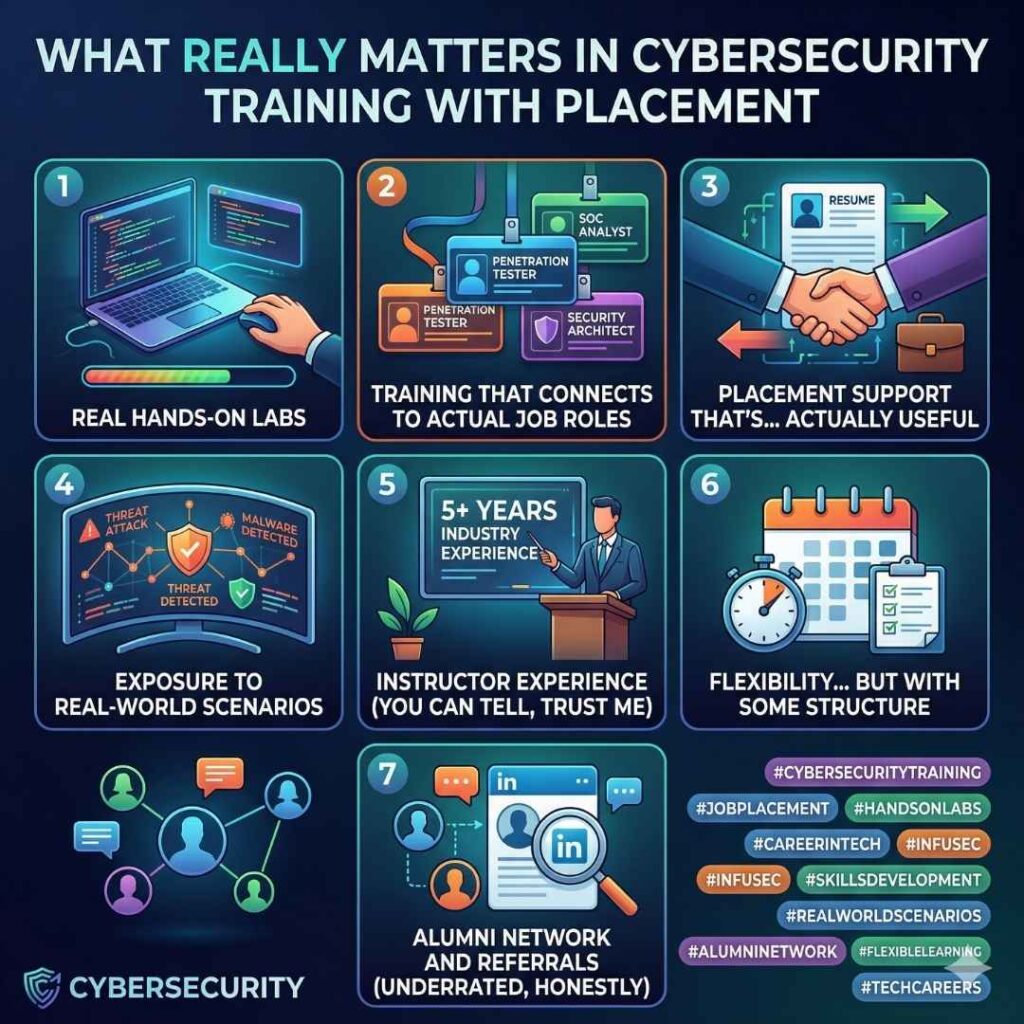
I’ve seen so many people enroll in cyber security training and job placement programs thinking a certificate alone will open doors. It used to work like that (sort of). Not anymore. In 2026, hiring managers are way more interested in what you can actually do when you’re put in front of a system.
1. Real Hands-On Labs (Not Just Watching Someone Else Do It)
This one’s a dealbreaker.
If your course is mostly slides, recordings, or someone sharing their screen while you watch… that’s not training. That’s passive learning, and it doesn’t stick.
The better cybersecurity training with placement programs put you in simulated SOC environments where you’re actually doing things like:
- Investigating alerts
- Digging through logs
- Working with tools like Splunk or Wireshark
Basically, you’re not just learning, you’re practicing how attacks play out in real life.
I remember talking to someone who finished a course but completely blanked in interviews because they’d never touched a real dashboard. It sounds surprising, but honestly, it happens a lot more than people admit.
2. Training That Connects to Actual Job Roles
This is something people miss early on; cybersecurity isn’t one single job.
A solid cybersecurity training with placement program should point you toward specific roles like:
- SOC Analyst (probably the most common starting point)
- Security Analyst
- Threat Intelligence Analyst
If everything feels too generic or all over the place, that’s usually a sign the course isn’t aligned with real hiring expectations.
3. Placement Support That’s… Actually Useful
A lot of cybersecurity training with placement programs say they offer support, but what they really mean is:
- Sending job links
- Sharing a basic resume template
That’s not enough.
The good ones go deeper. They’ll help you:
- Customize your resume for cybersecurity roles (not just general IT)
- Practice mock interviews that feel like the real thing
- Explain technical scenarios without sounding lost
From what I’ve personally seen, programs like H2K Infosys tend to do this better than most. They mix cybersecurity training with placement interview prep and even introduce real project work midway through, not just at the end when you’re already stressed about jobs.
4. Exposure to Real-World Scenarios
Cybersecurity changes fast. Like… really fast.
Ransomware, AI-driven phishing, cloud misconfigurations it’s a different landscape compared to even a couple of years ago.
A relevant cybersecurity training and placement program should include things like:
- Incident response simulations
- Case studies based on recent attacks
- Basics of cloud security (AWS and Azure are pretty much everywhere now)
I’ve noticed lately that interview questions are getting trickier too. It’s less about textbook answers and more about how you’d react in messy, real-world situations like spotting subtle phishing attempts that don’t look obviously fake.
5. Instructor Experience (You Can Tell, Trust Me)
You can usually tell within the first few sessions whether an instructor has actually worked in the field.
The good ones don’t just “teach” they:
- Share real incidents they’ve handled
- Talk about what went wrong (and what they learned)
- Explain how things play out on the job, not just in theory
That kind of insight? You won’t find it in slides.
6. Flexibility… But With Some Structure
If you’re working or switching careers, flexibility matters. But too much flexibility can actually work against you.
The better cybersecurity training with placement programs usually offer:
- Recorded sessions (so you don’t fall behind)
- Live classes (so you can ask questions)
- A clear schedule to keep you accountable
I’ve seen people sign up for fully self-paced courses and just… drift away after a few weeks. No deadlines, no pressure sounds nice, but it rarely works.
7. Alumni Network and Referrals (Underrated, Honestly)
This is one of those things you don’t think about until you actually need a job.
Strong programs tend to have:
- Active alumni groups
- Referral opportunities
- Ongoing peer support
And in today’s market, referrals can sometimes matter more than certifications. That’s just the reality.
A Quick Reality Check
Not every program that promises cybersecurity training with placement delivers on it. Some are great at marketing, not so great at outcomes.
If you’re evaluating one, try this:
- Ask for a demo class
- Talk to real past students (not just curated testimonials)
- See actual project work, not just course outlines
If things feel vague or they dodge questions… yeah, that’s usually a warning sign.
Final Thoughts
At the end of the day, choosing the right cyber security training with job placement program isn’t about picking the most popular name.
It’s about finding one that actually prepares you to do the job.
If it gives you real practice, exposure to how things work in the field, and serious placement support you’re in a good spot.
If it’s mostly videos and a certificate… you might want to think twice.
A lot of people realize that part a bit too late, after they’ve already invested the time and money.