Introduction
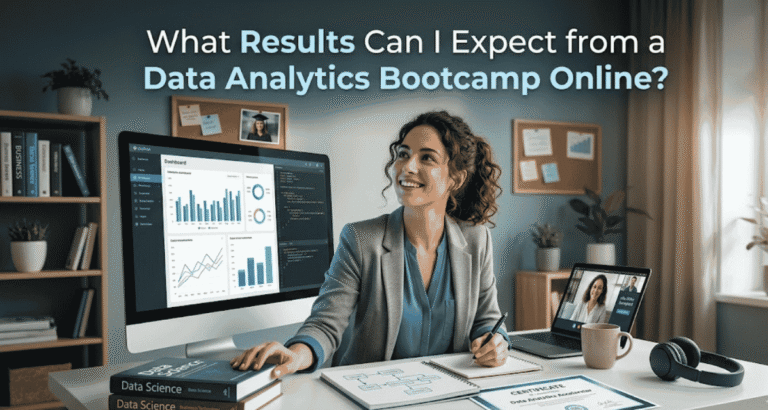
A good data analytics bootcamp online can realistically help you move from “I sort of understand spreadsheets” to being job-ready for roles like Data Analyst, Business Analyst, Reporting Analyst, or even Junior BI Developer within a few months. The biggest results people usually see are practical skills, portfolio projects, interview confidence, and access to better-paying tech-driven jobs.
And honestly, that shift can happen faster than most people expect especially now, in 2026, when companies are drowning in data but still struggling to find people who know how to actually interpret it.
Why So Many People Are Choosing Analytics Online Classes Right Now
A few years ago, data analytics bootcamp online felt optional for many professionals. Today? Not really.
Retail companies track customer behavior in real time. Healthcare organizations predict patient trends. Banks detect fraud using analytics dashboards. Even small businesses are using tools like Power BI and Tableau to make decisions instead of relying on gut feeling.
That’s why searches for Analytics online classes and a reliable Course for data Analytics have exploded recently.
One thing I’ve noticed from talking with professionals switching careers: many don’t want another 4-year degree. They want focused, practical training that leads somewhere tangible. That’s where structured bootcamps have gained traction.
What You Actually Learn in a Data Analytics Bootcamp Online
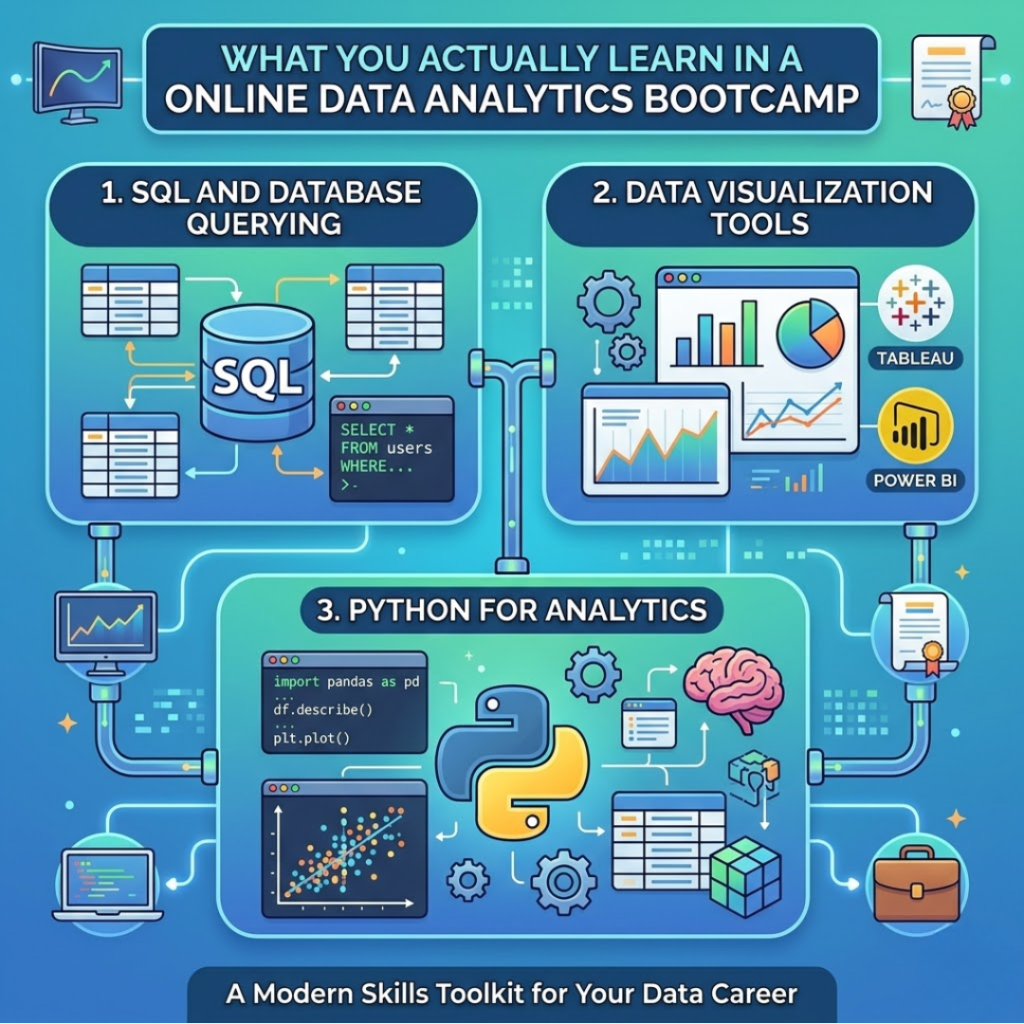
Not every program teaches the same depth, but strong bootcamps usually focus on hands-on business analytics skills rather than just theory.
Here’s what most learners end up working on:
SQL and Database Querying
This is usually the first “aha” moment.
You stop manually digging through Excel sheets and start pulling data directly from databases using SQL queries. Companies still rely heavily on SQL in 2026. It’s everywhere.
Typical projects include:
- Customer sales analysis
- Revenue trend reporting
- Marketing campaign tracking
- Inventory forecasting
A surprising number of entry-level analyst interviews still begin with SQL questions.
Data Visualization Tools
Most employers want analysts who can explain data visually not just calculate numbers.
That’s why a strong data analytics bootcamp online teaches platforms like:
- Power BI
- Tableau
- Excel Advanced Analytics
- Google Looker Studio
You’ll likely build dashboards showing KPIs, customer behavior patterns, or operational metrics.
And yes, portfolio dashboards matter. Recruiters often care more about seeing what you built than hearing what course you completed.
Python for Analytics
Some beginners get nervous here.
But most modern data analytics bootcamp online teach Python incrementally, focusing on practical applications rather than hardcore software engineering.
Popular subjects are:
* Data cleansing
* Automatisering
* Visualisation
* Predictive analytics
* Working with Data Sets in Pandas
Basic Python skills can exponentially increase your employability.
Real-World Projects That Mimic Job Tasks
People don’t realize how important this part is.
A good data analytics course should have projects that simulate real-world scenarios.
For instance:
- e-commerce sales performance analysis
- Creating HR attrition dashboards
- Predicting customer churn
- Cleaning up messy data from different sources
I have seen learners fail in interviews simply because they watched tutorials without applying concepts to real business problems.
Projects close that gap.
What Career Results Can You Expect?
This is usually the first question people ask and fairly so.
Common Job Roles After Completion
Depending on your background and effort level, graduates often target roles like:
- Data Analyst
- Business Analyst
- Reporting Analyst
- BI Analyst
- Operations Analyst
- Junior Data Scientist
- Marketing Analyst
Some professionals also use data analytics bootcamp online to grow within their current company instead of changing careers entirely.
That’s becoming increasingly common in banking, healthcare, telecom, and logistics industries.
Salary Expectations in 2026
Salaries obviously vary by region and experience, but analytics continues to be one of the stronger-paying non-coding tech careers.
Approximate ranges in 2026:
| Entry-Level Data Analyst | $65,000 – $90,000 |
| Business Analyst | $75,000 – $110,000 |
| BI Analyst | $85,000 – $120,000 |
| Senior Analytics Roles | $130,000+ |
In India and global remote markets, analytics hiring has also grown sharply due to AI-driven business expansion.
Ironically, the rise of AI tools has increased demand for analysts, not reduced it. Companies still need humans who can validate insights, interpret trends, and make business recommendations.
How Long Does It Take to See Results?
This depends on consistency more than talent.
Some learners start freelancing within 4–6 months. Others land full-time roles after 6–12 months of focused learning and project work.
What usually speeds things up:
- Building a portfolio early
- Practicing SQL daily
- Networking on LinkedIn
- Mock interviews
- Working on real datasets
- Resume optimization
People who only “consume” lessons without building projects tend to progress slower.
That pattern shows up constantly.
Common Mistakes Students Make in Analytics Online Classes
A few mistakes come up again and again.
Trying to Learn Too Many Tools at Once
You do not need:
- 10 programming languages
- 7 BI platforms
- advanced machine learning immediately
Focus first on:
- SQL
- Excel
- Power BI/Tableau
- Basic Python
That combination alone can open many entry-level opportunities.
Ignoring Business Thinking
Analytics isn’t only technical.
A dashboard means nothing if you cannot explain:
- Why revenue dropped
- Which customer segment matters
- What action leadership should take
Good analysts communicate clearly.
That skill becomes a career multiplier surprisingly fast.
Skipping Portfolio Work
This one hurts job seekers the most.
Recruiters want proof.
Even 3 strong projects can make a massive difference during interviews.
Why Structured Training Still Matters in 2026
There’s free content everywhere now. YouTube alone has thousands of analytics tutorials.
But here’s the issue most learners run into: fragmented learning.
One video teaches SQL basics. Another explains Tableau. Another jumps into AI analytics. Eventually people end up overwhelmed and unsure what employers actually expect.
Structured bootcamps help because they:
- Follow a roadmap
- Include guided projects
- Provide mentorship
- Offer interview prep
- Simulate workplace tasks
- Keep accountability high
That’s one reason many professionals lean toward organized programs from training providers like H2K Infosys instead of trying to piece everything together randomly.
Their training approach focuses heavily on practical implementation, live projects, and career transition support which honestly aligns with what employers care about most now.
What Makes a Good Data Analytics Bootcamp Online?
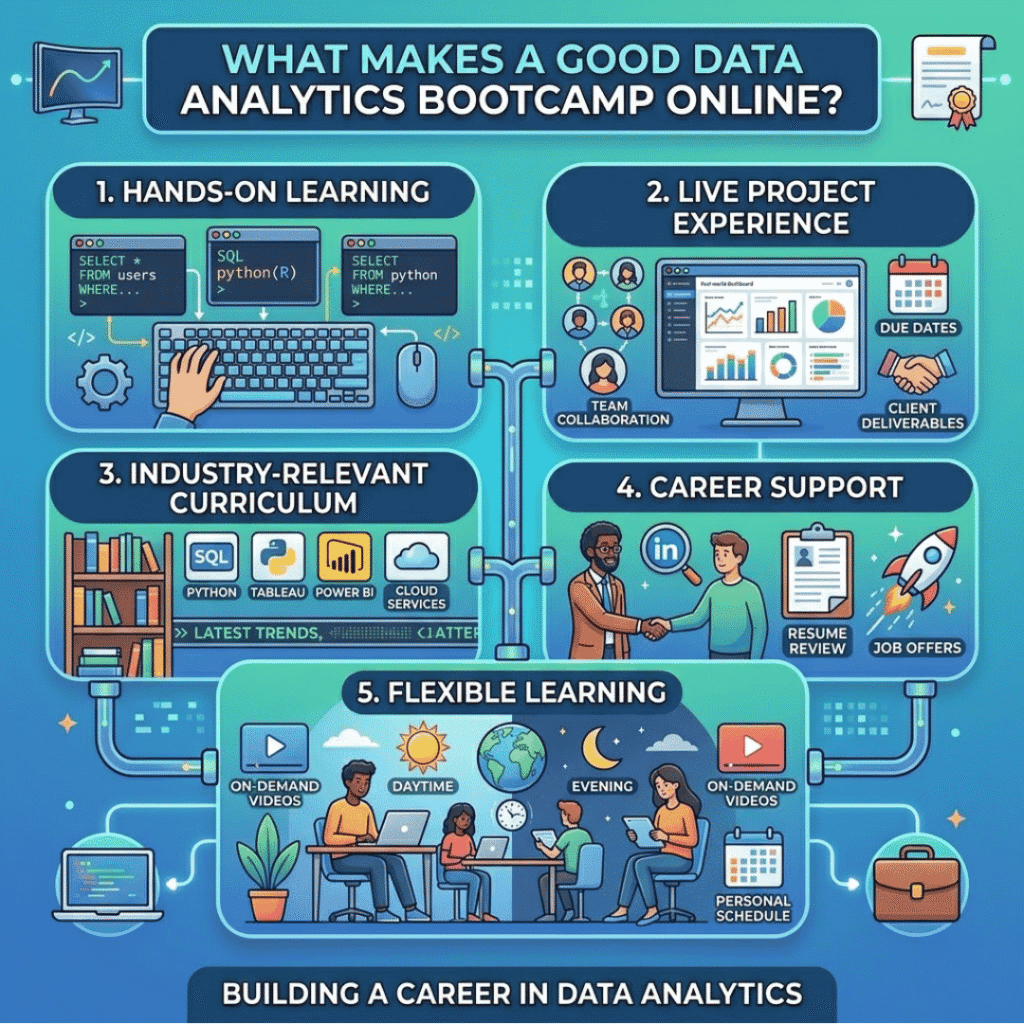
Not all bootcamps deliver the same outcomes.
Here’s what to look for:
Hands-On Learning
Avoid programs that are mostly slides and theory.
Live Project Experience
Real datasets matter more than textbook exercises.
Industry-Relevant Curriculum
The course should include:
- SQL
- Power BI/Tableau
- Python
- Excel
- Data storytelling
Career Support
Resume reviews, mock interviews, and job guidance still make a difference.
Flexible Learning
Many students today are balancing:
- full-time jobs
- family responsibilities
- career changes
Flexible schedules help reduce burnout.
A Realistic Scenario: Career Transition Into Analytics
One learner I came across recently had spent nearly eight years in customer support operations.
No technical background. No coding degree.
After completing a structured data analytics bootcamp online, building a few dashboard projects, and practicing SQL consistently for several months, they transitioned into a reporting analyst role supporting business operations.
That kind of transition is becoming much more common than people think.
Especially because companies increasingly value analytical thinking over traditional degrees alone.
Is a Data Analytics Bootcamp Worth It?
For many people, yes if the program is practical and you commit to applying what you learn.
The strongest outcomes usually happen when learners:
- Treat projects seriously
- Practice consistently
- Build portfolios publicly
- Learn business communication
- Stay current with industry tools
Analytics is one of those fields where demonstrable skill often matters more than formal credentials.
That’s a huge advantage for career changers.
And if you’re serious about building a career in this field, structured training with mentorship and real-world exposure can genuinely shorten the learning curve.
Related Topics You Can Also Explore
To build deeper expertise, you can also explore topics like:
- Business Intelligence vs Data Analytics
- Power BI Certification Training
- SQL Interview Questions for Data Analysts
- Python for Data Analysis Beginners
- How to Build a Data Analytics Portfolio
These topics naturally connect and help create a stronger analytics career foundation.
FAQs
Is a data analytics bootcamp online enough to get a job?
It can be, especially if the data analytics bootcamp online includes projects, portfolio work, and interview preparation. Employers increasingly prioritize practical skills over degrees alone.
How difficult is data analytics for beginners?
Most beginners struggle initially with SQL or Python syntax, but analytics itself is very learnable when taught practically. Consistent practice matters more than technical background.
Which tools are most important in Analytics online classes?
SQL, Excel, Power BI/Tableau, and Python remain the most valuable core tools for entry-level analyst roles in 2026.
How long does it take to become job-ready in data analytics?
Many learners become interview-ready within 4–8 months depending on study time, project work, and prior experience.
Are data analytics jobs still in demand with AI growing fast?
Yes. AI is actually increasing demand for analysts who can interpret data, validate trends, and help businesses make decisions from AI-generated insights.
Final Thoughts
A quality data analytics bootcamp online can absolutely change your career direction but results usually come from combining structured learning with consistent hands-on practice.
The people who succeed are rarely the ones chasing every new tool. They’re the ones who build real projects, understand business problems, and keep improving steadily over time.
If you’re considering a data analytics bootcamp online, focus less on flashy promises and more on whether the program gives you practical exposure, mentorship, portfolio development, and career support.
That combination still matters. Probably more now than ever.