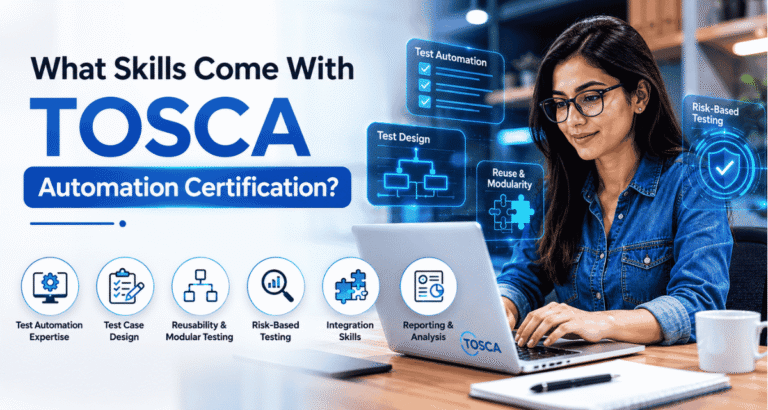
If you’re planning to build a serious career in test automation, a TOSCA Automation Certification can give you far more than just a certificate badge. It teaches practical automation skills that companies actually use in enterprise projects things like model-based testing, API automation, SAP testing, test data management, and even CI/CD integration basics. And honestly, that matters a lot in 2026, because employers are no longer impressed by “tool awareness” alone. They want people who can automate business workflows fast and maintain them without constant scripting headaches.
A lot of QA professionals start with Selenium and eventually realize maintenance becomes messy in large-scale enterprise applications. That’s where TOSCA AS1 Certification and broader Tricentis Certification paths stand out. Tosca’s model-based approach changes how people think about automation. Instead of writing endless code, testers learn to design reusable, scalable test cases. That shift is one of the biggest reasons companies in banking, healthcare, retail, and SAP-heavy environments continue adopting Tosca aggressively.
Why TOSCA Skills Are in High Demand in 2026
The automation market changed pretty quickly over the last few years. Enterprises are moving toward low-code and AI-assisted testing platforms because release cycles are getting shorter. Teams cannot afford fragile automation suites anymore.
That’s exactly why recruiters now search for professionals with TOSCA Automation Certification experience.
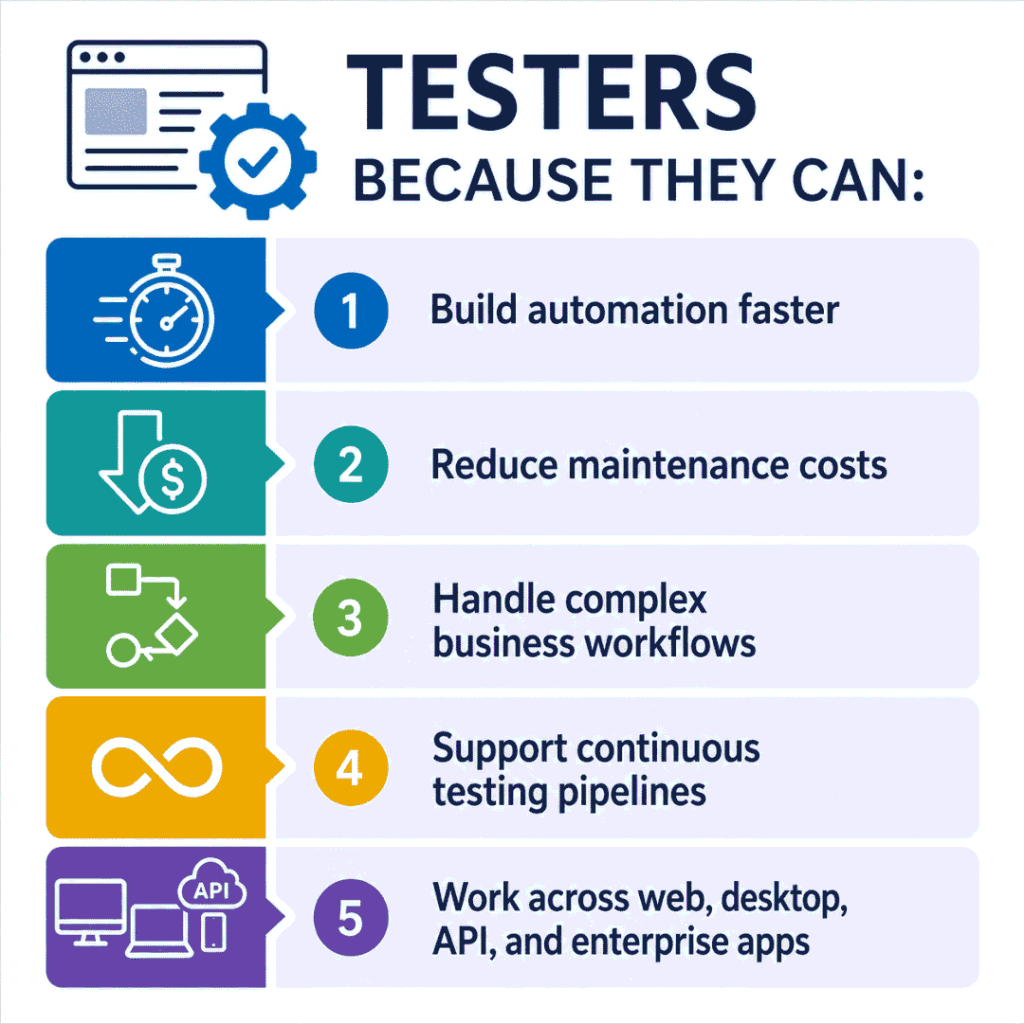
Many Fortune 500 companies using SAP, Salesforce, Oracle, and enterprise APIs prefer Tosca-certified testers because they can:
- Build automation faster
- Reduce maintenance costs
- Handle complex business workflows
- Support continuous testing pipelines
- Work across web, desktop, API, and enterprise apps
You’ll even notice this trend on job portals right now. Roles mentioning Tricentis Certification often include salaries higher than traditional manual QA profiles, especially for candidates with banking or ERP automation experience.
Core Skills You Learn in TOSCA Automation Certification
1. Model-Based Test Automation
This is probably the biggest skill you gain.
Unlike Selenium, where you manually code every step, Tosca teaches you how to create reusable models of applications. Once you understand modules and reusable components, automation becomes much cleaner.
Real-world example?
A healthcare company updating patient workflow screens weekly can still maintain stable automation because TOSCA Automation Certification separates the test logic from UI changes. That saves huge amounts of maintenance time.
This skill alone makes certified professionals valuable in enterprise environments.
2. API Testing and Service Validation
Modern applications rely heavily on APIs now. Even teams focused on UI testing eventually need API validation skills.
Through TOSCA AS1 Certification, learners typically understand:
- REST API testing
- Request/response validation
- API parameterization
- Service virtualization basics
- End-to-end workflow validation
A lot of beginners underestimate API automation at first. Then they join a real project and realize half the defects happen between connected systems, not just on screens.
That’s where TOSCA Automation Certification becomes useful because it combines UI and API automation into one framework.
3. Test Case Design Techniques
One underrated benefit of Tricentis Certification is learning structured test design.
You don’t just automate randomly. You learn:
- Risk-based testing
- Boundary value analysis
- Equivalence partitioning
- Requirement coverage strategies
- Reusable test architecture
Honestly, this is what separates experienced automation engineers from people who only “know the tool.”
Good companies care about testing strategy, not just clicking buttons automatically.
4. SAP and Enterprise Application Automation
This is a major career advantage.
SAP automation is still difficult with many traditional tools. TOSCA Automation Certification handles SAP environments much better, which is why large enterprises continue investing in it.
Professionals skilled in:
- SAP automation
- ERP workflow testing
- Enterprise process validation
- Cross-system integrations
often see stronger career growth compared to general automation testers.
In fact, many consulting companies specifically shortlist candidates with TOSCA Automation Certification for enterprise migration projects.
5. CI/CD and DevOps Testing Basics
Automation today is tightly connected to DevOps pipelines.
Tosca-certified professionals usually gain exposure to:
- Jenkins integration
- Continuous testing concepts
- Automated regression execution
- Test reporting
- Build validation workflows
No, you don’t become a DevOps engineer overnight. But you do learn how automation fits into modern release pipelines, which employers increasingly expect.
6. Test Data Management Skills
This area gets ignored way too often.
Real automation projects fail because of unstable test data more than broken scripts sometimes.
Tosca training introduces concepts like:
- Dynamic test data handling
- Reusable datasets
- Parameterization
- Data-driven testing
- Environment management
These skills become extremely useful in banking, insurance, and healthcare projects where data combinations matter constantly.
7. Automation Maintenance and Scalability
One thing experienced testers quickly learn: creating automation is easy. Maintaining it is the real challenge.
Good TOSCA Automation Certification training focuses heavily on:
- Reusable modules
- Scalable frameworks
- Easy maintenance structures
- Reducing flaky tests
- Long-term automation stability
And honestly, recruiters notice this. Teams want automation engineers who can maintain frameworks for years not just build demo scripts during interviews.
Career Opportunities After TOSCA Certification
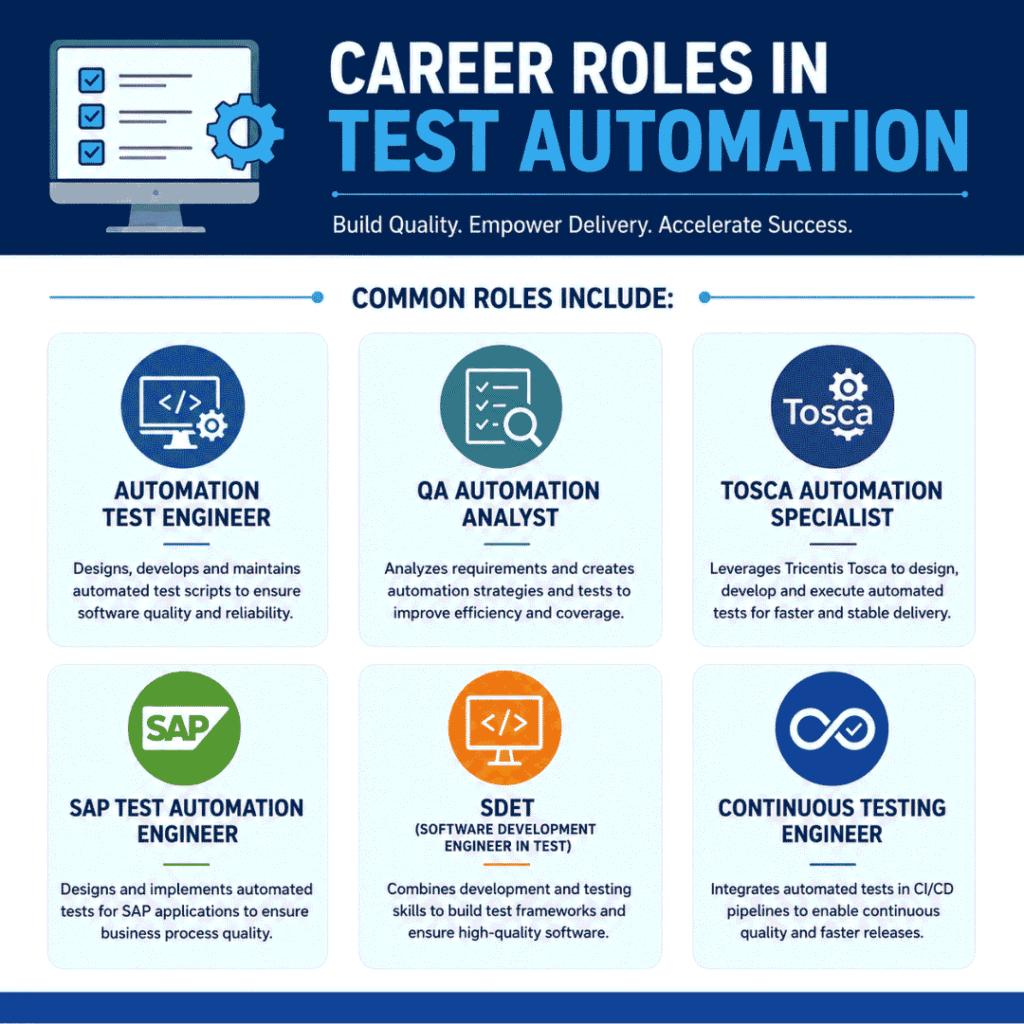
The career path after Tricentis Certification is surprisingly broad now.
Common roles include:
- Automation Test Engineer
- QA Automation Analyst
- Tosca Automation Specialist
- SAP Test Automation Engineer
- SDET
- Continuous Testing Engineer
In India and the US, companies using enterprise systems actively hire Tosca professionals because experienced resources are still relatively limited compared to Selenium testers.
Many mid-level QA professionals also use TOSCA AS1 Certification to shift from manual testing into higher-paying automation roles.
A Small Reality Check Most People Don’t Mention
Certification alone is not enough.
A lot of people pass certification exams but struggle in projects because they never practiced real workflows. That’s why structured hands-on training matters.
Platforms like H2K Infosys focus more on practical project scenarios, mock implementations, and enterprise-style automation exercises rather than only theory. That approach helps learners understand how TOSCA Automation Certification actually works inside real organizations.
And honestly, employers can tell the difference pretty quickly during interviews.
Common Mistakes Beginners Make
Ignoring Test Design Fundamentals
Many learners jump straight into automation execution without understanding testing strategy.
Treating Tosca Like Selenium
TOSCA Automation Certification works differently. Trying to force scripting-heavy thinking into model-based automation creates confusion.
Avoiding API Testing
UI-only automation skills are no longer enough in 2026.
Not Practicing Enterprise Scenarios
Simple demo projects won’t prepare you for complex business workflows.
Practical Tips to Learn Faster
- Practice reusable module creation daily
- Learn API testing alongside UI automation
- Work on SAP or enterprise-style workflows
- Understand risk-based testing concepts
- Focus on framework maintenance, not just execution
- Try integrating tests with Jenkins pipelines
Small consistency matters more than marathon study sessions.
Related Topics You Can Also Explore
To build deeper topical expertise, you can also explore:
- Difference Between Tosca and Selenium Automation
- How Long Does It Take to Prepare for TOSCA AS1 Certification?
- Best TOSCA Automation Training for Beginners
- SAP Test Automation Using Tosca
- CI/CD Testing Strategies for QA Engineers
These topics naturally connect together and help build stronger automation knowledge overall.
FAQs
Is TOSCA Automation Certification worth it in 2026?
Enterprises continue to adopt low-code automation platforms, and Tosca’s compatibility with core scenarios including SAP, ERP, among others, still maintains high market relevance.
What skills are required before learning Tosca?
Basic software testing knowledge helps. You don’t necessarily need strong coding experience because TOSCA Automation Certification is largely model-based.
Does TOSCA AS1 Certification help freshers?
It can help freshers enter automation testing roles faster, especially when combined with practical project experience.
Which industries use Tricentis Tosca the most?
Banking, healthcare, insurance, retail, telecom, and SAP-heavy enterprises are major users of Tosca automation.
How long does it take to learn TOSCA Automation Certification?
Most learners need around 6–10 weeks with consistent practice, depending on prior testing experience and project exposure.
Final Thoughts
The biggest value of TOSCA Automation Certification is not just learning a tool it’s learning how enterprise automation actually works in modern software delivery environments.
You gain practical skills in automation architecture, API validation, reusable testing, CI/CD workflows, and enterprise process testing. Those skills translate directly into stronger job opportunities and better long-term career growth.
If you’re serious about moving into automation testing or upgrading from manual QA roles, structured hands-on learning can make the transition much smoother. Programs from H2K Infosys are often useful because they combine certification preparation with real-world project exposure, which employers genuinely value now.