If you enjoy solving problems, spotting patterns, and making decisions based on logic rather than guesswork, data analytics is a strong long-term career choice. It’s especially suited for people who like turning raw information into meaningful insights that actually influence business outcomes.
Why Data Analytics Feels Like a “Future-Proof” Career (and not just hype)
Here’s something I’ve noticed over the past couple of years companies don’t just want data anymore, they depend on it. Whether it’s a startup figuring out customer behavior or a global company optimizing supply chains, decisions are increasingly backed by data.
And honestly, that shift isn’t slowing down.
With AI tools becoming mainstream and businesses collecting more data than ever, the need for skilled analysts has only grown. But here’s the catch tools alone don’t solve problems. People who understand data do.
That’s where trained analysts stand out.
Who Should Actually Consider Data Analytics?
Not everyone needs to jump into coding-heavy roles or deep tech careers. Data analytics sits in a sweet spot it blends business thinking with technical skills.
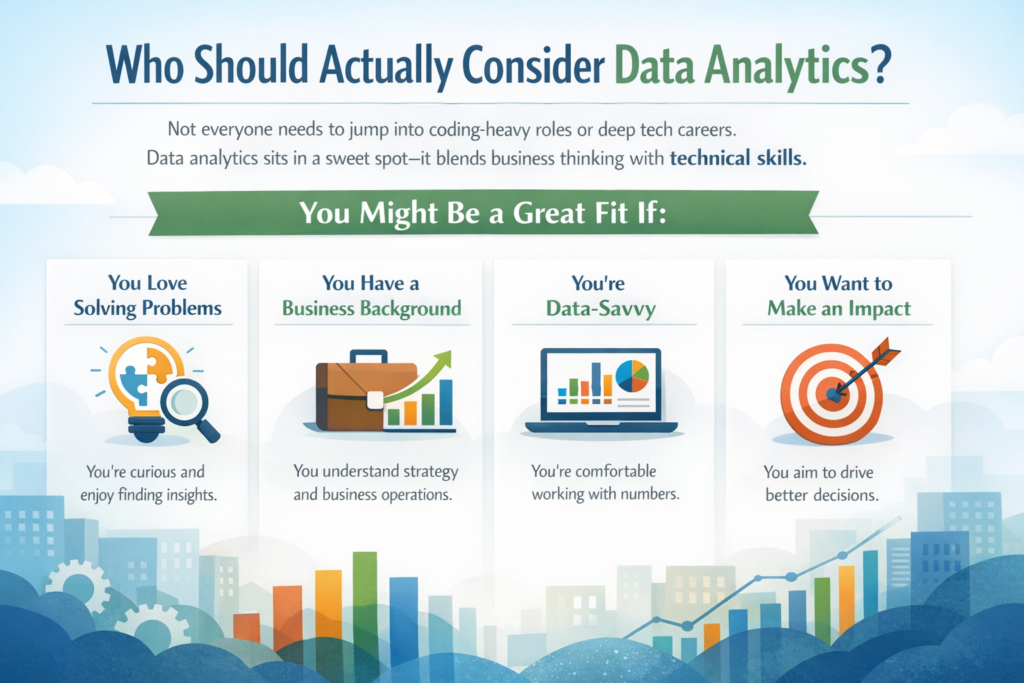
You might be a great fit if:
1. You Like Asking “Why” More Than “What”
If you’re the kind of person who doesn’t just accept results but questions them why did sales drop? why are users leaving? you’re already thinking like an analyst.
2. You’re Comfortable Learning Tools (Even If You’re Not a Tech Expert)
You don’t need to be a programmer from day one. Many people start with Excel, SQL, and visualization tools, then gradually build up.
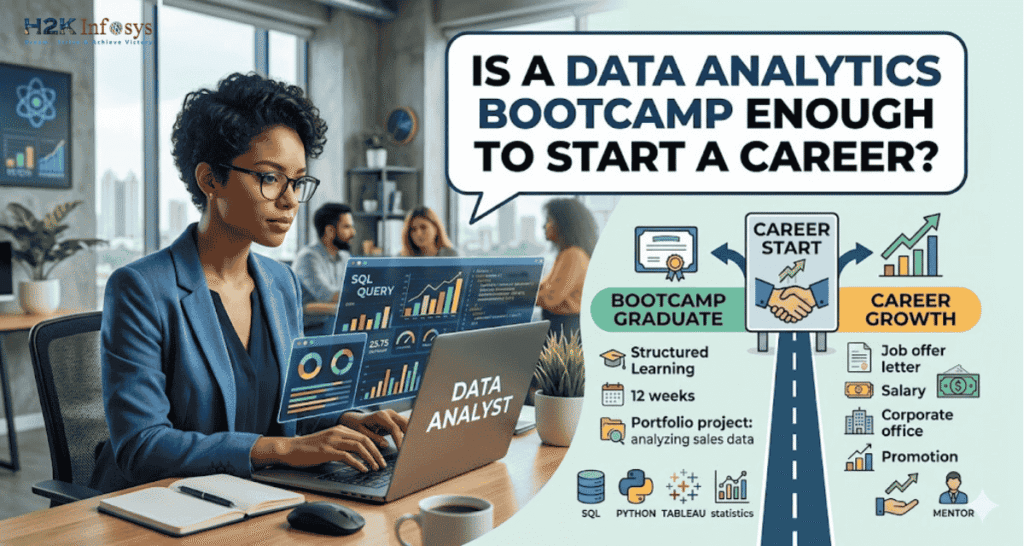
This is exactly why many learners opt for Data analyst online classes they provide a structured path instead of random YouTube hopping.
3. Career Switchers Looking for Stability
I’ve seen people from finance, marketing, even non-IT backgrounds transition into analytics. The learning curve is real, but it’s manageable with the right guidance.
4. Students Who Want Practical, Job-Ready Skills
Degrees are great, but employers increasingly look for what you can do. Real-world projects matter more than theory alone.
The Role of Certifications: Do They Really Help?
Short answer yes, but only if they’re practical.
Programs like the Google Data Analytics Certification give a solid foundation. They’re beginner-friendly and help you understand the basics of data cleaning, visualization, and analysis.
But here’s something many learners realize later:
Certification alone isn’t enough.
You need:
- Hands-on projects
- Real-world scenarios
- Interview preparation
That’s where more applied training programs come in.
Why Many Learners Choose H2K Infosys for Data Analytics Training
Let’s talk about something practical.
A lot of learners start with theory-heavy courses and then hit a wall when they try to apply it in real jobs. This is where training providers like H2K Infosys approach things a bit differently.
H2K Infosys Data Analytics Training: What Makes It Different?
1. Focus on Real-Time Project Experience
Instead of just teaching concepts, H2K Infosys integrates real-time projects into the learning process.
So rather than just learning SQL, you actually use it in simulated business scenarios. That shift makes a big difference when facing interviews.
2. Structured Learning Path Through Data Analyst Online Classes
Their data analyst online classes are designed for both beginners and working professionals. The structure helps you move step-by-step instead of feeling overwhelmed.
From what I’ve seen, this kind of guided learning saves a lot of time.
3. Strong Emphasis on Job Readiness
This part is often overlooked; knowing something and being able to present it in an interview are two different skills.
H2K Infosys includes:
- Mock interviews
- Resume preparation
- Real-world case studies
That combination tends to build confidence faster than self-study alone.
4. Blending Theory with Industry Expectations
Unlike generic courses, the training aligns with what companies are actually looking for right now data storytelling, dashboarding, and business insights.
Real-World Example: How Data Analytics Skills Are Used Today
Let’s make this real.
- E-commerce companies track user behavior to improve conversions
- Healthcare organizations analyze patient data to improve outcomes
- Banks use analytics to detect fraud patterns
Even small businesses now use dashboards to track daily performance. This wasn’t common a few years ago it’s becoming standard.
And someone has to build and interpret those insights.
Is Data Analytics Still Worth It in 2026?
Honestly, yes but with a small reality check.
It’s not just about learning tools anymore. The people who succeed are the ones who:
- Understand business problems
- Communicate insights clearly
- Work with real datasets
That’s why combining foundational programs like the Google Data Analytics Certification with practical training (like H2K Infosys offers) tends to give better results.
Final Thoughts: Is This Career Right for You?
If you’re looking for a career that:
- Offers long-term growth
- Works across industries
- Balances logic with creativity
Data analytics is a solid choice.
But here’s the honest part your success depends less on which course you take and more on how you apply what you learn.
That said, choosing the right Data analytics training environment, especially one like H2K Infosys that emphasizes real-world experience can make the journey a lot smoother.