Introduction
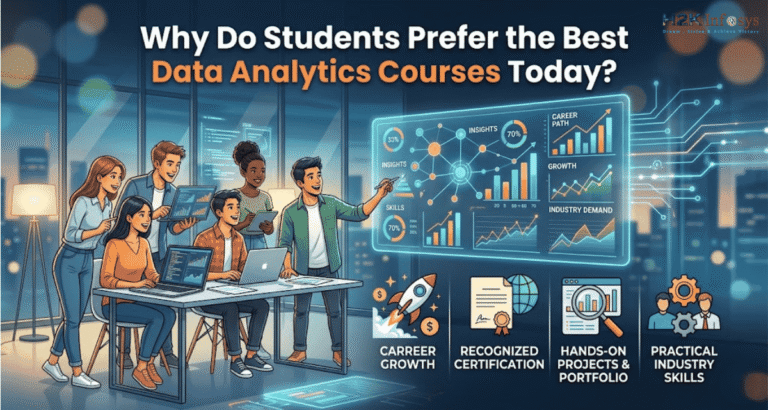
Students are choosing the best data analytics courses today because they no longer limit data skills to IT jobs or giant tech companies. Almost every business now depends on data to make decisions, and people who know how to work with that data are getting noticed fast. A good Best Data Analytics Courses give students practical skills they can actually use in real jobs, and honestly, that’s what most learners care about now.
A few years ago, people mostly talked about coding bootcamps or software development. Things feel different now. I’ve noticed more students asking questions like, “Can I move into analytics without a computer science degree?” or “Is data analytics still worth learning with AI growing so quickly?”
The interesting part is… AI has actually increased demand for analytics skills instead of reducing it.
Businesses suddenly have more data than ever, but they still need real people who can interpret patterns, explain outcomes, and make sense of what’s happening beyond the charts.
Data Is Everywhere Now. Students See That Clearly
You don’t have to work at Google or a startup anymore to see analytics in action.
Retail companies use customer data to predict buying behavior. Hospitals analyze patient trends. Banks monitor fraud using analytics models. Even food delivery apps track tiny details like delivery times, weather patterns, and customer habits.
It’s become part of everyday business operations.
That’s one major reason students are searching for the best data analytics courses. They’re seeing that analytics is not some niche career anymore. It’s becoming a core business skill.
And honestly, once people start noticing how many industries use data, it changes how they consider career stability too.
Students Want Skills That Lead Somewhere Practical
A lot of traditional education still feels disconnected from actual jobs. That’s probably why career-focused training programs are getting more attention lately.
Students are keen to learn things they can apply immediately:
- Creating dashboards
- Working with SQL queries
- Understanding business reports
- Cleaning messy datasets
- Building visualizations in Power BI or Tableau
Not just memorizing theory for exams.
I’ve spoken with people who spent years in support roles or manual reporting jobs and realized they were already working with data every day without officially calling it “analytics.” Once they learned proper tools and reporting techniques, their career options changed pretty quickly.
That practical connection matters.
A strong Best Data Analytics Courses usually focuses less on academic jargon and more on solving real business problems. That’s what employers are asking for now anyway.
The Career Opportunities Are Hard to ignore.
Let’s be honest for a second: salary and job demand absolutely influence course decisions.
Students today are far more career-aware than they used to be. Before enrolling anywhere, they check:
- Hiring trends
- LinkedIn job postings
- Salary ranges
- Remote opportunities
- Industry growth
And analytics keeps showing up in those searches.
Companies are hiring for roles like:
- Data Analyst
- Reporting Analyst
- Business Intelligence Analyst
- Power BI Developer
- Junior Data Consultant
- Operations Analyst
What’s interesting is that Best Data Analytics Courses jobs are also expanding outside traditional tech companies. Logistics firms, insurance companies, healthcare providers, and even manufacturing businesses are investing heavily in data-driven decision-making.
That broader demand makes learners feel safer investing their time in the field.
AI Is Changing Analytics, But Not the Way People Expected
This is something many students worry about now.
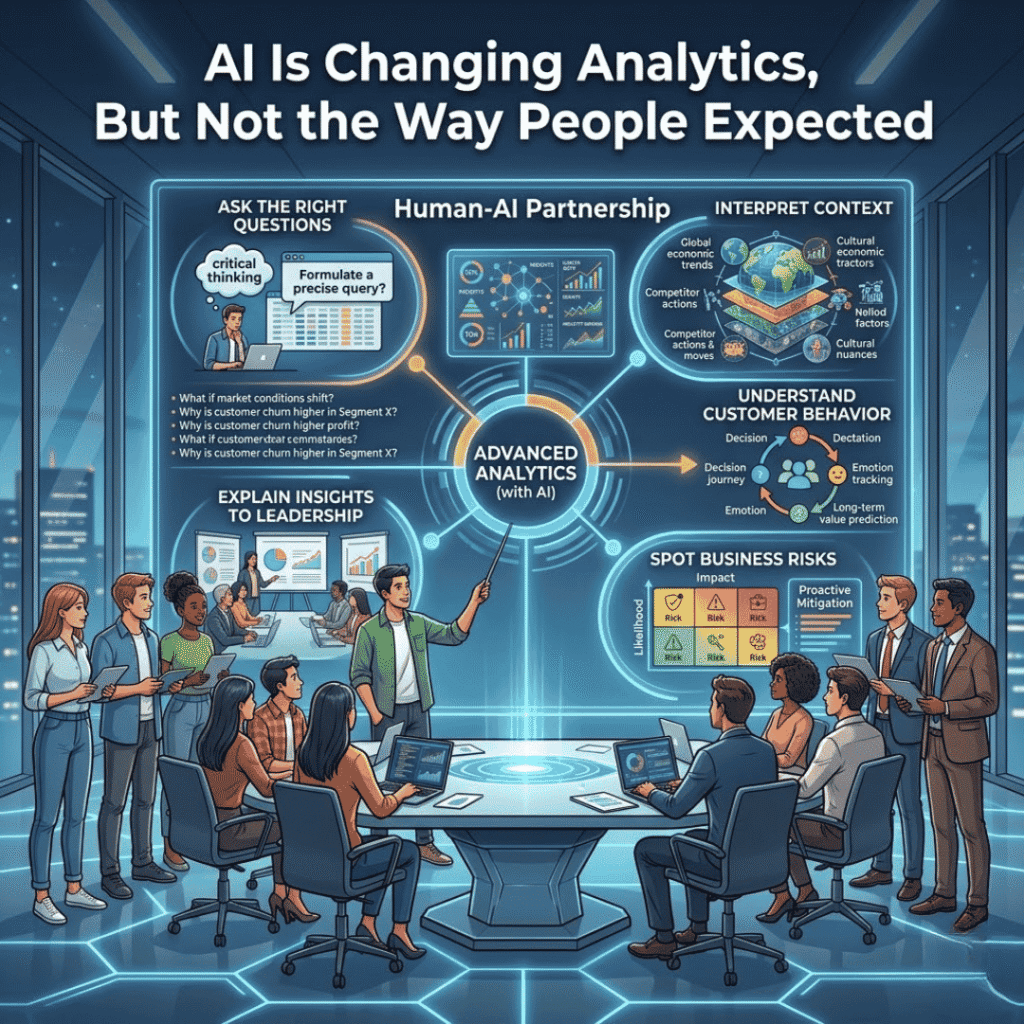
People assume AI tools will completely automate analytics jobs. But what’s actually happening inside companies is more layered than that.
AI can generate reports faster. It can summarize patterns. It can automate repetitive tasks.
But businesses still need humans who can
- Ask the right questions
- Interpret context
- Explain insights to leadership
- Spot business risks
- Understand customer behavior
A dashboard alone doesn’t make decisions.
That’s why updated Best Data Analytics Courses now include AI-assisted analytics, automation tools, and modern reporting workflows instead of teaching only old-school spreadsheet methods.
The industry moved quickly over the last two years. Good training providers adapted with it.
Students Prefer Hands-On Learning Now
This part has changed a lot.
Back then, people were satisfied watching recorded tutorials and collecting certificates. Employers aren’t really concerned about certificates alone anymore. They want proof that candidates can actually work with data.
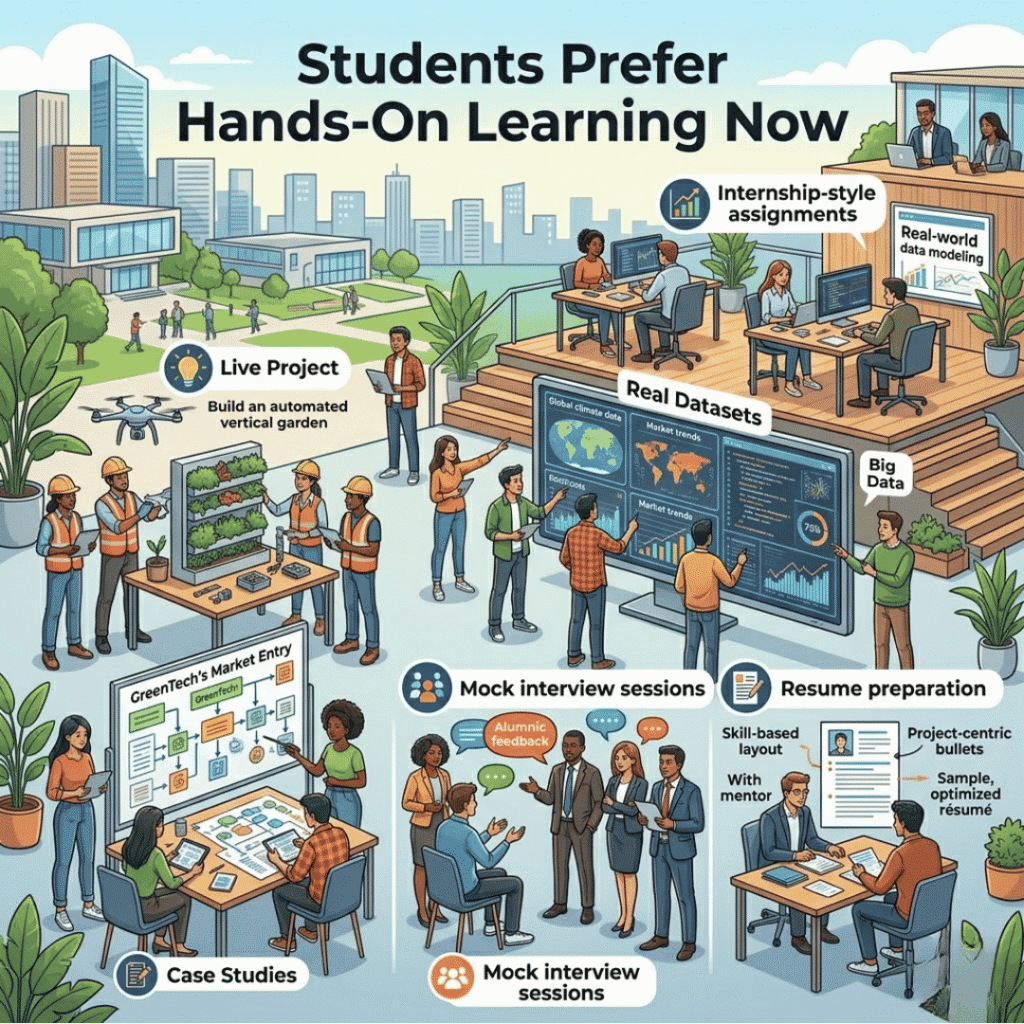
That’s why students now look for programs with:
- Live projects
- Case studies
- Internship-style assignments
- Real datasets
- Mock interview sessions
- Resume preparation
Without practical experience, analytics interviews become difficult very fast.
One hiring manager I spoke with recently mentioned that many candidates know tool definitions but freeze when asked to analyze a business scenario. That gap is becoming more obvious in interviews.
Structured learning helps reduce that problem.
Platforms like H2K Infosys have become popular partly because they focus heavily on project-based learning instead of only theory slides. That practical exposure gives students more confidence when applying for jobs.
Flexibility Matters More Than Ever
A huge percentage of analytics learners today are not full-time college students.
Many are:
- Working professionals
- Career switchers
- Parents restarting careers
- Non-IT employees moving into tech
- People learning after work hours
That’s why flexible online learning has become such a major factor when choosing the best data analytics courses.
People want training they can realistically fit into their schedules.
And honestly, live online learning became much more accepted after remote work normalized across industries. Companies care more about skills now than whether someone sat inside a classroom building.
What Students Actually Learn in a Best Data Analytics Courses
A proper analytics course usually combines technical tools with business thinking.
Technical Skills
Students often learn:
- SQL
- Excel analytics
- Power BI
- Tableau
- Data visualization
- Basic Python
- Reporting automation
- Data cleaning techniques
Business Skills
This part gets overlooked sometimes, but it matters a lot:
- Understanding KPIs
- Explaining insights clearly
- Identifying trends
- Supporting business decisions
- Problem-solving with data
The strongest analysts are usually not the people writing the fanciest code. They’re the ones who can explain what the numbers actually mean to a business.
That communication piece matters more than many beginners realize.
Common Mistakes Students Make When Choosing Courses
I’ve seen this happen pretty often.
Picking the Cheapest Course Available
Low-cost courses sometimes skip projects completely. Students finish with certificates but struggle during interviews.
Ignoring Career Support
Resume guidance, mock interviews, and placement preparation genuinely help beginners.
Learning Tools Without Context
Knowing Power BI buttons is not enough if you can’t solve business problems using the tool.
Depending Only on Recorded Videos
Analytics is hands-on. Passive learning usually doesn’t stick for long.
That’s why structured programs with instructor guidance tend to work better for many learners.
Why Many Learners Choose H2K Infosys
There are endless analytics courses online now, which honestly makes choosing harder sometimes. What many students seem to appreciate about H2K Infosys Data Analytics Training is the career-focused structure. The training includes practical assignments, real-world scenarios, project work, and support designed around actual hiring expectations.
That combination is especially helpful for people entering analytics from non-technical backgrounds.
Many learners don’t just need information; they need direction, accountability, and realistic project exposure.
That’s where structured training can make a noticeable difference.
Data Analytics Is Becoming a Long-Term Career Path
At this point, analytics is not just a “trending skill.”
Businesses are investing heavily in:
- AI systems
- Cloud platforms
- Predictive reporting
- Automation tools
- Customer intelligence platforms
All of those systems depend on data.
This means that companies still need professionals who understand how to organize, analyze, and explain data properly.
Students see that shift happening in real time. That’s why demand for the best data analytics courses keeps growing instead of slowing down.
If someone is serious about entering a stable tech-oriented career without necessarily becoming a hardcore software developer, analytics has become one of the more realistic options available right now.
Related Topics You Can Also Explore
If you’re building a long-term analytics career, these topics connect naturally with data analytics:
- Business Analyst Training
- Power BI Certification Course
- SQL Online Training
These skills work together and help create stronger job opportunities over time.
FAQs
Which data analytics program is best for beginners?
Programs that include hands-on projects, SQL, visualization tools, and interview preparation usually work best for beginners.
Are data analytics jobs still in demand in 2026?
Yes. Demand remains strong across healthcare, finance, retail, logistics, AI operations, and cybersecurity industries.
Can non-IT students learn data analytics?
Absolutely. Many professionals move into analytics from finance, operations, customer support, and non-technical backgrounds.
How long does it typically take to become job-ready in analytics?
For many learners, consistent training and project practice over several months is enough to start applying for entry-level analytics roles.
Do the Best Data Analytics Courses include AI tools now?
Most updated programs do. Modern analytics training increasingly includes AI-assisted reporting and automation concepts.
Final Thoughts
Students prefer the best data analytics courses today because they want practical skills tied directly to real career opportunities.
And honestly, that thinking makes sense.
The job market changed. Employers care more about what candidates can actually do with data than about collecting generic certifications.
A good best data analytics courses offers the opportunity for learners to gain real-world skills, to understand business problems and to prepare for real job expectations, not just classroom exercises.
If you are serious about this field, the best next step is usually to find structured, project-based training that mirrors how analytics teams actually work today