

DevOps has transformed how modern software is built, tested, and delivered. By combining development and operations into a single collaborative workflow, DevOps enables faster releases, higher quality software, and improved system reliability. At the heart of this transformation lies automation. Without automation tools, DevOps would struggle to deliver on its promise of speed and consistency.
Automation tools help DevOps teams streamline repetitive tasks such as code integration, testing, infrastructure provisioning, configuration management, and deployment. For professionals enrolled in Quality assurance testing courses, understanding these tools is critical, as quality and automation are deeply embedded in modern DevOps pipelines.
Many teams rely on tools as a crucial part of their workflow. These tools not only enhance productivity but also ensure quality throughout the software development lifecycle.
Understanding the benefits of using an automation tool can significantly improve project outcomes, making it essential for modern development teams.
This blog explores six essential automation tools for DevOps, explaining what they do, how they fit into the DevOps lifecycle, and why they matter for software quality and delivery.
With an automation tool, organizations can achieve faster deployment times while maintaining a high standard of quality in their software.
Automation tools are designed to address the challenges of manual processes, thus allowing teams to focus on more strategic tasks that require human interaction.
Why Automation Is Essential in DevOps
Before diving into specific tools, it is important to understand why automation is foundational to DevOps.
In traditional software development, tasks such as testing, deployment, and infrastructure setup were often manual. These manual processes introduced delays, inconsistencies, and errors. DevOps automation addresses these issues by:
- Reducing human error
- Increasing release frequency
- Improving consistency across environments
- Enabling continuous integration and continuous delivery (CI/CD)
- Strengthening collaboration between teams
Automation also supports quality assurance. Automated testing, for example, ensures that code changes do not break existing functionality. This is why DevOps concepts are now widely included in QA software testing courses and Quality assurance testing courses, helping testers adapt to modern delivery models.
1. Jenkins – Continuous Integration and Continuous Delivery Automation
The integration of an automation tool within QA practices promotes seamless collaboration and efficient testing across different platforms.
Having an effective automation tool is crucial for enabling teams to manage their workflows and adapt to rapid changes in project demands.
This automation tool simplifies complex processes and reduces the likelihood of errors, making it a favorite among developers.
Jenkins is one of the most widely used tools in DevOps. It is an open-source automation server designed to support continuous integration and continuous delivery pipelines.
What Jenkins Does
Jenkins automates the process of building, testing, and deploying applications. Whenever a developer commits code to a repository, Jenkins can automatically:
- Pull the latest code
- Build the application
- Run automated tests
- Deploy the application to a staging or production environment
This automation ensures that issues are detected early, reducing the cost and effort of fixing defects later.
Why Jenkins Matters in DevOps
Incorporating an automation tool can lead to significant improvements in team productivity and efficiency, ultimately benefiting the organization.
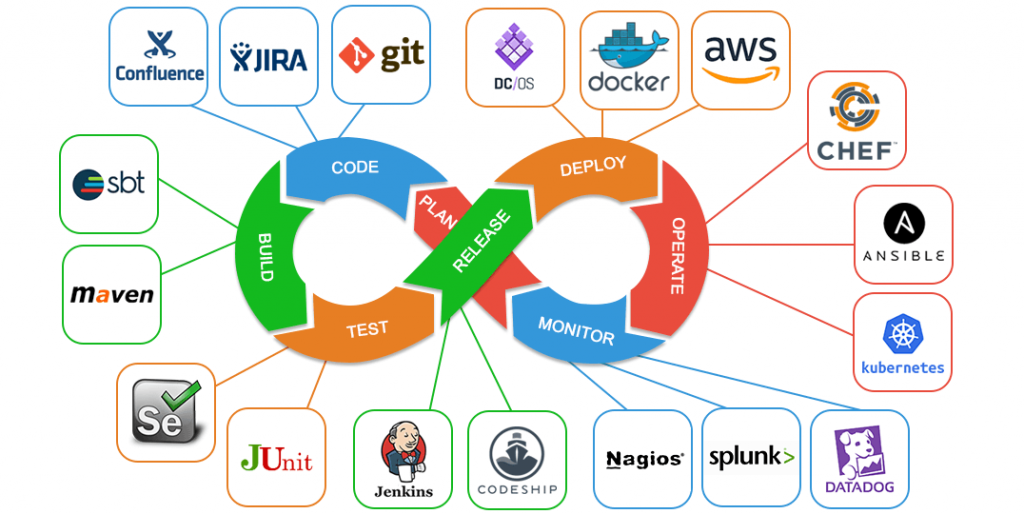
Jenkins plays a central role in CI/CD pipelines. It integrates with tools like Git, Docker, Kubernetes, Selenium, and cloud platforms. For professionals taking Quality assurance testing courses, Jenkins is especially valuable because it enables automated test execution as part of the build process.
When teams utilize an automation tool effectively, they can achieve a higher level of agility and responsiveness to changing project needs.
Jenkins and Quality Assurance
Jenkins supports test automation frameworks used in QA, such as unit testing, integration testing, and regression testing. This tight integration ensures continuous feedback on software quality, making Jenkins a must-know tool for both developers and testers.
2. Docker – Containerization Automation Tool
Docker revolutionized DevOps by introducing containerization. Containers package applications and their dependencies into a lightweight, portable unit that runs consistently across environments.
What Docker Does
Docker allows teams to:
- Create containers for applications
- Ensure consistency between development, testing, and production
- Deploy applications faster and more reliably
Instead of worrying about environment differences, teams can rely on containers to behave the same everywhere.
Why Docker Is Critical for DevOps
Docker reduces the “works on my machine” problem. Automated container builds and deployments help DevOps teams maintain speed without sacrificing stability.
For learners in QA software testing courses, Docker is valuable because it allows testers to create consistent test environments, reducing environment-related test failures.
Docker and Automated Testing
Testers can run automated test suites inside containers, making tests more reliable and repeatable. This approach is increasingly covered in Quality assurance testing courses that focus on DevOps-ready testing practices.
3. Kubernetes – Container Orchestration Automation
While Docker handles container creation, Kubernetes manages containers at scale. It automates deployment, scaling, and management of containerized applications.
What Kubernetes Does
Kubernetes automates tasks such as:
- Deploying containers across clusters
- Scaling applications based on demand
- Managing container health and restarts
- Load balancing traffic
It ensures applications remain available and performant even under heavy load.
Why Kubernetes Is Important in DevOps
Modern applications often consist of multiple microservices. Kubernetes automates the orchestration of these services, making it easier to manage complex systems.
For QA professionals trained through QA software testing courses, Kubernetes introduces new testing considerations such as service reliability, scalability testing, and fault tolerance testing.
Kubernetes and Quality Assurance
Automation in Kubernetes allows testers to simulate real-world scenarios, including scaling events and failure recovery. This makes it an important topic in advanced Quality assurance testing courses focused on cloud-native applications.
4. Ansible – Configuration Management and Automation
Ansible is a configuration management and automation tool that simplifies infrastructure setup and application deployment.
What Ansible Does
Ansible automates:
- Server configuration
- Application deployment
- Infrastructure provisioning
- Repetitive administrative tasks
It uses simple, human-readable configuration files, making it accessible even to those without deep infrastructure knowledge.
Why Ansible Fits DevOps
Ansible promotes consistency and repeatability. Instead of manually configuring servers, teams define desired states and let Ansible enforce them automatically.
This approach supports DevOps goals by reducing configuration drift and deployment errors.
Ansible and Testing Automation
For those enrolled in QA software testing courses, Ansible is useful for automating test environment setup. Testers can quickly spin up identical environments, ensuring reliable and repeatable test results.
5. Terraform – Infrastructure as Code Automation
Terraform is an Infrastructure as Code (IaC) tool that allows teams to define and manage infrastructure using code.
What Terraform Does
Terraform automates the creation and management of infrastructure resources such as:
- Virtual machines
- Networks
- Databases
- Cloud services
Infrastructure definitions are stored as code, version-controlled, and reusable.
Why Terraform Is Essential in DevOps
Infrastructure automation is critical for scalability and consistency. Terraform enables teams to provision entire environments with minimal manual effort.
For professionals learning through Quality assurance testing courses, Terraform introduces the concept of testable infrastructure. Testers can validate infrastructure configurations alongside application testing.
Terraform and Quality Assurance
Automated infrastructure provisioning ensures that test environments match production environments closely. This alignment improves test accuracy and reduces production defects, reinforcing the importance of Terraform in DevOps-driven QA practices.
6. Selenium – Test Automation Tool in DevOps
Selenium is a widely used automation tool for web application testing. It plays a crucial role in integrating quality assurance into DevOps pipelines.
What Selenium Does
Selenium automates browser-based testing by simulating real user interactions. It supports:
- Functional testing
- Regression testing
- Cross-browser testing
Selenium integrates easily with CI/CD tools like Jenkins.
Why Selenium Is Vital in DevOps
DevOps emphasizes continuous testing. Selenium enables automated test execution at every stage of development, providing rapid feedback on application quality.
This makes Selenium a core topic in QA software testing courses and Quality assurance testing courses focused on DevOps testing strategies.
Selenium and Continuous Testing
By integrating Selenium with CI/CD pipelines, teams ensure that every code change is tested automatically. This continuous testing approach reduces defects and increases confidence in releases.
How These Tools Work Together in a DevOps Pipeline
In real-world DevOps environments, these tools are rarely used in isolation. A typical automated pipeline might look like this:
- Developers commit code to a repository
- Jenkins triggers a build and runs Selenium tests
- Docker builds container images
- Kubernetes deploys containers
- Ansible configures environments
- Terraform provisions infrastructure
Each tool automates a specific part of the lifecycle, creating a seamless, efficient delivery process.
For learners in QA software testing courses, understanding how these tools interact is as important as learning each tool individually. Modern Quality assurance testing courses increasingly emphasize this end-to-end automation perspective.
Why DevOps Automation Skills Matter for QA Professionals
Adopting an automation tool can significantly reduce the time spent on manual testing and improve overall software quality.
The role of QA has evolved significantly. Testers are no longer limited to manual testing performed at the end of development. Instead, QA professionals are now active contributors throughout the DevOps lifecycle.
Automation tools enable QA teams to:
- Participate in CI/CD pipelines
- Implement continuous testing
- Improve release confidence
- Reduce manual testing effort
This shift explains why DevOps tools are now standard components of QA software testing courses and Quality assurance testing courses worldwide.
Conclusion
Automation is the backbone of DevOps, enabling faster, more reliable software delivery without compromising quality. Tools like Jenkins, Docker, Kubernetes, Ansible, Terraform, and Selenium each play a vital role in automating different stages of the DevOps lifecycle.
For developers, these tools improve productivity and scalability. For QA professionals, they create opportunities to embed quality into every stage of development. As a result, DevOps automation skills are no longer optional they are essential.
Whether you are a developer, tester, or IT professional, mastering these six automation tools will help you stay relevant in modern software teams. This is why forward-looking QA software testing courses continue to integrate DevOps automation as a core learning outcome.
By understanding not just the tools, but how they work together, professionals can build, test, and deliver software that meets the demands of today’s fast-paced digital world.
The right automation tool can empower teams to automate repetitive tasks, freeing them up to focus on critical issues that require human insight.
An automation tool not only accelerates project timelines but also enhances the quality of the final product delivered to users.
An automation tool is essential for maintaining a competitive edge in today’s fast-paced development landscape.
Utilizing an automation tool can lead to more consistent testing results, which is vital for ensuring software reliability.

























7 Responses
QuerySurge is a testing tool that automates the testing of Big Data implementations, Data Warehouses, the ETL process, Data Migrations, Database Upgrades, System Upgrades, Interface Testing and BI reports.
Basis is a set of programs and tools that act as an interface with Database, Operating system, Communication protocols and business applications.
Embold supports developers and development teams by finding critical code issues before they become roadblocks. It is the perfect tool to analyze, diagnose, transform, and sustain your software efficiently.
SolarWinds Network Performance Monitor is a powerful and affordable network monitoring software enabling you to quickly detect, diagnose, and resolve network performance problems and outages.
Jenkins is an open source automation server. It helps automate the parts of software development related to building, testing, and deploying, facilitating continuous integration and continuous delivery.
Devops tool helps to automate the process. It enhances communication, collaboration between product management software development and operation professionals. There is no chances of human error. Good for complex project, improve quality of testing.
Devops tool helps to automate the process. It enhances communication, collaboration between product management software development and operation professionals.
1.Query Surge
QuerySurge is smart data testing solution that is the first of its kind, full of Devops solutions for continuous data testing.
2.Basis Technology
Basis technology offers the sole Devops and test automation platform engineered specifically for SAP. Their Devops for SAP tool, Active Control allows businesses to manoeuvre SAP applications from fixed release cycles to an on demand delivery model supported by CI/CD and Devops.
3.Embold
Fixing bugs before deployment saves a lot of time and energy in the long run. Embold is a software analytics platform that analyses source code and unhides issues that impact stability, robustness, security and maintainability.
4. Systems management bundle
Systems Management Bundle is a tool that enables you to monitor your server with less effort. This application checks the performance of Amazon AWS and Microsoft Azure. It can find and fix internal or external website app which does the issues.
6. Jenkins
Jenkins a DevOps tool for monitoring execution of repeated tasks It’s one among the simplest software deploy tools which helps to integrate project changes more quickly by immediately finding issues.
Devops tool helps to automate the process. It enhances communication, collaboration between product management software development and operation professionals.
6 Automation tools for Devops
1. Query Surge
2. Basis Technology
3.Embold
4. Systems management bundle
6. Jenkins
Automation tools help to enhance the communication, collaboration between the product management software development and operation professionals.
Types of Automation tools:
1. Query Surge
2. Basis
3. Embold
4. Solarwinds
5. Jenkins
DevOps is a set of practices that combines software development (Dev) and IT operations (Ops). It aims to shorten the systems development life cycle and provide continuous delivery with high software quality.
There are six Automation tools for Dev ops
1. Query Surge
2. Basis Technology
3.Embold
4. Systems management bundle
6. Jenkins
Nice overview of these automation options — it’s helpful to see tools grouped by purpose so we can better understand where they fit in a workflow. I like how the article connects practical capabilities of DevOps Automation Tools with everyday team needs. I found a useful overview that also touches on how teams implement automation in real environments, including aspects like DevOps Automation Testing and infrastructure practices. Putting tools and services together gives a clearer picture of how DevOps and Automation work in action.