If you’re looking for the most job-focused cybersecurity program in the USA, it’s usually not a traditional degree; it’s a hands-on, role-based training program like those offered by h2kinfosys that simulates real security work, includes live labs, and offers placement support. The programs that actually get people hired are the ones that teach you how to do the job, not just pass an exam. Enrolling in job-focused cybersecurity programs in the USA can greatly enhance your employability.
Many learners prefer job-focused cybersecurity programs in the USA because they offer practical experience.
Why “job-focused” matters more than ever
I’ve seen a pattern over the last couple of years especially with how fast cybersecurity program in the usa is evolving. People complete courses, collect certifications, and still feel stuck when it’s time to apply for jobs. The gap? Real experience.
Employers are increasingly looking for candidates from job-focused cybersecurity programs in the USA who can demonstrate hands-on skills.
This is why job-focused cybersecurity programs in the USA are in high demand amongst aspiring professionals.
Employers aren’t just asking, “Do you know cybersecurity program?”
They’re asking, “Have you handled alerts? Investigated incidents? I worked with SIEM tools?”
That’s where true cyber security training online stands apart now. The best programs don’t just teach, they simulate what a weekday in a security operations center actually feels like.
Additionally, choosing job-focused cybersecurity programs in the USA provides networking opportunities that can lead to job placements.
Effective job-focused cybersecurity programs in the USA often include mentorship from industry experts.
Considering job-focused cybersecurity programs in the USA is essential for building a successful career in this rapidly evolving field.
What makes a cybersecurity program truly job-focused?
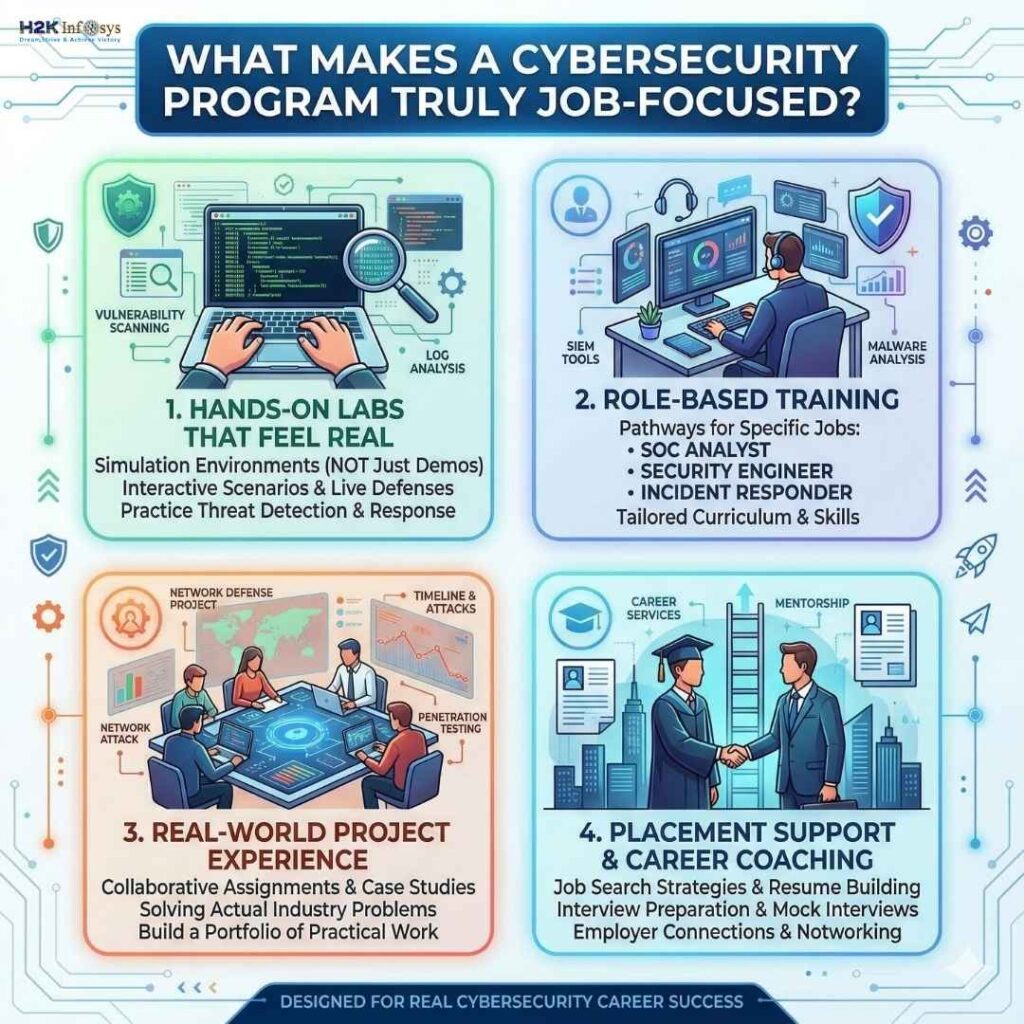
Not all training is built the same. Some look impressive on paper but don’t translate into real-world skills. The programs that stand out usually include:
1. Hands-on labs that feel real (not just demos)
You’re not just watching someone click through tools you’re actually doing things like:
- Investigating suspicious login attempts
- Analyzing logs from tools like Splunk
- Responding to simulated phishing attacks
Honestly, this is where most learners either “get it” or don’t.
2. Role-based training (SOC Analyst, Security Analyst, etc.)
Instead of broad theory, the training is structured around actual job roles. That means you’re learning exactly what a Level 1 SOC analyst does on a daily basis.
3. Real-world project experience
Some programs now include capstone projects or even mock “incident response scenarios.” These are gold when you’re interviewing because you can talk about what you’ve done, not just what you’ve studied.
4. Placement support or career coaching
This part gets overlooked, but it matters a lot. Resume help, mock interviews, and recruiter connections can make a huge difference in landing your first role in cyber security jobs with training.
Many find that job-focused cybersecurity programs in the USA offer a more comprehensive learning experience compared to traditional degrees.
After completing job-focused cybersecurity programs in the USA, students often feel more prepared for real-world challenges.
A quick reality check (based on what I’ve seen)
A friend of mine switched from a non-IT background last year. He tried a certification-only route first, CompTIA Security+, self-study, the usual path. It gave him knowledge, sure, but interviews didn’t go anywhere.
Later, he joined a more structured, job-oriented cybersecurity program in the usa with labs and mock SOC environments. Within a few months, he could confidently explain:
- How he investigated a brute-force attack
- How alerts are triaged
- How escalation works in real teams
That’s what finally clicked for employers.
Success in this field can often be attributed to participation in job-focused cybersecurity programs in the USA.
Employers appreciate candidates who have completed job-focused cybersecurity programs in the USA for their practical knowledge.
Programs that lean heavily toward job readiness
From what I’ve observed (and heard from learners), the most job-focused cybersecurity program in the USA tend to come from:
- Training providers that combine live instruction + lab environments
- Platforms offering “learn + practice + placement” models
- Programs that simulate enterprise tools instead of just teaching concepts
Some even go a step further and include niche tracks like cyber security sales training, which is interesting if you’re aiming for roles that blend technical knowledge with business development or client-facing security solutions.
That’s actually becoming more relevant now, especially with companies needing professionals who can explain security products, not just implement them.
Many successful professionals attribute their careers to job-focused cybersecurity programs in the USA.
Trends shaping job-focused cybersecurity training 2026
The best job-focused cybersecurity programs in the USA will evolve with industry trends.
A few things have changed recently, and they’re worth knowing if you’re choosing a cybersecurity program in the usa:
🔹 AI in cybersecurity training
Programs are starting to include AI-driven threat detection scenarios. Not super advanced yet, but definitely growing.
🔹 Cloud security is no longer optional
If a course doesn’t touch AWS or Azure security basics, it’s already behind.
🔹 Simulated work environments are becoming standard
The best training now feels like a “practice job,” not a classroom.
So, what should you actually look for?
If you’re serious about getting hired, don’t overcomplicate it. Just ask:
- Will I practice real cybersecurity program in the usa tasks regularly?
- Can I explain my experience in an interview without sounding theoretical?
- Does this program help me transition into actual cyber security jobs with training, not just certifications?
If the answer is yes, you’re probably on the right track.
Final thought
There’s no single “best” cybersecurity program in the USA for everyone. But the most job-focused ones all share the same DNA: hands-on work, real scenarios, and clear pathways to employment.
And if I had to put it simply
The right program doesn’t just teach you cybersecurity. It makes you feel like you’re already working on it.
Ultimately, job-focused cybersecurity programs in the USA are designed to meet the needs of the evolving job market.
FAQs:
Look for job-focused cybersecurity programs in the USA that offer internships or job placement assistance.
Choosing the right job-focused cybersecurity programs in the USA can significantly influence your career trajectory.
Consider enrolling in job-focused cybersecurity programs in the USA to enhance your skills and job prospects.
What makes a cybersecurity program job-focused?
A job-focused cybersecurity program includes practical training, hands-on labs, real-world projects, industry-relevant skills, certification preparation, resume support, mock interviews, and career guidance to help learners become job-ready.
How long does it take to complete a job-focused cybersecurity program?
The duration depends on the program structure. Most intensive cybersecurity training programs can take around 3 to 12 months to complete, depending on the learner’s background and learning pace
What jobs can I get after completing a cybersecurity program?
Graduates can apply for roles such as Security Analyst, SOC Analyst, Cybersecurity Specialist, Incident Response Analyst, Vulnerability Analyst, and Information Security Associate.
Do I need a technical background to join a cybersecurity program?
A technical background can be helpful, but many beginner-friendly cybersecurity programs teach foundational concepts first. Basic computer knowledge and willingness to learn are usually enough to start.
Are cybersecurity certifications important for getting hired in the USA?
Yes, certifications can strengthen a cybersecurity resume. Many employers value certifications because they demonstrate knowledge of security concepts and industry practices.