The most useful resume keywords for Data Analyst Applications are usually the same ones recruiters and ATS systems keep scanning for again and again SQL, Excel, Python, Power BI, Tableau, data visualization, business intelligence, and statistical analysis. If your experience genuinely matches these, then just weaving them in properly can make a noticeable difference in getting callbacks.
I’ve noticed something over time good candidates don’t always lose because they lack skills. Sometimes it’s just the resume language. Recruiters often skim a resume in seconds, and ATS tools basically “filter first, read later.” So if your wording doesn’t line up with what they’re searching for, your Data Analyst Applications can quietly slip through the cracks.
Why Resume Keywords Actually Matter in Data Analyst Applications
Most companies today receive hundreds (sometimes thousands) of resumes. Naturally, they lean on ATS software to shortlist people. These systems don’t “understand” your story the way a human would they just match keywords.
So if a job description mentions SQL, dashboard building, and data cleaning, and your resume reflects those exact phrases, your chances improve right away.
This is usually one of those early lessons people pick up during structured Data analytics training. It’s not just about learning tools it’s about learning how to present them in a way that actually helps your Data Analyst Applications get noticed.
Top Technical Keywords for Data Analyst Applications
These are the keywords that show up repeatedly in real job descriptions:
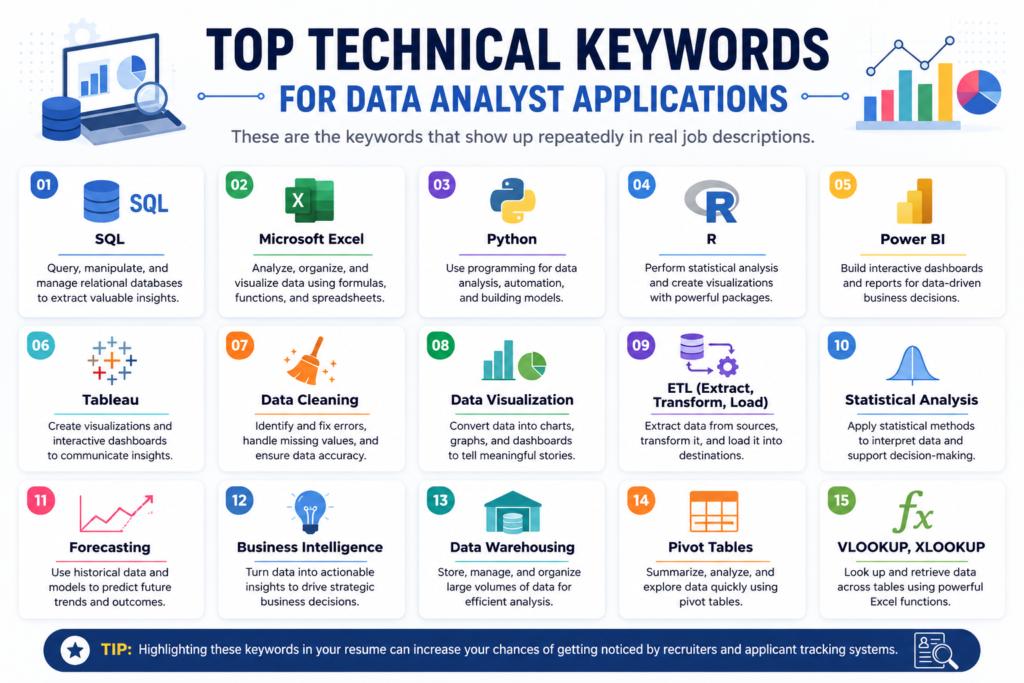
- SQL
- Microsoft Excel
- Python
- R
- Power BI
- Tableau
- Data Cleaning
- Data Visualization
- ETL (Extract, Transform, Load)
- Statistical Analysis
- Forecasting
- Business Intelligence
- Data Warehousing
- Pivot Tables
- VLOOKUP, XLOOKUP
One thing I’d say from observation don’t just list them randomly. They should feel “earned” through your projects or experience, otherwise it looks flat.
Business and Soft Skill Keywords for Data Analyst Applications
Technical skills alone don’t really complete the picture. Hiring managers also look for how you think and communicate inside Data Analyst Applications.
Some useful ones:
- Problem Solving
- Critical Thinking
- Data Interpretation
- Communication
- Reporting
- Stakeholder Management
- Decision Support
- Trend Analysis
- Requirements Gathering
Honestly, the strongest profiles usually balance both sides tools + thinking. That combination tends to stand out more than people expect.
Using Keywords Naturally in Data Analyst Applications
This is where many people go wrong they overload the skills section like a checklist.
Something like:
SQL, Python, Tableau, Excel
It’s there… but it doesn’t say much.
Now compare that with something more grounded:
Used SQL and Python to clean and analyze over 500,000 customer records and built Tableau dashboards that cut reporting time by 40%.
Same keywords. Very different impact. This version makes your Data Analyst Applications feel real, not just formatted.
Best Resume Sections for Data Analyst Applications
If you want keywords to actually work for you, placement matters more than people think.
Professional Summary – a short intro that naturally includes tools and experience
Skills Section – a clean list of relevant technical + business skills
Projects Section – where you show real problem-solving
Work Experience – achievements with numbers (this is big)
Certifications – especially something like an Online data analytics certificate
Example of an ATS-Friendly Summary
Here’s a simple version that tends to work well:
“Data Analyst with hands-on experience in SQL, Python, Excel, Power BI, and Tableau. Skilled in data cleaning, visualization, and business reporting. Completed an Online data analytics certificate and worked on real projects involving customer segmentation and sales forecasting.”
It’s straightforward, not overdone, and still keyword-rich enough for Data Analyst Applications.
How H2K Infosys Helps Strengthen Data Analyst Applications
H2K Infosys focuses on practical, job-oriented Data analytics training, and that’s where things start to feel more real for learners building their Data Analyst Applications.
Instead of just theory, students work on actual tools and scenarios like:
- SQL queries and database handling
- Excel reporting and advanced formulas
- Python for data analysis
- Power BI dashboards
- Tableau visualization projects
- Resume building and interview practice
Many also complete an Online data analytics certificate, which honestly helps a lot when you’re trying to make your Data Analyst Applications look more credible on paper.
Project Keywords That Add Weight to Data Analyst Applications
Projects are where resumes usually become convincing.
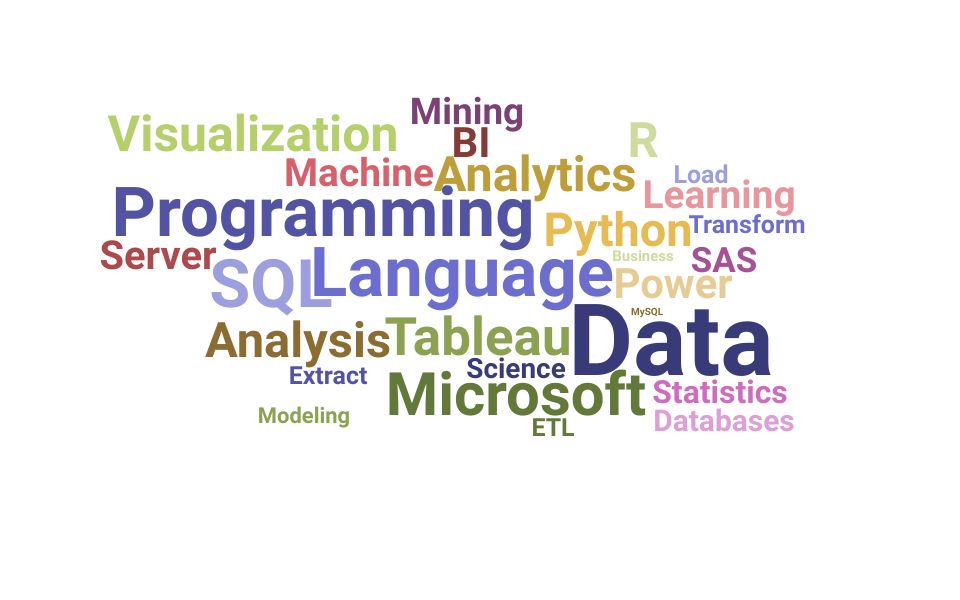
Some commonly valued ones:
- Sales Dashboard
- Customer Churn Analysis
- Financial Reporting
- Inventory Optimization
- KPI Tracking
- Marketing Analytics
- Predictive Modeling
These aren’t just fancy titles they signal real work behind your Data Analyst Applications, especially when backed with tools and outcomes.
Certification Keywords for Data Analyst Applications
Certifications still matter, especially if you’re early in your career or switching fields.
Useful ones include:
- Online data analytics certificate
- Data Analytics Certification
- Business Intelligence Training
- SQL Certification
- Power BI Certification
They won’t replace experience, but they definitely support your Data Analyst Applications when used correctly.
Common Mistakes in Data Analyst Applications
A few things that quietly hurt chances:
- Using vague terms like “computer skills”
- Ignoring the job description completely
- Listing tools without showing results
- Not including projects
- Skipping certifications altogether
Even something like an Online data analytics certificate can sometimes bridge that early experience gap in Data Analyst Applications.
Tailoring Data Analyst Applications for Each Role
One resume rarely fits everything. Slight adjustments actually matter more than people think.
Finance roles lean toward forecasting and variance analysis.
Marketing roles focus more on customer segmentation and campaign tracking.
Operations roles care about KPIs, reporting, and efficiency metrics.
When you tweak your keywords based on the role, your Data Analyst Applications just feel more relevant instantly.
Current Hiring Reality for Data Analyst Applications
Right now, in 2026, companies aren’t just looking for tool knowledge. They expect people to actually explain insights clearly sometimes to non-technical teams who don’t care how SQL works, just what the numbers mean.
That’s why structured Data analytics training is becoming more important. It’s not just about learning tools anymore it’s about building real projects that turn into stronger Data Analyst Applications.
Final Thoughts
At the end of the day, keywords do matter but only when they’re backed with real experience. SQL, Python, dashboards, certifications… they all help, but what really strengthens your Data Analyst Applications is how naturally you connect them to actual work.
If you’re learning through a practical Data analytics program like the one at H2K Infosys, the goal isn’t just to collect skills it’s to turn them into resumes that actually get noticed, not ignored.