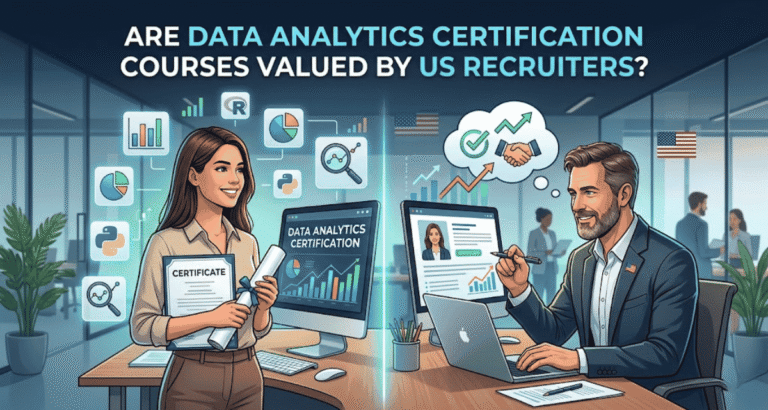
Before choosing data analytics certification courses, ask if US recruiters value them, include hands-on projects, and build in-demand skills.
I remember asking a hiring manager this exact question last year: “Do you even look at certifications?”
His answer was pretty blunt: “Only if the candidate can prove they learned something from it.”
That pretty much sums up how US recruiters see data analytics certification courses right now.
There’s definitely demand. Data roles are still growing, and companies are open to candidates from different backgrounds. But expectations have changed. It’s less about what you studied and more about what you can actually do.
Why Data Analytics Certification Courses Still Matter
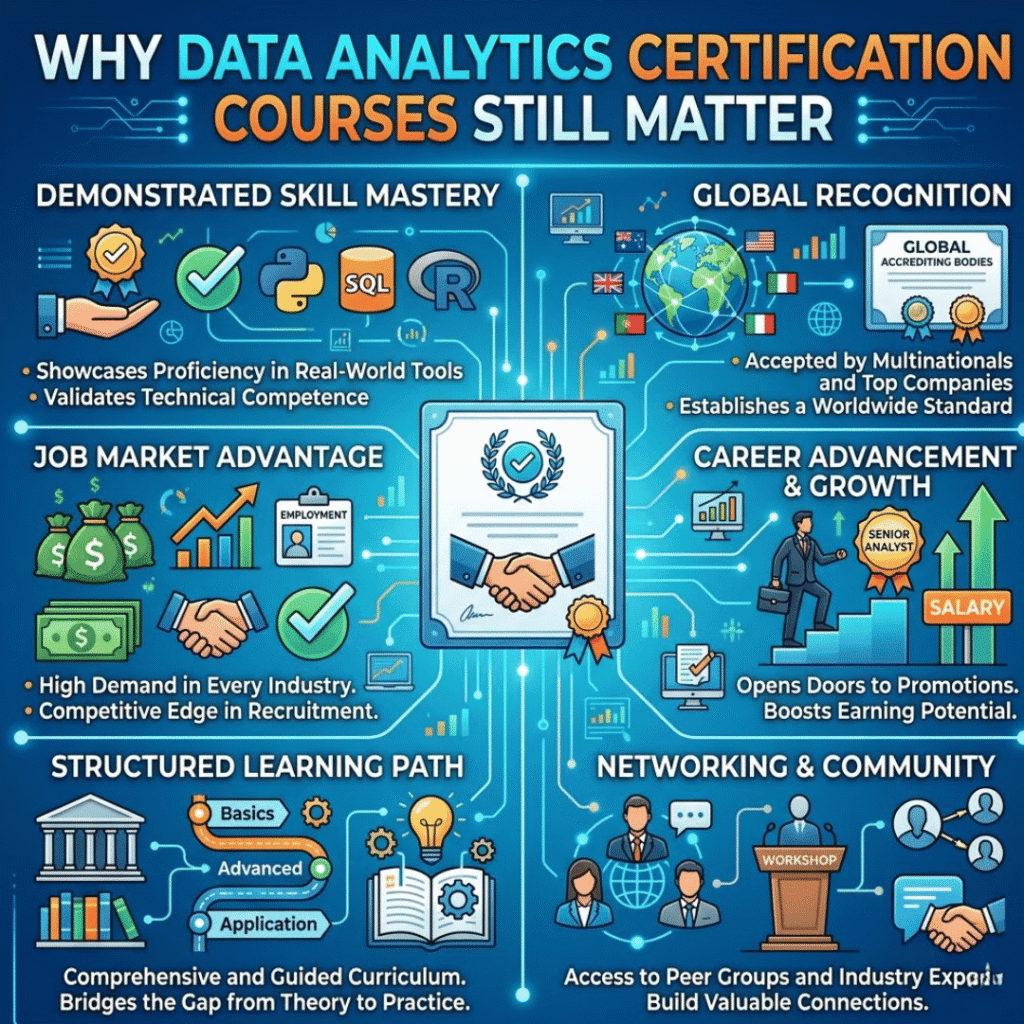
A good data analytics certification courses does help you get noticed especially if you’re switching careers.
Think about it from a recruiter’s side. They’re scanning hundreds of resumes. A certification signals:
- You’ve put in effort to learn the field
- You understand the basics of tools and workflows
- You’re serious about moving into data
But here’s the catch they won’t stop there. If you make it to the interview, they will dig deeper.
What Recruiters Actually Look For (Beyond the Certificate)
This is where a lot of people get it wrong.
They complete a course, add it to LinkedIn, and expect calls to start coming in. Usually… that doesn’t happen.
From what I’ve seen and honestly, from people I’ve helped, these things matter much more:
Real Projects
Not “practice exercises.” Actual projects.
For example:
- Analyzing sales data and finding trends
- Building a dashboard in Tableau or Power BI
- Cleaning messy datasets using Python
If you can explain your thinking behind a project, you’re already ahead of many candidates.
Strong Tool Knowledge
Most best courses on data analytics cover tools, but not all teach them deeply.
Right now, recruiters expect familiarity with:
- SQL (almost non-negotiable)
- Python
- Excel
- Visualization tools
Skipping SQL is one of the biggest mistakes I see beginners make.
Business Thinking
This part is underrated.
Companies don’t hire analysts just to create charts. They want insights answers to real questions.
Like:
- Why are sales dropping in one region?
- Which customers are most likely to churn?
Courses that include real-world scenarios make a big difference here.
A Real Scenario (What Works in Today’s Market)
Let’s say someone from a non-tech background maybe finance or marketing takes a Data Analytics Certification Courses.
If they:
- Build a few solid projects
- Show how they used data in their previous role
- Prepare well for interviews
They actually have a strong chance.
I’ve seen candidates like this get shortlisted faster than people with generic academic backgrounds but no practical exposure.
Are Data Analytics Certification Courses Enough on Their Own?
Not really.
They help you get your foot in the door, but they won’t carry you all the way.
To land a job, you’ll usually need:
- A small but solid portfolio
- Confidence in explaining your work
- Some interview preparation
This is where many people struggle they learn the content but don’t prepare for how hiring actually works.
Why Structured Training Makes a Difference
This is something I didn’t fully appreciate at first.
Self-paced courses are great, but they can feel scattered. You learn bits and pieces, but you’re not always sure if you’re job-ready.
That’s where programs like H2K Infosys come in.
They focus more on:
- Real-time projects
- Guided learning
- Interview preparation
- Understanding how the job actually works
And honestly, that last part knowing what to expect in interviews can save a lot of time and frustration.
If you’re serious about moving into this field, having that structure can really help.
Why So Many People Are Moving Into Data Analytics
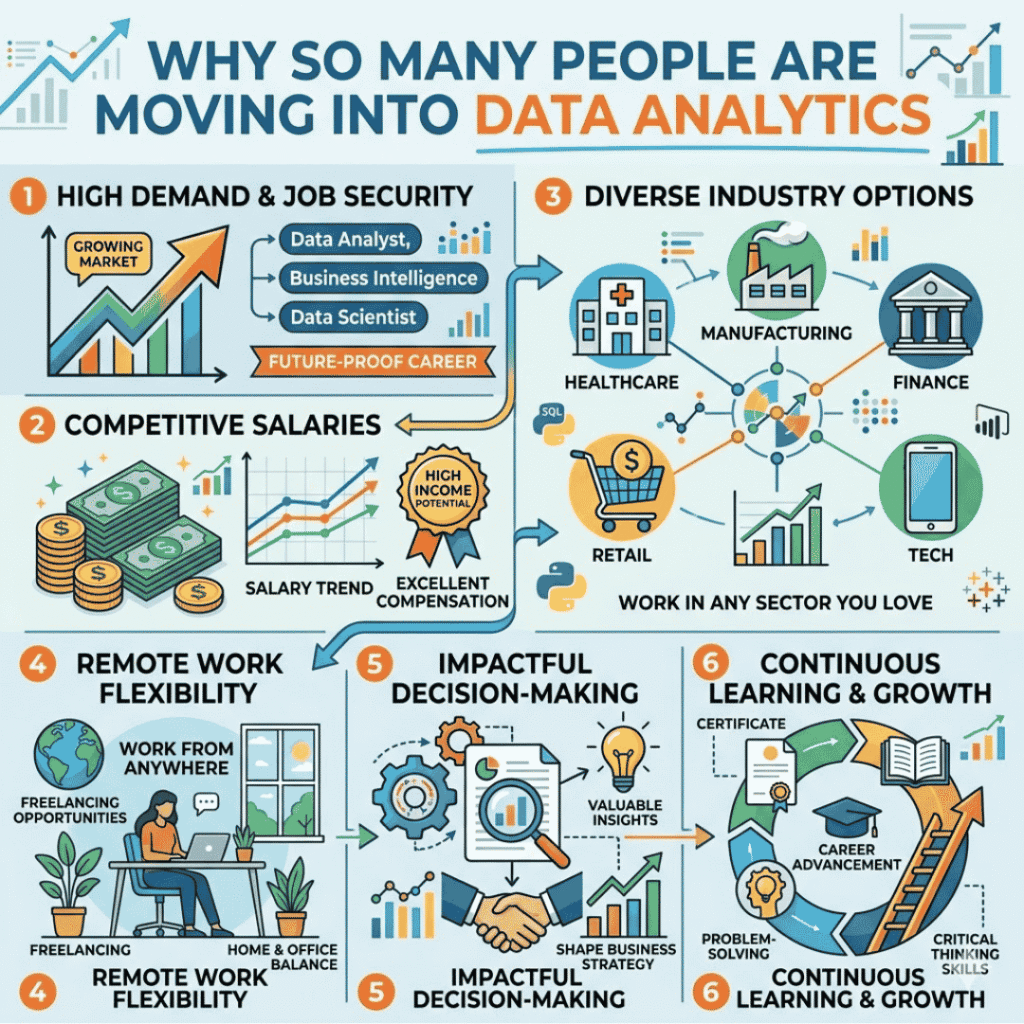
There’s a reason this field keeps growing.
- Companies rely heavily on data now
- Entry barriers are lower compared to some tech roles
- Salaries are solid, even at entry level
- Career growth is flexible
You can start as an analyst and later move into data science, business intelligence, or even AI-related roles.
Common Mistakes to Avoid
A few patterns I’ve noticed:
- Collecting multiple certificates without building anything
- Ignoring SQL (again, this one hurts your chances)
- Not practicing real interview questions
- Relying too much on theory
If you focus on skills instead of just completion, you’ll stand out naturally.
How to Choose the Right Course
Before picking from the data analytics certification courses, ask yourself:
- Will I build real projects?
- Is there guidance or just recorded content?
- Does it prepare me for interviews?
If a course doesn’t help you apply what you learn, it’s probably not enough.
Related Topics You Can Explore
If you’re planning this as a career path, these topics are worth looking into:
- How to create a strong data analytics portfolio
- Common SQL interview questions for analysts
- Data analyst vs data scientist what’s the difference
They all connect and help you build a complete profile.
FAQs
Do US recruiters trust online data analytics certificates?
Yes, but they care more about the skills and projects behind the certificate.
Can I switch careers using a data analytics certification?
Yes, many people do but you’ll need practical experience and preparation.
How long does it take to complete a certification?
Usually around 3 to 6 months, depending on how deeply you study.
Is SQL really that important?
Yes. It’s one of the most commonly used tools in data analyst roles.
Are structured programs better than self-learning?
They can be, especially if they include projects and interview prep.
Final Thoughts
So yes Data Analytics Certification Courses are valued in the US. But they’re not magic.
They work best when you treat them as a starting point, not the final goal.
If you’re going to invest time in data analytics certification courses, make sure you’re actually learning how to solve problems with data not just finishing lessons.
And if you want a clearer, more guided path, structured data analytics certification courses like H2K Infosys can make the whole process feel a lot more practical and less overwhelming.
At the end of the day, it’s simple:
skills get you hired not certificates alone