Yes, placement-focused cyber security courses improve hiring chances because they train students around real SOC workflows, hands-on tools, interview preparation, and employer expectations instead of only theoretical concepts. In today’s market, companies are hiring candidates who can actually investigate alerts, handle tickets, and work with SIEM platforms from day one, not just explain cyber security definitions in an interview.
I’ve noticed something interesting over the last year or two. Recruiters are no longer impressed by certificates alone. They want proof that a candidate has touched real tools, understands live attack scenarios, and can explain what they would do during an incident. That shift is exactly why cyber security training and job placement programs are becoming more valuable than traditional classroom-style courses.
And honestly, this makes sense. Security teams are under pressure. Organizations dealing with ransomware attacks, cloud breaches, and AI-driven phishing campaigns don’t have months to train fresh hires from scratch anymore.
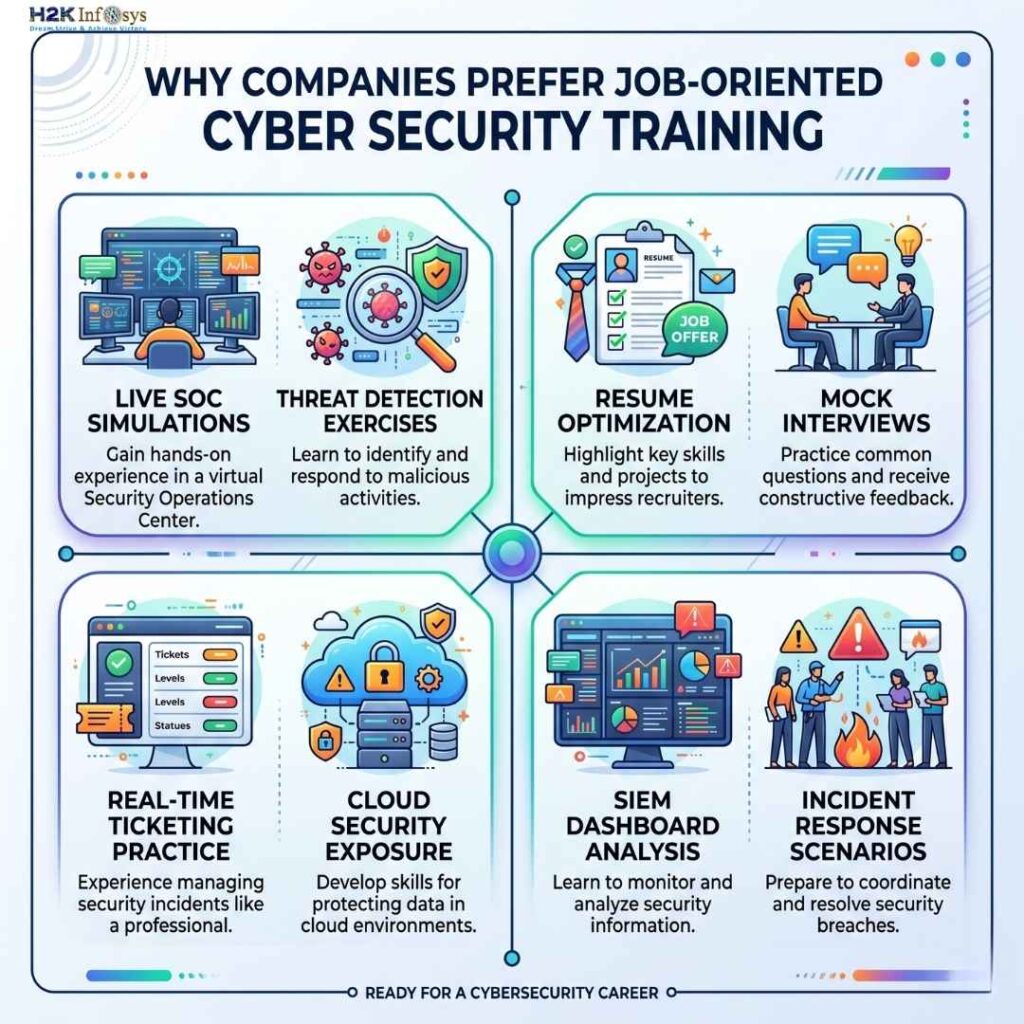
Why Companies Prefer Job-Oriented Cyber Security Training
A lot of beginners assume learning cyber security courses means watching videos and passing a certification exam. The reality inside most companies is very different.
Security operations centers (SOCs) move fast. Analysts monitor thousands of alerts daily. Teams use platforms like Splunk, Microsoft Sentinel, Wireshark, Nessus, ServiceNow, and CrowdStrike in real environments. Employers look for candidates who already understand these workflows.
That’s where cyber security training with job placement changes the equation.
Instead of focusing only on theory, placement-oriented programs usually include:
- Live SOC simulations
- Threat detection exercises
- Resume optimization
- Mock interviews
- Real-time ticketing practice
- Cloud security exposure
- SIEM dashboard analysis
- Incident response scenarios
I’ve spoken with hiring managers who openly say they shortlist practical learners faster than candidates with only academic knowledge. A student who can explain how they handled a phishing investigation during training often stands out immediately.
The Hiring Market Changed After AI-Driven Cyber Threats Increased
This is something many learners overlook.
Since generative AI tools became widely available, phishing emails, malware scripting, and social engineering attacks have become more sophisticated. Companies now need analysts who can respond quickly and think critically.
In 2025 and continuing into 2026, many organizations expanded their SOC teams because threat volumes increased dramatically. Businesses are especially looking for:
- Tier 1 SOC Analysts
- Vulnerability Analysts
- SIEM Analysts
- Incident Response Associates
- Cloud Security Support Analysts
That’s why cyber security jobs with training programs are seeing more attention from career switchers and IT beginners.
A few years ago, entry-level hiring was slower because employers expected experience. Now many companies prefer candidates from practical training environments because they adapt faster.
How Hands-On Labs Improve Interview Performance
One thing I’ve personally observed is that technical interviews have become scenario-based.
Interviewers don’t just ask:
“What is phishing?”
Instead, they ask:
“You receive multiple failed login alerts from different countries on a privileged account. What steps would you take?”
There’s a huge difference.
Students from practical cyber security training and job placement programs usually perform better because they’ve already seen similar cases during labs or simulated SOC exercises.
For example, during a mock SOC investigation, learners may need to:
- Analyze suspicious IP activity
- Review logs in Splunk
- Identify malware indicators
- Escalate incidents correctly
- Document findings in ServiceNow
That practical exposure builds confidence naturally. You can usually tell within five minutes of an interview whether someone has worked in labs or only memorized theory.
Why Placement Assistance Actually Matters
Some people underestimate placement support. They think training alone is enough.
It’s not always enough anymore.
The cyber security courses job market is competitive, especially for entry-level roles. Many applicants apply with identical certifications. Placement-focused institutes help bridge that gap by teaching students how hiring really works.
Good placement support typically includes:
- Resume tailoring for SOC roles
- LinkedIn profile optimization
- Mock HR interviews
- Technical interview preparation
- Referral guidance
- Employer networking sessions
- Real project discussions
I’ve seen candidates improve dramatically after just a few mock interviews. Sometimes the issue isn’t technical knowledge, it’s communication.
A student may know Splunk well but struggle to explain investigations clearly. Placement mentoring helps fix that.
How H2K Infosys Helps Learners Become Job-Ready
One reason many learners lean toward H2K Infosys is because the training structure feels aligned with actual workplace expectations instead of just certification preparation.
Their programs often focus heavily on:
- Real-time SOC workflows
- Practical SIEM usage
- Cloud and security monitoring
- Live instructor guidance
- Resume and placement preparation
- Hands-on assignments
- Realistic attack simulations
What stands out is the emphasis on “doing the work” rather than just consuming content.
That matters a lot.
Recruiters increasingly ask candidates to explain investigations, ticket escalation processes, and alert triaging experiences. Learners from structured cyber security training with job placement programs usually have stronger examples ready during interviews.
I’ve also noticed that students who practice with real enterprise tools tend to feel less overwhelmed once they join a company. The learning curve becomes manageable because the environment already feels familiar.
Real-World Example of Why Practical Experience Wins
A junior candidate I heard about recently had no previous cyber security courses job background. They came from a general IT support role.
What changed things for them?
They joined a placement-focused training program where they practiced:
- SIEM monitoring
- Threat analysis
- Log investigation
- Incident documentation
During interviews, instead of giving textbook answers, they discussed a simulated brute-force attack investigation they handled during training.
That practical explanation helped them land an entry-level SOC Analyst role faster than candidates with only theoretical certifications.
Honestly, employers remember practical stories. Not memorized definitions.
Modern Recruiters Want Proof, Not Just Passion
This is probably the biggest shift happening in cyber security courses hiring right now.
Five years ago, saying “I’m passionate about cyber security courses” carried some weight. Today recruiters want evidence behind that statement.
Can you:
- Investigate alerts?
- Work inside a SIEM?
- Analyze logs?
- Recognize attack indicators?
- Escalate incidents properly?
- Explain your thought process calmly?
That’s why structured cyber security jobs with training pathways are helping more beginners enter the field successfully.
The combination of technical labs, interview coaching, and placement support creates a much stronger hiring profile than theory-only learning.
Final Thoughts
Placement-focused cyber security courses improve hiring chances because they align training with what employers actually need today: practical security skills, investigation experience, communication ability, and job readiness.
The industry is moving quickly, especially with cloud adoption, AI-driven threats, and growing ransomware activity. Companies don’t just want learners who passed exams, they want professionals who can contribute from the first week.
Programs like H2K Infosys stand out because they combine technical depth with real placement preparation, which is exactly what many beginners struggle to find on their own. For learners serious about entering the field, that mix of hands-on practice and career support can make a very real difference in landing interviews and converting them into actual job offers.