Introduction
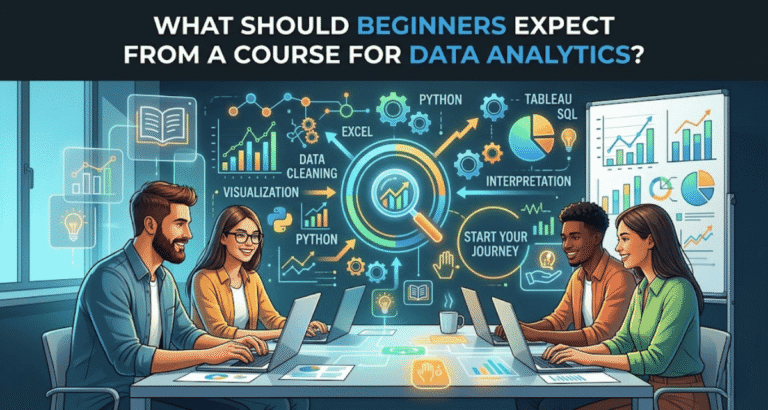
Starting a course for data analytics usually feels a little intimidating at first. Most beginners imagine endless coding, complicated math, and screens full of confusing charts. The reality is honestly much more practical. A good course teaches you how businesses use data to make decisions every single day, things like understanding customer behavior, tracking sales trends, or figuring out why a marketing campaign suddenly stopped working.
That’s why so many people are joining Course for Data Analytics right now. Companies in 2026 are hiring people who can actually understand data, not just stare at spreadsheets all day pretending to look busy. Big difference there.
The First Thing Beginners Usually Notice
Most students expect technical overload on day one.
Instead, many courses begin with simple things:
- understanding datasets
- learning how Excel is still everywhere
- spotting patterns in reports
- asking the right business questions
And weirdly enough, that last one matters a lot more than people think.
I remember talking to a junior analyst who said the hardest part of learning analytics wasn’t Python at all. It was learning how companies think. A dashboard means nothing if you can’t explain why sales dropped or why customers stopped returning.
That practical mindset is what separates useful training from random tutorial videos online.
What You Actually Learn in a Data Analytics Course
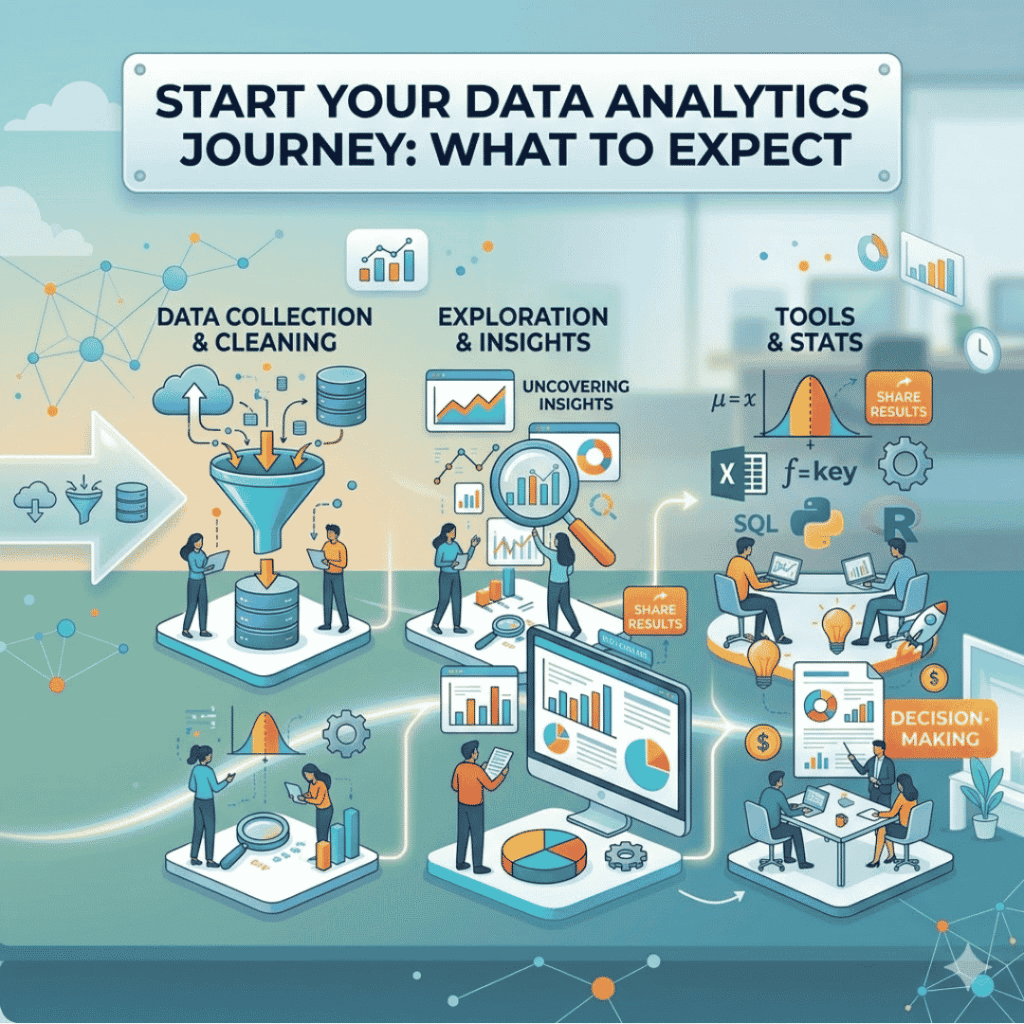
A beginner-friendly data analytics python course usually builds skills step by step instead of throwing advanced coding at you immediately.
Most programs cover:
Excel and Data Handling
This surprises people every year.
Even now, companies still use Excel heavily. Not because it’s flashy, but because it works. You’ll learn:
- sorting and filtering data
- formulas
- reporting basics
- cleaning messy information
And trust me, real-world data is messy. Missing values, duplicate rows, weird formatting… all normal.
SQL Basics
SQL is basically how analysts “talk” to databases.
At first, writing queries feels awkward. Then suddenly it clicks, and you realize you can pull insights from thousands, sometimes millions, of records in seconds.
That moment feels pretty satisfying, honestly.
Python for Analytics
A proper course for data analytics doesn’t expect beginners to become programmers overnight.
Python is mainly used for:
- automating repetitive tasks
- analyzing large datasets
- creating visual reports
- finding patterns faster
Libraries like Pandas and Matplotlib are still extremely common in 2026, even with AI-powered analytics tools becoming more popular.
And here’s something people don’t say enough: companies still value course for data analytics who understand the logic behind the tools. AI can speed things up, sure, but businesses still need humans who know whether the output actually makes sense.
Why course for data analytics Are So Popular Right Now
Part of it is flexibility, obviously.
People are switching careers while working full-time, managing families, or finishing degrees. Traditional classroom schedules just don’t fit many lives anymore.
But another reason is demand.
Healthcare companies use course for data analytics to predict patient trends. Retail businesses track buying patterns. Financial firms monitor fraud in real time. Even sports teams now rely heavily on performance analytics.
It’s honestly hard to find an industry untouched by data anymore.
That’s why structured course for data analytics have become more career-focused recently. Employers don’t just want theory. They want people who can work on actual business scenarios.
What Makes a Good Course Different
Not every course prepares beginners properly. Some spend too much time explaining concepts without showing how they apply in real work environments.
A strong Course for Data Analytics usually includes:
Real Projects
This matters more than certifications sometimes.
Projects help students experience:
- customer churn analysis
- sales forecasting
- marketing performance tracking
- business reporting
At organizations like H2K Infosys, project-based learning is often a major focus because recruiters increasingly ask candidates to demonstrate practical problem-solving skills during interviews.
Honestly, employers care less about “perfect scores” and more about whether you can handle real datasets without panicking.
Live Mentoring
Recorded videos can only help so much.
Beginners usually hit moments where they think:
“Wait… why did this query fail?”
or
“Why is my dashboard showing wrong numbers?”
That’s where mentor guidance becomes valuable.
Good instructors explain not just what to do, but why the course for data analytics approach problems a certain way.
Career Preparation
A lot of students overlook this part until interviews start.
Good programs typically help with:
- resumes
- LinkedIn profiles
- mock interviews
- portfolio building
- case study discussions
Because knowing SQL alone doesn’t automatically get someone hired.
Common Mistakes Beginners Make
This section’s important because almost everyone does at least one of these.
Trying to Learn Everything Immediately
People jump between:
- machine learning
- AI tools
- cloud platforms
- advanced statistics
- automation frameworks
…and end up completely overwhelmed.
Building fundamentals first usually works better.
Watching Without Practicing
Analytics is hands-on.
You can watch tutorials for weeks and still freeze when facing a real dataset.
Projects matter. Even small ones.
Ignoring Communication Skills
This one sneaks up on people.
Strong analysts explain findings clearly to non-technical teams. Sometimes that matters more than writing complex code.
What Career Opportunities Look Like
Entry-level opportunities continue growing across industries.
Common roles include:
- Data Analyst
- Business Analyst
- BI Analyst
- Reporting Analyst
- Junior Data Scientist
Salary ranges obviously vary by location and experience, but skilled analysts remain in high demand globally.
And remote opportunities? Those have expanded massively over the past few years.
Companies now hire analysts from different countries regularly, especially candidates with practical project experience.
Why Structured Training Helps Many Beginners
Self-learning works for disciplined people. No question.
But many beginners struggle because they don’t know:
- where to start
- what skills matter most
- which projects impress recruiters
- how interviews actually work
That structure matters more than people expect.
Training providers like H2K Infosys address this gap by combining technical learning with live projects and job-oriented preparation.
And honestly, having guidance can save months of confusion.
If you’re serious about entering course for data analytics rofessionally, structured learning usually speeds things up far more than random tutorials scattered across the internet.
Related Topics You Can Also Explore
If you want to go deeper into analytics, these topics connect naturally:
- “Best Python Projects for Beginner Data Analysts”
- “How to Build a Data Analytics Portfolio in 2026”
- “SQL vs Python: Which Skill Gets You Hired Faster?”
These subjects work well together as part of a broader course for data analytics learning path.
FAQs
Do beginners need coding experience before joining analytics classes?
No. Most beginner-friendly courses teach coding gradually and start with fundamentals first.
Is Python difficult for new learners?
For most people, Python feels easier than expected because the syntax is relatively beginner-friendly compared to many programming languages.
Are course for data analytics enough to get a job?
They can be especially when they include projects, mentoring, and interview preparation alongside technical training.
Which industries hire data analysts the most?
Healthcare, finance, retail, logistics, tech, and e-commerce companies are all hiring analysts heavily in 2026.
How long does it take to learn data analytics?
Many beginners become job-ready within 4–8 months, depending on consistency, practice, and project experience.
Final Thoughts
A course for data analytics isn’t really about memorizing tools. It’s more about learning how to think through problems, understand patterns, and make sense of information businesses already have but don’t fully understand yet.
That’s the interesting part of analytics, honestly. You’re helping companies make smarter decisions using data they’ve been sitting on the whole time.
The field keeps growing, the demand is still strong, and beginners now have far more accessible learning options than they did even a few years ago.
And if you want a more guided, career-focused path, programs from H2K Infosys are worth looking into because they combine practical training with real-world project exposure and job preparation.
The biggest thing is simply getting started and practicing consistently. Most course for data analytics improve by doing, not by waiting until they feel “fully ready.