Intoduction
They can, but not every course does it well.
Some beginner programs genuinely help people learn practical analytics skills they can use at work. Others mostly recycle theory, hand out Data Analytics Courses for Beginners, and leave students wondering why they still can’t handle a real dataset.
That’s the honest answer.
Right now, in 2026, companies hiring junior analysts care less about “course completion” and more about whether someone can actually work with data. Can you clean a spreadsheet? Write a SQL query without copying Stack Overflow every five minutes? Build a dashboard that makes sense to a manager who hates technical jargon?
That’s the real benchmark now.
What Beginners Usually Learn in a Data Analytics Course
Most beginner-friendly Data Analytics Courses for Beginners start with the basics before moving into tools businesses use daily.
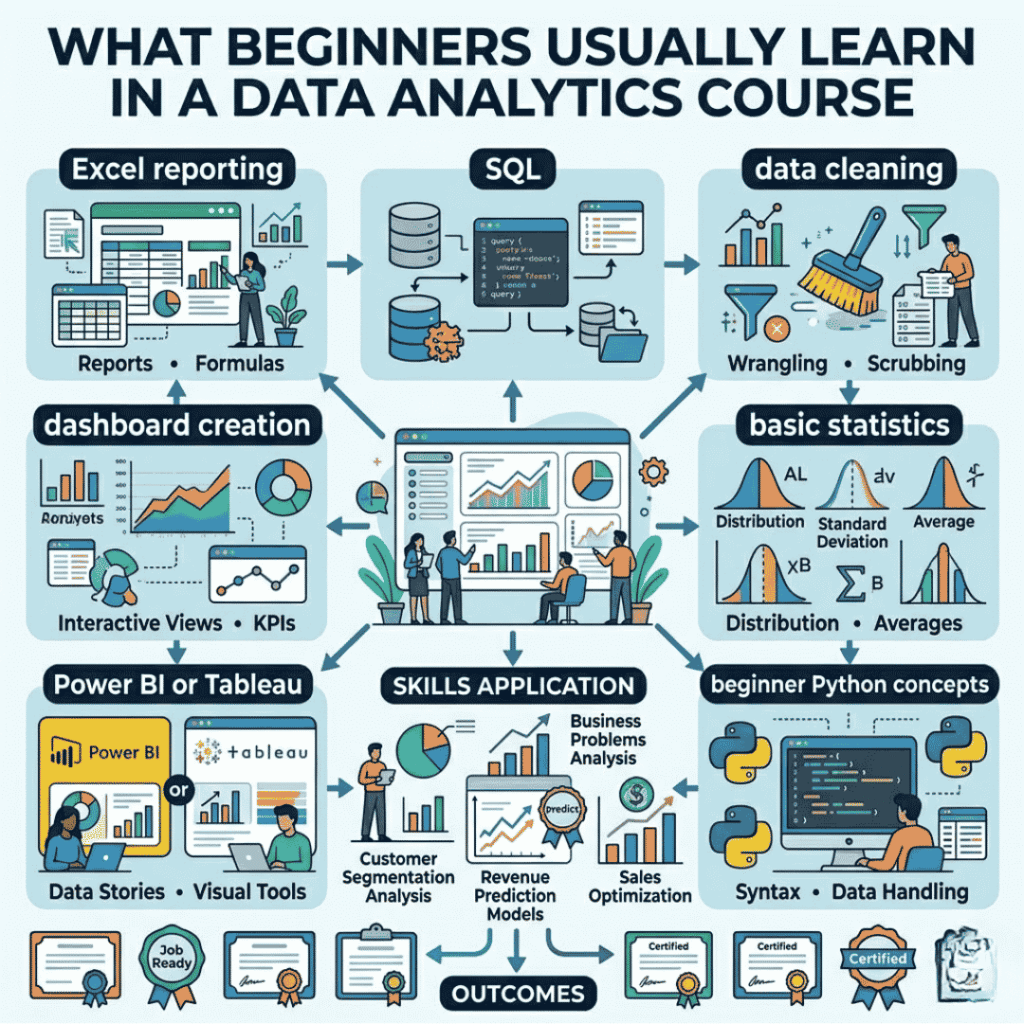
Typically, students learn:
- Excel reporting
- SQL
- data cleaning
- dashboard creation
- basic statistics
- Power BI or Tableau
- beginner Python concepts
A decent Data Analytics Courses for Beginners won’t just explain definitions. It should make you practice repeatedly until the workflow feels natural.
And honestly, repetition matters more than people think.
I’ve seen beginners watch 40 hours of tutorials and still freeze when someone asks them to filter data properly in SQL.
The Biggest Difference Between Good and Bad Courses
This part gets overlooked all the time.
Good Data Analytics Courses for Beginners focus on messy, imperfect, real-world situations.
Bad ones teach only polished examples where everything works perfectly.
Real company data is rarely clean.
Columns break. Reports don’t match. Duplicate entries appear for no reason. Someone from management changes requirements halfway through the project. That’s normal analytics work.
A lot of beginners get shocked by that because online ads make analytics look extremely smooth and glamorous.
It usually isn’t.
Sometimes you spend two hours figuring out why totals don’t match across spreadsheets.
Why So Many Working Professionals Are Switching Into Analytics
Part of it is salary growth, obviously.
But another reason is that analytics now exists in almost every industry.
Healthcare companies use analytics. Retail stores use it. Logistics firms, banks, insurance companies, e-commerce platforms all of them rely heavily on reporting and data interpretation now.
So people from non-technical backgrounds are realizing something important:
They already understand business problems.
Now they just need the analytics side.
That’s why Data Analytics Courses for Beginners programs have grown so quickly over the last few years.
A Real Example That Explains This Well
One person I talked to during an analytics webinar had worked in warehouse operations for nearly eight years.
No coding background at all.
At first, they struggled badly with SQL joins. Honestly, almost everyone does.
But they already understood inventory movement, shipping delays, and operational reporting because they’d been dealing with those problems daily at work.
After learning analytics tools through structured training, they started building inventory dashboards and automated reports.
That practical combination helped them move into an operations analyst role later.
That story is becoming really common now.
What Employers Actually Want From Beginner Analysts
This is where people sometimes misunderstand the industry.
Employers are not expecting entry-level analysts to be experts in artificial intelligence or advanced machine learning.
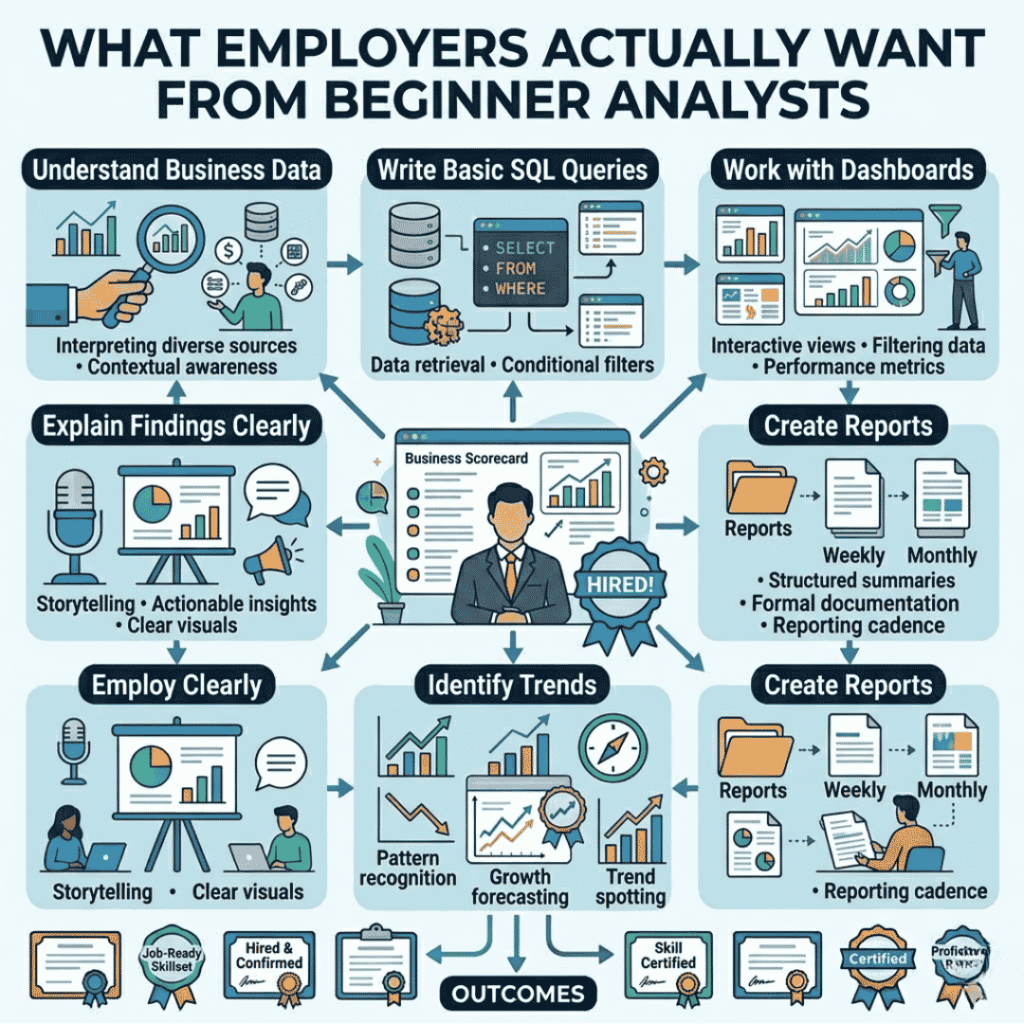
Most companies simply want someone who can:
- understand business data
- create reports
- identify trends
- explain findings clearly
- work with dashboards
- write basic SQL queries
Communication matters a lot too.
Some technically strong beginners still struggle during interviews because they can’t explain their thought process clearly.
A simple explanation usually beats complicated jargon.
The Skills That Matter Most Early On
SQL
Still extremely important.
Honestly, SQL scares beginners more than it should.
Once the logic clicks, it becomes much easier.
Excel
People joke about Excel, but companies still depend on it heavily.
Especially for operational reporting.
Power BI and Tableau
Visualization tools help transform raw information into dashboards people can actually understand.
Problem-Solving
This one doesn’t get enough attention.
Analytics is less about memorizing commands and more about figuring out why something happened inside the business.
The Truth About Online Learning
Some people learn incredibly well online.
Others struggle without structure.
That’s why guided programs tend to work better for many beginners. Especially professionals balancing jobs and family responsibilities.
A structured data analyst course online usually gives learners:
- projects
- deadlines
- mentor support
- interview preparation
- portfolio guidance
Without structure, people often jump randomly between YouTube tutorials and never feel confident enough to apply for jobs.
That happens more than course advertisements admit.
Why Hands-On Projects Matter So Much
Projects are where learning becomes real.
Not certificates.
A hiring manager will almost always care more about:
- dashboards you built
- reports you analyzed
- business problems you solved
than a generic completion badge.
Strong training providers like H2K Infosys usually include practical assignments because employers increasingly expect candidates to show applied experience during interviews.
That practical exposure helps beginners talk more confidently about their skills.
Common Beginner Mistakes
Trying to Learn Everything Too Fast
People jump into AI tools before learning spreadsheets properly.
That usually creates confusion.
Avoiding SQL Practice
Watching SQL tutorials is not the same as practicing SQL.
Unfortunately, there’s no shortcut here.
Ignoring Communication Skills
Analytics is business communication as much as technical work.
Comparing Yourself to Experts Online
This one frustrates beginners constantly.
Someone with ten years of experience makes dashboards look effortless. That doesn’t mean beginners are failing.
Is Data Analytics Still Worth Learning in 2026?
Yes.
Very much so.
Even with AI tools becoming more common, businesses still need people who can:
- validate data
- understand context
- explain trends
- interpret reports
- make decisions from numbers
AI can assist analysts.
It hasn’t replaced analytical thinking.
If anything, companies now expect analysts to work alongside AI tools while still understanding business logic themselves.
Quick Summary
- Good Data Analytics Courses for Beginners teach practical, job-related skills.
- Real learning comes from projects and hands-on work, not certificates alone.
- SQL, Excel, dashboards, and reporting remain core analytics skills.
- Beginners from non-technical backgrounds can absolutely move into analytics.
- Structured learning paths often help people stay focused and job-ready.
Related Topics You Can Explore
If you’re researching analytics careers, these topics are worth exploring too:
- “Best SQL Projects for Beginners”
- “How Long Does It Take to Become a Data Analyst?”
- “Power BI vs Tableau for Career Growth”
- “Can Non-IT Professionals Learn Data Analytics?”
- “What Does a Junior Data Analyst Actually Do?”
FAQs
Do Data Analytics Courses for Beginners really help people get jobs?
They can, especially when they include projects, mentorship, and interview preparation.
Is coding required for data analytics?
Not heavily at the beginning. Many entry-level analysts start with SQL, Excel, and visualization tools first.
What is the hardest part for beginners?
SQL and data cleaning are usually the biggest early challenges.
How long does it take to learn analytics skills?
Many people build entry-level skills within several months of consistent practice.
Are online analytics bootcamps worth it?
They can be valuable if the program focuses on practical projects instead of only theory.
Final Thoughts
A good analytics course should make you practice real business scenarios, not just memorize terminology.
That’s the difference.
The strongest Data Analytics Courses for Beginners help learners become comfortable working with messy datasets, dashboards, reporting workflows, and business questions that don’t always have perfect answers.
And honestly, that practical confidence matters much more than collecting certificates.
If you’re serious about building analytics skills that employers actually value, a structured and project-focused Data Analytics Courses for Beginners can make the learning process far more realistic and career-oriented.