For a lot of freshers, Data analytics training can make them reasonably job-ready within 4 to 8 months, especially if they spend time practicing instead of only binge-watching tutorials and taking notes. Consistent practice, even a little daily, honestly makes a bigger difference than most beginners expect.
A few years ago, people believed analytics careers were mostly for hardcore programmers or computer science graduates. That thinking is slowly disappearing now. Recruiters care far more about whether someone can understand data, build reports, explain patterns, and solve business problems in a practical way.
That shift, honestly, is one big reason structured Data analytics training programs are suddenly everywhere right now not just among freshers, but also career switchers and working professionals trying to stay relevant.
Why Data Analytics Careers Are Growing So Quickly in 2026
Pretty much every industry runs on data now. Retail brands study customer buying behavior, hospitals analyze treatment trends, fintech companies track fraud activity, and even sports organizations rely heavily on performance analytics.
If you look at hiring activity on LinkedIn or major job portals lately, entry-level analytics roles keep growing because businesses need people who can turn messy data into decisions that actually help operations.
What’s interesting is that many companies are quietly shifting toward skill-based hiring. Degrees still matter, sure, but practical ability matters more than it used to.
That’s exactly where a good Data Analytics course starts making a real difference.
Freshers who understand tools like:
- SQL
- Power BI
- Excel
- Tableau
- Basic Python
- Data visualization
usually stand out faster during interviews than candidates who only studied concepts academically.
And honestly, I’ve seen people from completely non-technical backgrounds land interviews after completing solid Data analytics training focused on reporting projects and dashboard work. Recruiters pay attention when someone can actually show what they built.
H2K Infosys and Practical Data Analytics Training
One challenge many freshers face is figuring out which training programs actually prepare them for real jobs instead of just throwing random concepts together.
That’s one reason H2K Infosys gets mentioned often among learners exploring analytics careers. Their training approach focuses a lot on real-time projects, business reporting situations, interview preparation, and practical assignments that resemble actual workplace tasks instead of textbook-only learning.
A structured Data Analytics course with guided mentorship can save beginners a lot of confusion. Otherwise, many learners spend months jumping between YouTube videos, trying to piece everything together themselves and that gets overwhelming pretty quickly.
What makes practical Data analytics training valuable isn’t just learning SQL syntax or dashboard creation. It’s understanding how companies actually use those skills in daily operations.
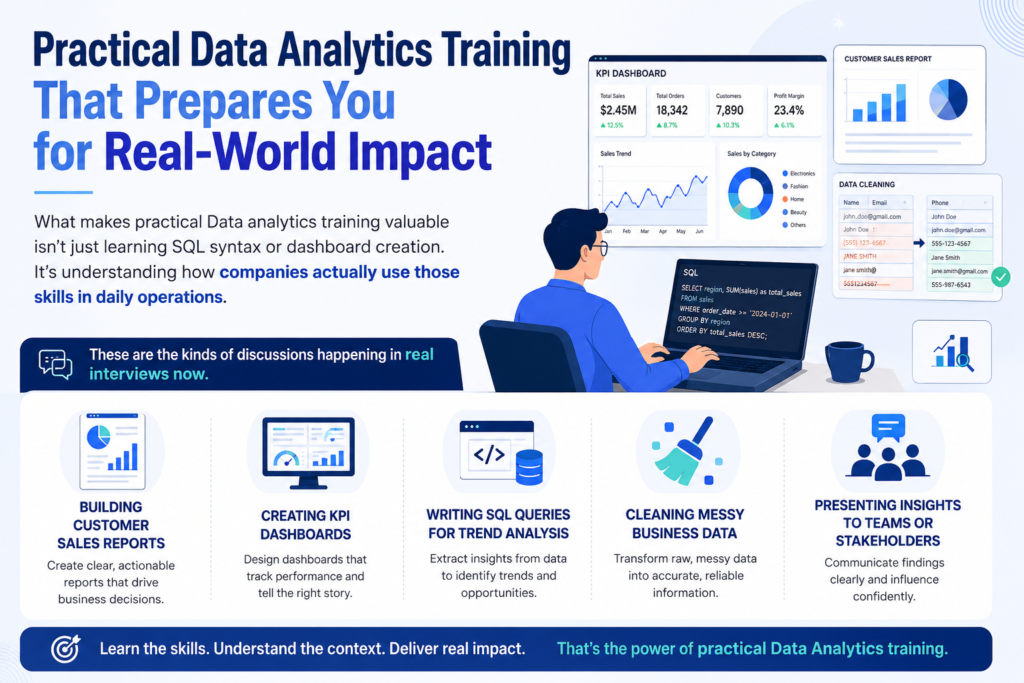
Things like:
- Building customer sales reports
- Creating KPI dashboards
- Writing SQL queries for trend analysis
- Cleaning messy business data
- Presenting insights to teams or stakeholders
These are the kinds of discussions happening in real interviews now.
How Long Does It Usually Take Freshers to Become Job-Ready?
The timeline obviously depends on effort and consistency, but many beginners who seriously follow structured Data analytics training become reasonably interview-ready within 5 to 8 months.
A rough learning path often looks something like this:
| Learning Area | Estimated Time |
|---|---|
| SQL & Excel Basics | 4–6 Weeks |
| Visualization Tools | 3–5 Weeks |
| Reporting & Projects | 4–6 Weeks |
| Resume + Interview Prep | 2–3 Weeks |
Still, speed is not really the main thing.
Some learners rush through a Data Analytics course, collect certificates, and then struggle badly during interviews because they skipped project practice. Others spend extra time building dashboards, practicing SQL queries, or improving case studies and those candidates usually sound far more confident when recruiters start asking practical questions.
Why Certifications Matter More Than People Realize
Hiring patterns have changed a lot recently.
Recruiters increasingly filter resumes based on practical skills, portfolio projects, and recognized certifications because companies want candidates who can contribute faster.
A solid Data Analytics certification shows that a fresher already understands analytics workflows and has at least worked with industry-standard tools.
No, certifications alone won’t magically guarantee a job. Most recruiters know the difference between real skills and memorized answers. But certifications absolutely improve visibility and credibility during shortlisting.
These days, hiring managers often ask questions like:
- Have you worked on real datasets?
- Can you write SQL joins confidently?
- Have you created dashboards for reporting?
- Can you explain business insights clearly?
A practical Data Analytics certification backed by hands-on project work helps candidates answer those questions naturally instead of sounding rehearsed.
How H2K Infosys Helps Freshers Build Real Experience
One issue with many online learning platforms is that they overload students with theory but barely explain how analytics works inside actual companies.
H2K Infosys takes a more practical route with Data analytics training by exposing learners to workflow-based assignments, mock interviews, reporting exercises, and business-oriented case studies.
That becomes especially useful for freshers who’ve never worked in a corporate environment before.
I remember reading feedback from one learner who mentioned that project-based practice helped them explain dashboard decisions confidently during interviews instead of repeating textbook definitions. Sounds small, maybe but recruiters notice that difference immediately.
At the end of the day, employers usually want problem-solvers, not people who only memorized terminology.
What Freshers Should Actually Focus on During Data Analytics Training
A good Data Analytics training should help freshers strengthen three main areas.

Technical Skills
This includes:
- SQL
- Excel
- Power BI
- Tableau
- Basic Python
- Data cleaning
Business Understanding
This part matters more than many beginners expect.
Companies want analysts who understand:
- customer behavior
- sales trends
- KPI reporting
- business performance metrics
Communication Skills
Honestly, this gets ignored way too often.
Even technically strong analysts struggle if they can’t explain insights clearly. During Data analytics training, practicing presentations, dashboard walkthroughs, and business explanations helps a lot during interviews.
Real Hiring Trends Freshers Should Pay Attention to in 2026
One noticeable trend right now is the rise of AI-assisted analytics tools. Companies increasingly automate repetitive reporting tasks, but human analysts are still needed to interpret data properly and make business recommendations.
That’s why recruiters are focusing more on:
- analytical thinking
- dashboard storytelling
- business interpretation
- decision-making ability
rather than just tool knowledge alone.
So yes, AI is changing analytics workflows. But freshers completing quality Data analytics training are still finding strong opportunities because organizations need people who can connect data with business decisions in a meaningful way.
Can Non-Technical Freshers Still Get Analytics Jobs?
Absolutely and honestly, this surprises a lot of people.
Freshers from commerce, economics, mathematics, business, and even non-IT backgrounds are successfully moving into analytics roles after completing practical Data analytics training.
The biggest difference usually comes down to project exposure.
Recruiters shortlist candidates much faster when they can demonstrate:
- dashboard projects
- SQL work
- reporting examples
- business case studies
- portfolio projects
A strong Data Analytics certification helps support those practical skills during the hiring process.
Final Thoughts
Getting hired after completing Data analytics training is no longer as slow or complicated as people assume especially for learners who focus seriously on projects, practical experience, and consistent skill-building.
Many freshers now start receiving interview calls within months because companies increasingly value hands-on analytics ability over traditional academic backgrounds alone.
A structured Data Analytics course, combined with real-world project practice, interview preparation, and industry-focused guidance from providers like H2K Infosys, can genuinely improve job readiness in today’s competitive market.
And honestly, one thing becomes obvious after talking to recruiters for a while: people who practice analytics regularly almost always stand out faster than people who only study theory.