If you are taking a course in Data Analytics, the most valuable projects are those that solve real world business problems. Employers want more than certifications, they want proof you can work with data, find insights and communicate findings that help organisations make better decisions.
I’ve spoken to lots of people in analytics and there’s one theme that keeps recurring. Portfolios are more impressive to hiring managers than certificates of course completion. A successful project speaks volumes about your skill set, more than a laundry list of technical skills on a resume.
That is why picking the right projects in your learning journey can make a huge difference for your future opportunities.
Why Projects Are Important In Data Analytics?
The need for Data Analytics professionals continues to rise across industries. Today companies generate massive amounts of data and are always looking for those who can translate that data into actionable insights.
Healthcare providers analyse patient trends. Retailers track customer behaviour. Financial institutions measure risk and performance. Analytics are used, in one form or another, by almost every industry.
The problem is that many candidates applying for entry-level jobs have done similar Data analytics training programs. Projects make you stand out.
A strong portfolio demonstrates that you are able to:
- Organise and clean raw data
- Write SQL queries effectively
- Create dashboards and reports
- Identify trends and patterns
- Make business recommendations
- Share the results with the stakeholders
They are not just academic exercises. These are the daily tasks performed by an analyst.
The Sales Performance Analysis Project
If you’re new to the field, a sales analytics project is one of the best places to start.
Sales data is relatively easy to understand but also presents many opportunities for meaningful analysis. Students might consider questions like:
- Which products are the most profitable?
- What are the seasonal patterns?
- Which regions are doing best?
- How do customer purchasing patterns differ?
With tools like Excel, SQL, Power BI or Tableau, you can turn large datasets into reports that deliver real business value.
Sales analysis is something that organisations regularly use to guide decision-making so many hiring managers are immediately able to see its relevance.
Analysis of Customer Segmentation
One of the most practical projects in Data Analytics is customer segmentation.
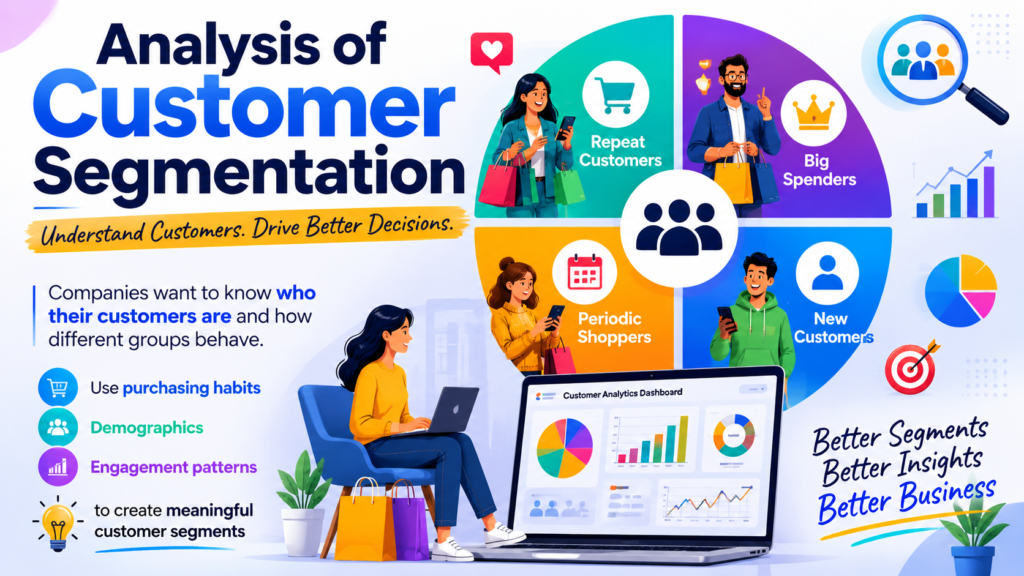
Companies want to know who their customers are, they want to know how different groups behave. Students will learn how to use purchasing habits, demographics and engagement patterns to create meaningful customer segments.
For example, a retail company can identify:
- Repeat customers who are loyal
- Big spenders
- Periodic shoppers
- New customers
This project helps students understand how data drives marketing, customer retention, and revenue growth.
A lot of students who take Data Analyst online classes are interested in projects related to customer segmentation, as this brings the technical analysis to life with real business results.
Dashboard Development Project
If you’ve spent any time looking at analytics job postings, then you’ve probably noticed dashboard skills are listed in the requirements quite often.
The company uses a dashboard to get a quick look at the most important metrics and make informed decisions.
A dashboard project could look at:
- Sales performance
- Customer metrics
- Financial Statements
- Results of marketing campaign
- Efficiency of supply chain
Interactive dashboards are a way to teach students how to present information in a clear way. Because data is only useful if it is understood by those who make decisions.
I’ve found that a well-designed dashboard project often ends up being one of the strongest pieces in an analytics portfolio.
Business Reporting Project – SQL Based
SQL is still one of the most critical technical skills to have in Data Analytics.
Even today, businesses rely heavily on databases with modern visualisation tools and automation platforms. This is why SQL projects still carry a lot of weight in interviews.
A reporting project can include:
- Information Retrieval in Databases
- Creation of monthly business reports
- Joins and subqueries in writing
- Aggregate functions
- Automating the report process
Recruiters will ask you about SQL experience a lot because it’s such a core skill for analysts.
Completing a SQL-focused project for a Data Analytics course demonstrates both technical knowledge and practical use.
Forecasting and Predictive Analytics Project
Predictive analytics projects have become more valuable as organisations begin to focus more on future planning.
Students may examine historical data to predict:
- Future sales results
- Stock needs
- Client attrition
- Revenue growth patterns
Your analytical thinking and understanding of business planning are demonstrated through simple forecasting models alone.
In 2026, as artificial intelligence and predictive technologies become more integrated with business operations, students can use forecasting projects to align their skills with current industry needs.
Social Media Analytics Initiative
Social media platforms generate vast amounts of data every day.
For example, businesses want to know how audiences react to content, which campaigns are most effective, and how customers view their brands.
Examples of social media analytics projects include:
- Engagement analysis
- Tracking audience growth
- Evaluating campaign performance
- Sentiment analysis
These are great projects for students who want to work in marketing analytics.
I’ve seen entry level candidates get noticed by recruiters simply because they demonstrated how social media metrics could be translated into meaningful business recommendations.
Healthcare Data Analysis Project
Health care is still one of the fastest-growing fields for data analytics.
Hospitals, clinics and healthcare organisations depend on data to enhance patient care while staying operationally efficient.
Students can investigate datasets on:
- Admissions of patients
- Schedule appointments
- Resource distribution
- Hospital performance measures
Healthcare analytics projects demonstrate to prospective employers your ability to apply analytical thinking to real-world problems that have impact beyond the bottom line.
Financial Analytics Project
Financial datasets offer excellent opportunities to build advanced analytics skills.
Examples of projects are:
- Budgetary analysis
- Track expenses
- Investment performance measurement
- Assessment of risk
- Revenue outlook
Financial analytics projects are highly respected and make a great addition to a portfolio, as they require attention to detail and good problem-solving abilities.
How H2K Infosys Gives Students Chances To Get Hands-On Analytics Experience?
A common challenge for students is understanding what projects employers actually care about.
This is where H2K Infosys has grabbed the attention of aspiring analytics professionals. The training method is based on practical learning, with hands-on projects and real-world business scenarios, not just theory.
Students are introduced to tools used in industry including:
- SQL
- Excel
- Power BI
- Python
- Visualisation and reporting platforms
Through project-based exercises, students learn these tools, which helps bridge the gap between classroom concepts and workplace expectations.
If you are looking for online classes to become a Data analyst, hands-on project experience is often cited as one of the most important factors to consider when choosing a training program.
The Significance of Project-Based Learning

A portfolio should demonstrate more than technical knowledge. The problem-solving process, analysis of information, and communication skills are all demonstrated in this.
Project-based learning helps students build:
- Analytical reasoning
- Ability to tell a story through data
- Dashboard design expertise
- Reporting functions
- Business problem solving skills
Employers tend to care less about whether a candidate memorised a concept and more about whether they can apply that concept in a practical situation.
That’s why meaningful projects tend to be the centrepiece of successful analytics portfolios.
Creating a Well-Rounded Data Analytics Portfolio
Some students make the mistake of only doing one kind of project.
A better strategy is to build a portfolio that showcases a range of skills.
An effective portfolio may contain:
- Sales Analysis Project
- SQL Reporting Project
- Dashboard Development Project
- Customer Segmentation Project
- Forecasting Project
- Social Media Analytics Project
The combination shows technical expertise, business knowledge and the ability to work with different datasets.
Conclusion
The best projects for students in a Data Analytics course are those that are similar to real-world business problems and give them a chance to use their analytical skills in a practical setting. Sales analysis, customer segmentation, SQL based reporting, dashboard building, forecasting, healthcare analytics, financial analytics projects all add up to a stronger portfolio.
As the competition for analytics jobs continues to heat up, hands-on experience can be the difference maker between one candidate and the next.