Introduction: Why Advanced Python Skills Matter More Than Ever
Python has always been celebrated for its simplicity, readability, and powerful ecosystem. But in 2025, the language is more influential than ever with explosive growth in AI, automation, data engineering, cybersecurity, cloud DevOps, and full-stack development. As Python evolves, so does the expectation from developers: you must understand advanced features, write optimized code, leverage modern libraries, and adopt new smart programming techniques to stay ahead. Whether you’re preparing for real-world project work or aiming to strengthen your credentials through the Best Python Certification, mastering these advanced skills will put you way ahead in the competitive tech landscape.
This covers the most advanced, practical, future-ready Python tricks every developer should master in 202including performance hacks, Python 3.13 enhancements, asynchronous mastery, AI automation shortcuts, memory-efficient patterns, and more.
Let’s dive deep.
1. Mastering Python 3.13 & CPython Speed Improvements
Python 3.13 introduces huge speed gains thanks to the no-GIL (Global Interpreter Lock) preview, interpreter specialization, and performance enhancements across the runtime.
Why it matters
- Faster execution for data-heavy workloads
- Better concurrency
- Improved multithreading for I/O and CPU tasks
- Reduced latency for API and microservices
Pro Trick: Benchmark Your Code with time.perf_counter()
import time

start = time.perf_counter()
# your code here
end = time.perf_counter()

print(f"Execution Time: {end - start:.5f} seconds")
Understanding performance at this granularity is essential in 2025.
2. Using Structural Pattern Matching Like a Pro
Introduced in Python 3.10, match-case has now become one of the most powerful tools in modern applications.
Real-world advanced usage
def handle_event(event):
    match event:
        case {"type": "login", "user": user, "ip": ip}:
            print(f"Login by {user} from {ip}")
        case {"type": "purchase", "user": user, "amount": amount} if amount > 500:
            print(f"High-value purchase by {user}")
        case {"type": "logout", "user": user}:
            print(f"{user} logged out")
        case _:
            print("Unknown event")
Why developers love it
- Cleaner business logic
- Faster condition evaluation
- Removes deep nesting in code
3. AsyncIO + Task Groups = Next-Level Concurrency
Python’s modern async model is now heavily used in AI-driven agents, microservices, web scrapers, and data pipelines.
Advanced Example: Parallel API Calls
import asyncio
import httpx

async def fetch(url):
    async with httpx.AsyncClient() as client:
        r = await client.get(url)
        return r.json()

async def main():
    urls = ["https://api1.com", "https://api2.com", "https://api3.com"]
    tasks = [fetch(url) for url in urls]

    results = await asyncio.gather(*tasks)
    print(results)

asyncio.run(main())
What makes this advanced?
- Uses non-blocking I/O
- Achieves massive speedup
- Ideal for large integrations and AI/ML inference pipelines
4. Type Hints, TypedDict & Protocols for Clean Architecture
Static typing is now standard for large Python systems.

Advanced TypedDict Example
from typing import TypedDict

class User(TypedDict):
    id: int
    name: str
    email: str
    is_active: bool
Protocols for Interface Contracts
from typing import Protocol

class Notifier(Protocol):
    def send(self, message: str) -> bool:
        ...

class EmailNotifier:
    def send(self, message: str) -> bool:
        print("Email:", message)
        return True
Why typing matters in 2025
- Better collaboration
- Fewer runtime bugs
- Cleaner large-scale codebases
- Faster development with AI code assistants
5. Memory-Efficient Generators for Big Data & AI Pipelines
Generators allow processing gigabytes of data without crashing the system.
Advanced Generator: Lazy Loading Large Datasets
def stream_file(path):
    with open(path, "r") as f:
        for line in f:
            yield line.strip()
Use cases in 2025
- AI training data
- Log processing
- Real-time streaming
- Sensor data pipelines
6. Leveraging functools for High-Level Functional Programming
Functional tricks can simplify complex code dramatically.

memoization with lru_cache()
from functools import lru_cache

@lru_cache(maxsize=None)
def fibonacci(n):
    if n < 2:
        return n
    return fibonacci(n-1) + fibonacci(n-2)
Why this trick rocks
- Massive performance boost
- Used in: ML preprocessing, recursive workloads, inference caching
7. Context Managers Beyond with open()
Custom context managers help clean up resources without errors.
Advanced Example
from contextlib import contextmanager

@contextmanager
def timer(name):
    import time
    start = time.time()
    yield
    print(f"{name} took {time.time() - start} seconds")
8. Decorators that Add Real Power
Decorators are essential for logging, validation, caching, authorization, and more.
Advanced decorator with arguments
def authorize(role):
    def wrapper(func):
        def inner(*args, **kwargs):
            user_role = kwargs.get("role")
            if user_role != role:
                raise PermissionError("Unauthorized")
            return func(*args, **kwargs)
        return inner
    return wrapper

@authorize("admin")
def delete_user(user_id, role="guest"):
    print(f"User {user_id} deleted.")
9. Using dataclasses Like a Senior Developer
Dataclasses clean up class boilerplate.
Advanced dataclass features
from dataclasses import dataclass, field
from typing import List

@dataclass(order=True)
class Product:
    sort_index: float = field(init=False, repr=False)
    name: str
    price: float
    tags: List[str]

    def __post_init__(self):
        self.sort_index = self.price
10. Multiprocessing for Heavy CPU Tasks
In 2025, multiprocessing is essential for AI, ML, and analytics workloads.
Example: Parallel CPU Computations
from multiprocessing import Pool

def square(n):
    return n*n

with Pool() as p:
    results = p.map(square, range(1_000_000))
11. Walrus Operator for Cleaner, Faster Code
The walrus operator := avoids duplicate evaluation.

while (data := input("Enter > ")).lower() != "quit":
    print("You typed:", data)
Use cases
- Stream processing
- Real-time logs
- Data extraction loops
12. Smart List Comprehensions (Advanced Patterns)
Nested comprehension with filtering
matrix = [[j for j in range(5)] for i in range(5)]
Flattening a list of lists
flat = [x for row in matrix for x in row]
13. Lambda Expressions with Sorting and Transformations
data = [{"name": "A", "age": 23}, {"name": "B", "age": 19}]
data.sort(key=lambda x: x["age"])
Used in
- Pandas pipelines
- API sorting
- Data analysis applications
14. Using pathlib for Clean, Modern File Handling
from pathlib import Path

log_file = Path("logs/app.log")
if log_file.exists():
    print(log_file.read_text())
15. Smarter Error Handling with Exception Groups (Python 3.11+)
Python 3.11 introduced one of the most powerful enhancements to error handling: Exception Groups and the new except* syntax. This update solves a long-standing limitation in Python handling multiple unrelated exceptions that occur simultaneously, especially in concurrent or parallel tasks.
Traditionally, an exception block could only catch one error type at a time. But modern applications often execute multiple coroutines or threads where several exceptions may be raised together. This is where ExceptionGroup becomes extremely useful.
With an Exception Group, Python can package multiple exceptions into a single error object. This allows developers to handle them individually, selectively, or collectively, improving robustness and clarity in concurrent programs.
async def task1():
    raise ValueError("Invalid input")

async def task2():
    raise TypeError("Wrong type")

try:
    await asyncio.gather(task1(), task2())
except* ValueError as e:
    print("Handled ValueError:", e)
except* TypeError as e:
    print("Handled TypeError:", e)
In this example, both exceptions raised inside asyncio.gather() are caught separately using the new except* syntax—something impossible before Python 3.11.
Why it matters:
Exception Groups make error handling more predictable in async code, event-driven systems, distributed services, and complex workflows. They improve debugging, code readability, and fault tolerance by giving developers more granular control over simultaneous failures
16. Advanced Logging for Enterprise Python
import logging

logging.basicConfig(
    level=logging.INFO,
    filename="app.log",
    format="%(asctime)s - %(levelname)s - %(message)s"
)
17. Using __slots__ for Memory Optimization
class User:
    __slots__ = ("name", "email")
    def __init__(self, name, email):
        self.name = name
        self.email = email
Benefits
- Memory savings
- Faster object creation
18. AI Coding Integration With Python Tools
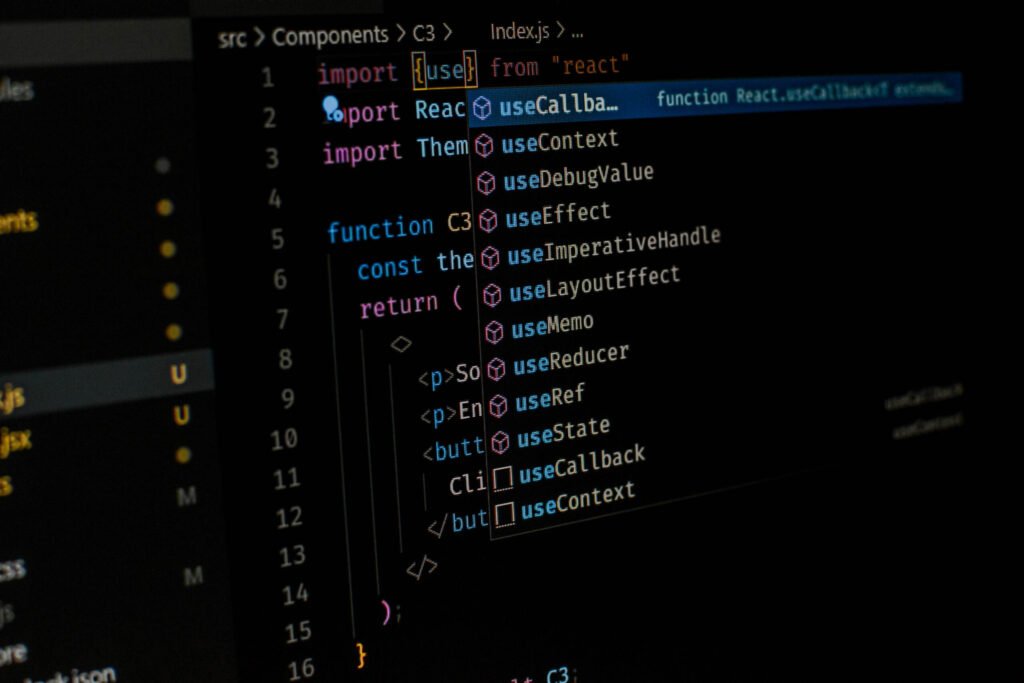
In 2025:
- AI agents generate tests
- AI suggests optimizations
- AI performs code refactoring
- AI integrates Python code into pipelines
- Auto-documentation with AI
Modern Python developers must use AI-enhanced workflows.
19. Modern Testing Frameworks: pytest + Hypothesis
Hypothesis Example
from hypothesis import given, strategies as st

@given(st.integers(), st.integers())
def test_add(a, b):
    assert a + b == b + a
Why it’s advanced
- Auto-generates smart test cases
- Eliminates human oversight
- Finds edge cases instantly
20. Using Virtual Environments & Poetry for Dependency Management
Poetry Simplifies Everything
poetry new project
poetry add requests
poetry run python app.py
2025 projects must be:
- Modular
- Dependency-safe
- Version-controlled
21. Python in Cloud & DevOps Workflows
Advanced tricks:
- Using Python for serverless AWS Lambda
- Writing IaC scripts
- Using Python CLIs for cloud automation
- Managing Kubernetes via Python APIs
Python is now a DevOps super-tool.
22. Optimizing Python with Cython & PyPy
Large AI/ML pipelines greatly benefit from:
- Cython acceleration
- PyPy JIT optimizations
- Compiled extensions for bottlenecks
23. Metaprogramming: Writing Python That Writes Python
Dynamic class creation
User = type("User", (), {"name": "Guest"})
Metaclass usage
Used in frameworks like Django & SQLAlchemy.
24. Database Tricks Developers Ignore
Async database queries
import asyncpg
result = await asyncpg.connect(...).fetch("SELECT * FROM users")
ORM-level performance profiling
Modern apps rely heavily on these optimizations.
25. Final Trick: Clean Architecture + Python = 2025 Power Combo
Advanced developers use:
- Domain-driven design
- Service-based modules
- Strong typing
- Async services
- AI automation
- Optimized performance techniques
Combining these gives you unmatched productivity.
Conclusion
Python continues to dominate software development in 2025 but the developers who truly stand out are those who go beyond syntax and master advanced patterns, async techniques, optimization tricks, metaprogramming, and AI-integrated workflows. As more professionals upskill through programs like Python Online Course Certification, the demand for deeper, more advanced Python capabilities grows, making these high-level skills essential for staying competitive in a rapidly evolving tech world.
By learning and applying these advanced Python tricks, you position yourself as a high-value developer ready for the next decade of innovation.