Yes, you absolutely can get job placement assistance after online cyber security training. In fact, many learners today choose online programs specifically because they combine technical training with career support such as resume preparation, interview coaching, live project experience, and employer connections. The important thing isn’t whether the training is online or offline anymore. What really matters is whether the program is designed to help you move from learning to actually getting hired.
A few years ago, online learning had this reputation of being “watch videos and figure the rest out yourself.” Cyber security training hiring has changed that picture quite a bit. Employers now care more about skills, labs, practical exposure, and whether you can solve real security problems than whether you sat inside a physical classroom.
I’ve seen people switch from completely unrelated backgrounds banking, customer support, healthcare administration, even retail into security roles after structured online training. Interestingly, this is also why training providers such as H2K Infosys and similar career-focused programs have been emphasizing practical labs, project-based learning, and placement preparation rather than only recorded lessons. One thing that keeps showing up, though, is that the people who move faster usually have some form of placement support attached to their learning.
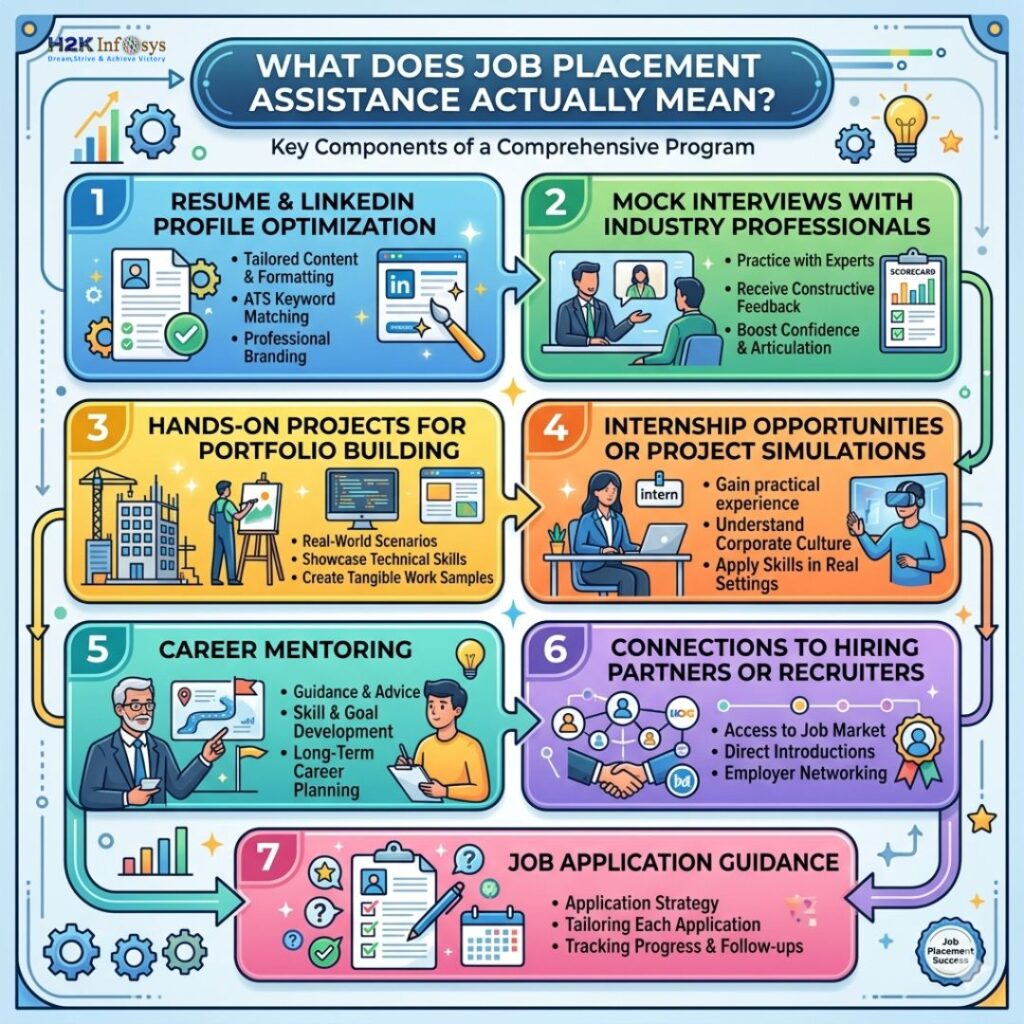
What Does Job Placement Assistance Actually Mean?
People hear the phrase and sometimes assume it means guaranteed employment. That’s not usually how it works.
Placement assistance generally includes things like:
- Resume and LinkedIn profile optimization
- Mock interviews with industry professionals
- Hands-on projects for portfolio building
- Internship opportunities or project simulations
- Career mentoring
- Connections to hiring partners or recruiters
- Job application guidance
Think of it as having a GPS instead of driving through a city you’ve never visited before.
Cyber security training itself is broad. A student might finish training and apply for roles such as:
- Security Analyst
- SOC Analyst
- Junior Penetration Tester
- Risk Analyst
- Compliance Associate
- Cloud Security Support roles
Many cyber security jobs with training programs are specifically designed for beginners who need both skills and career direction.
Why Employers Are Paying More Attention to Practical Skills
Something interesting has happened in cyber security training hiring over the last couple of years.
Organizations are dealing with larger attack surfaces because of cloud systems, remote work environments, AI-powered applications, and increasing ransomware activity. Companies need people who can actually work through security incidents rather than simply explain concepts from a textbook.
I remember speaking with a hiring manager during a cybersecurity networking discussion who said something that stuck with me:
“I can teach tools. Teaching a problem-solving mindset is harder.”
That’s why practical learning matters.
If someone completes online cyber security training and spends time working on SIEM tools, threat detection labs, cloud environments, vulnerability assessments, and simulated incidents, that often creates a stronger impression than simply holding a certificate.
Can Beginners Really Get Placement Support?
Yes, and this is probably the question I hear most often.
A lot of beginners assume placement assistance only helps experienced IT professionals. That’s usually not true.
Many cyber security training and job placement programs are built specifically for learners starting from zero experience.
Here’s a realistic example.
Imagine someone named Alex working in customer service. Alex decides to move into cyber security training because of growing industry demand. After joining an online training program, Alex learns networking fundamentals, security basics, cloud concepts, and incident response.
Then comes the part people sometimes overlook:
Alex builds projects, receives resume feedback, participates in mock interviews, and gets introduced to employers through career support sessions.
Now Alex isn’t entering interviews saying:
“I watched training videos.”
Instead, Alex says:
“I worked through simulated security incidents and used real tools during projects.”
Those are two very different conversations.
Why Training Alone Sometimes Isn’t Enough
I’ve noticed a pattern with many learners.
People spend months collecting certifications and finishing courses but never create a strategy around getting hired. Then they wonder why applications disappear into a black hole.
Training builds knowledge.
Placement assistance helps convert that knowledge into action.
There is a difference.
A person can understand threat detection concepts perfectly and still struggle to answer practical interview questions like:
“Tell me about a security issue you investigated.”
That’s where mock projects and guided career preparation become valuable.
How H2K Infosys Fits Into This Picture
When people research cyber security training with job placement, they usually aren’t looking only for video lessons anymore. They’re looking for a complete path that includes practical exposure and hiring preparation.
Programs like H2K Infosys have gained attention because they focus on hands-on learning combined with placement-oriented support. Instead of stopping at theory, the approach includes live projects, mentoring, interview preparation, and guidance that aligns with current industry hiring expectations.
I think this matters because cybersecurity employers increasingly want evidence of applied skills.
Learning concepts is useful.
Showing experience, even simulated experience often moves conversations forward.
What Should You Look For Before Joining Any Program?
Not every training provider delivers meaningful placement support.
I would pay attention to these questions:
- Are live projects included?
- Does the program offer mock interviews?
- Is there resume guidance?
- Are mentors actively working in the industry?
- Is career assistance ongoing after training ends?
- Are students building practical portfolios?
That last point gets ignored more often than it should.
Because when recruiters compare candidates, portfolios and project experience tend to speak very loudly.
Final Thoughts
So, can you get job placement assistance after online cyber security training?
Yes and for many learners, it becomes one of the biggest reasons they successfully enter the field. Online learning itself is no longer the challenge. The challenge is choosing a program that connects learning with real-world experience and career support.
The cybersecurity market continues evolving quickly, and employers increasingly value practical capability over passive learning. If you’re exploring cyber security training with job placement options, focus less on the “online vs offline” question and more on whether the training helps you build skills, confidence, and a path toward real cyber security jobs with training support behind you.
That combination often makes the difference between finishing a course and actually starting a cyber security training career.