

Introduction
In the world of software testing, applications are only as strong as their databases. A flawless user interface and well-coded features can still fail if the underlying data layer is unstable or inaccurate. Database testing ensures that every transaction, record, and data flow within a system functions correctly, validating that the backend supports the application’s business logic without error.
As data becomes the lifeblood of modern business operations, QA professionals who master database testing stand out in the job market. Whether you are enrolled in a Course for QA Tester or pursuing QA Testing Training, understanding database testing is essential for building a successful career in software quality assurance.
What Is Database Testing?
Database testing focuses on verifying the integrity, consistency, and reliability of data stored in a database. It ensures that data operations including insertion, update, deletion, and retrieval are performed as expected and that business rules are correctly implemented at the database level.
In simple terms, it checks:
- Whether data is stored correctly.
- Whether data retrieval queries return accurate results.
- Whether database transactions such as commits and rollbacks behave as intended.
- Whether constraints, triggers, and stored procedures execute properly.
Database testing is not about checking how the data looks but how it works. It validates the backend, which forms the backbone of every application.
Why Database Testing Is Important
Database testing is critical for several reasons.
1. Data Integrity
Applications often interact with databases through multiple layers. If the database is not tested properly, it may result in data duplication, loss, or corruption, all of which can harm an organization’s credibility.
2. Performance and Scalability
Database performance directly impacts application speed. QA testers must ensure queries are optimized, indexes are applied correctly, and stored procedures execute efficiently.
3. Security and Compliance
With data privacy regulations such as GDPR and HIPAA, verifying database access control, encryption, and user privileges has become crucial for compliance.
4. Complex Integrations
Modern systems rely on multiple databases or microservices that share data. Database testing helps ensure smooth communication between these systems.
5. Business Continuity
In financial, healthcare, or e-commerce domains, data accuracy is mission-critical. A single miscalculation can result in revenue loss or regulatory fines.
Key Components of Database Testing
Database testing is generally divided into two main categories: Structural Testing and Functional Testing.
1. Structural Testing
This type focuses on the database structure and its components such as tables, columns, indexes, triggers, and stored procedures.
Main checks include:
- Schema verification: Ensuring database schema aligns with business requirements.
- Data mapping: Confirming that fields in the database match application input fields.
- Keys and indexes: Verifying that primary, foreign, and unique keys are correctly defined.
- Stored procedures and triggers: Validating business logic embedded in SQL code.
2. Functional Testing
Functional testing ensures that all operations on the database such as CRUD (Create, Read, Update, Delete) work correctly.
Examples:
- When a new user registers, their data should appear in the “Users” table.
- When an order is placed, total cost and inventory updates must reflect accurately.
This testing helps validate transaction behavior (commit, rollback), data validation rules, and referential integrity between tables.
Types of Database Testing
1. Data Validity Testing
Checks whether data entered by users is stored accurately in the database. For example, when a customer’s name is entered as “John Smith,” it should appear exactly the same in the backend without truncation or encoding errors.
2. Data Integrity Testing
Ensures relationships between tables remain consistent. For instance, if a record in the “Orders” table references a “CustomerID,” that customer must exist in the “Customers” table.
3. Constraint Testing
Validates database constraints such as:
- Primary key (ensures uniqueness)
- Foreign key (maintains relational integrity)
- Not Null (prevents missing data)
- Check constraints (enforces valid values)
4. Stored Procedure Testing
QA testers validate that stored procedures execute correctly and return expected results for various input parameters.
5. Trigger Testing
Database triggers automatically perform actions when certain events occur (for example, audit logs on updates). These must be tested to avoid unintended consequences.
6. Database Performance Testing
Focuses on optimizing SQL queries, reducing latency, and ensuring scalability under load. It helps identify bottlenecks that may slow down the entire application.
Common Database Testing Tools
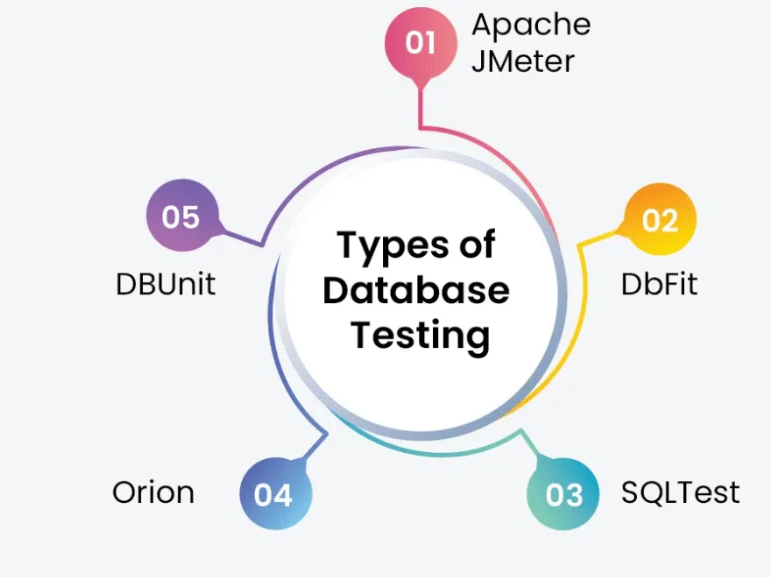
Modern QA testers use several tools to automate and manage database testing. Some popular ones include:
| Tool Name | Description |
|---|---|
| SQL Server Management Studio (SSMS) | A must-have for SQL Server testing and query validation. |
| Oracle SQL Developer | Ideal for Oracle database management and automated testing. |
| Toad for Oracle/MySQL | Simplifies SQL editing, debugging, and schema comparisons. |
| DbUnit (Java) | Integrates database testing into JUnit frameworks. |
| Selenium with JDBC | Allows testers to perform database validations alongside UI tests. |
| Apache JMeter | Often used for database performance testing. |
| DataFactory / FAKER | Generates realistic test data for database validation. |
These tools help streamline repetitive testing and reduce human error, ensuring accuracy in every database cycle.
SQL Skills Every QA Tester Should Learn
Database testing demands strong SQL skills. QA testers should be able to:
- Write SELECT, INSERT, UPDATE, DELETE queries.
- Use JOINs (INNER, OUTER, LEFT, RIGHT) to fetch data from multiple tables.
- Apply aggregate functions such as
SUM(),AVG(),COUNT(). - Validate constraints and triggers using DDL (Data Definition Language).
- Debug stored procedures and views.
- Execute transaction commands such as
COMMITandROLLBACK.
These SQL skills are covered extensively in any reputable Course for QA Tester or advanced QA Testing Training program.
Example: Database Testing Scenario
Let’s explore a simple real-world example of how database testing works in a QA environment.
Scenario:
An e-commerce application records every customer order in the Orders table.
When a customer places an order:
- A record is created in the
Orderstable. - The product inventory count is reduced.
- Payment details are stored in the
Paymentstable.
Testing Steps:
- Verify that order details (OrderID, CustomerID, ProductID, Quantity, Amount) are stored correctly.
- Check that
Inventory.Quantitydecreases by the ordered amount. - Validate that
Payments.Statusis updated to “Completed.” - Execute rollback and commit tests to ensure transaction consistency.
- Run query performance tests to confirm response time under load.
This scenario demonstrates that database testing ensures both accuracy and reliability of every critical business process.
Challenges in Database Testing
Despite its importance, database testing poses several challenges.
1. Complex Data Relationships
Databases often have hundreds of tables with foreign key Dependencies, making it difficult to validate all relationships.
2. Data Volume
Testing with large datasets can be time-consuming and require performance tuning.
3. Test Data Management
Maintaining relevant test data for different environments (development, staging, production) is often complex.
4. Security Restrictions
Access to production databases may be limited for testers, making it harder to reproduce real scenarios.
5. Automation Limitations
Automating dynamic data validations or cross-database tests requires advanced scripting and tool integration.
Proper training through a Course for QA Tester helps professionals overcome these challenges with industry-proven techniques and best practices.
Best Practices for Database Testing
To ensure accuracy and efficiency in database testing, QA professionals should follow these best practices:
- Understand the Data Model:
Review ER diagrams and schema definitions before writing test cases. - Use SQL Queries for Validation:
Directly validate data in the backend rather than relying solely on the UI. - Maintain Test Data Consistency:
Reset the database or use rollback scripts after every test run. - Focus on Boundary Values:
Test for extreme inputs such as maximum field lengths or null values. - Automate Where Possible:
Integrate database validation into CI/CD pipelines using tools like Jenkins or JUnit. - Include Negative Testing:
Ensure the system handles invalid data gracefully without crashing. - Performance and Load Tests:
Simulate high transaction volumes to check for scalability and query optimization.
By following these practices, QA engineers enhance application quality and system performance.
Role of Database Testing in QA Testing Training
A strong QA Testing Training curriculum always includes database testing modules because every modern application, from web to mobile, relies on databases.
In professional training programs, you will learn:
- Fundamentals of relational databases (SQL, Oracle, MySQL, PostgreSQL)
- Writing and executing complex SQL queries
- Testing stored procedures, triggers, and functions
- Automating backend testing
- Integrating database checks in Selenium and JMeter scripts
- Real-world project simulations involving data verification
By mastering these skills, testers not only validate UI or API layers but also ensure end-to-end application accuracy.
Career Benefits of Learning Database Testing
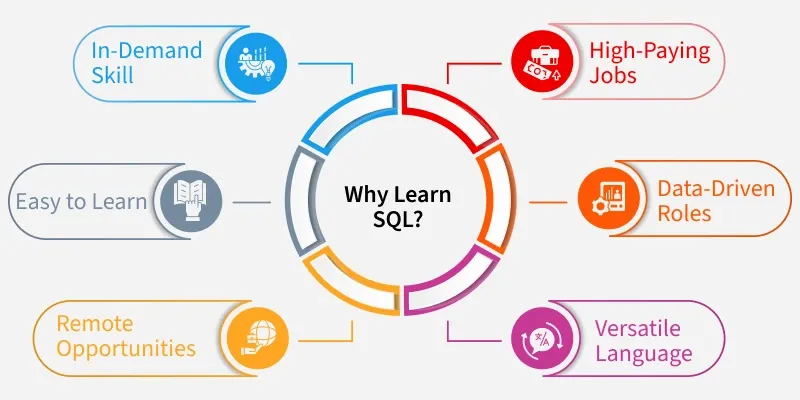
Database testing adds immense value to a QA tester’s profile. Here’s how:
1. Higher Employability
Organizations value testers who understand both frontend and backend operations.
2. Cross-Functional Expertise
Database testing bridges the gap between developers, DBAs, and testers, making you a key part of the SDLC.
3. Better Salaries
QA professionals skilled in database testing often command higher salaries due to their technical expertise.
4. Strong Analytical Thinking
Database testing strengthens logical reasoning and attention to detail, essential for higher QA roles like Test Analyst or QA Lead.
5. Career Growth Opportunities
With the right Course for QA Tester, you can advance into specialized roles such as:
- Database QA Engineer
- Automation Test Engineer
- Data Validation Specialist
- Test Lead or QA Manager
Conclusion
Database testing is the foundation of reliable, data-driven software systems. It ensures that business applications run smoothly, data remains accurate, and performance stays optimal under any load.For aspiring QA professionals, mastering database testing is no longer optional, it is a necessity. Enrolling in a comprehensive QA Testing Training or specialized Course for QA Tester will equip you with the technical and analytical skills needed to validate data integrity, optimize performance, and guarantee application reliability.
Whether you are testing a small e-commerce app or a large enterprise ERP system, database testing remains your best tool for ensuring that every byte of data works exactly as intended: secure, consistent, and accurate.

























10 Responses
Database testing is to validate the information in the database if it is of expected format and stored in appropriate location and has desired value. Database testing is important because it makes sure that the data values and information received from the end user from user interface correctly, and also stored in the database correctly. Database testing helps to save data loss, saves aborted transaction data, transaction data and avoids unauthorised access to the information.
Structural Database Testing:
It is a database testing technique that validates all the elements inside data repository which are mainly used for the data storage and also not allowed to directly manipulate by the end-users.
2. Functional database Testing:
It is a type of database testing which is used to verify the functional requirements of a database from a user’s point of view. The main goal of functional testing is to test whether the transactions and operations performed by the end user’s, which are related to the database works or not.
3. Non-functional Testing
Here the database testing are often divided into different categories as needed to the business requirements. These are often load testing, stress testing, usability testing, and compatibility testing
Database testing includes the retrieved values from database, from the web, may be from desktop application.
In this the data in the user interface should be matched as per the records which are stored in the database.
It validates the information in the database if it is of expected format and stored in appropriate location and has desired value.
Database testing validations:
Checking the data mapping, ACID (atomicity, consistency, isolation, Durability) properties validation.
Data Integrity, Business rule conformance.
Database testing is important because it makes sure that the data values and information received from the end user
from user interface correctly, and also stored in the database correctly
Types of Database testing:
1. Structural Database Testing:
It is a database testing technique that validates all the elements inside data repository which are mainly used for the data storage and also not allowed to directly manipulate by the end-users. The validation of database servers is also significant consideration a structural database.
2. Functional database Testing:
It is a type of database testing which is used to verify the functional requirements of a database from a user’s point of view. The main goal of functional testing is to test whether the transactions and operations performed by the end user’s, which are related to the database works or not.
Following are basic conditions that need to be observed for database validations:
Whether the field is mandatory while allowing NULL values on that field?
Whether the length of each field is of sufficient size?
Whether all similar fields have the same names across tables?
Whether there are any computed fields present in the database?
This particular procedure is the verification of the field mappings from the end-user viewpoint. The tester tests at the database level and then also will navigate to the relevant user interface item to observe and validate the proper field validations have been carried out or not.
3. Non-functional Testing
Here the database testing are often divided into different categories as needed to the business requirements. These are often load testing, stress testing, usability testing, and compatibility testing then so on.
Database testing is to validate the information in the database if it is of expected format and stored in appropriate location and has desired value. Database testing validations are: checking the data mapping, ACID (atomicity, consistency, isolation, durability) properties validation, data integrity and business rule conformance. Database testing helps to save data loss, saves aborted transaction data, transaction data and avoids unauthorized access to the information. Here the GUI, is given the most emphasis by the test team and development team members since the graphical user interface happens to be the most visible part of the application. In database testing can test relationship between the tables and test all columns of all the tables.
Types of database testing are structural testing, functional testing, and non-functional testing. Structural database validates all the elements inside data repository which are mainly used for the data storage and also not allowed to directly manipulate by the end-users. The main goal of functional testing is to test whether the transactions and operations performed by the end user’s, which are related to the database works or not. Non-functional testing is divided into load testing, stress testing, usability testing and compatibility testing.
Database testing includes the retrieved values from database, from the web, may be from desktop application. Here the data in the user interface should be matched as per the records which are stored in the database. Database testing is to validate the information in the database if it is of expected format and stored in appropriate location and has desired value.
Database testing validations:
Here the following verifications are done:
Checking the data mapping
ACID (atomicity, consistency, isolation, Durability) properties validation.
Database testing is important because it makes sure that the data values and information received from the end user from user interface correctly, and also stored in the database correctly. Database testing helps to save data loss, saves aborted transaction data, transaction data and avoids unauthorised access to the information. Database is important for any software application. Hence testers must have good knowledge of sql for database testing. Database testing can be done along with functional testing.
Types of Database testing:
Structural Testing-Mainly used for the data storage and also not allowed to directly manipulate by the end-users.
Functional testing-It is a type of database testing which is used to verify the functional requirements of a database from a user’s point of view.
Non-functional testing-Here the database testing are often divided into different categories as needed to the business requirements. These are often load testing, stress testing, usability testing, and compatibility testing then so on.
Database testing is to validate the information in the database if it is of expected format and stored in appropriate location and has desired value. It is important because it makes sure that the data values and information received from the end user from user interface correctly, and also stored in the database correctly. It helps to save data loss, saves aborted transaction data, transaction data and avoids unauthorised access to the information.
Types of Databases testing are listed below with details:
1. Structural Database Testing:
It is a database testing technique that validates all the elements inside data repository which are mainly used for the data storage and also not allowed to directly manipulate by the end-users.
2. Functional database Testing:
It is a type of database testing which is used to verify the functional requirements of a database from a user’s point of view. The main goal of functional testing is to test whether the transactions and operations performed by the end user’s, which are related to the database works or not.
3. Non-functional Testing
Here the database testing are often divided into different categories as needed to the business requirements. These are often load testing, stress testing, usability testing, and compatibility testing
Database testing is to validate the information in the database if it is of expected format and stored in appropriate location and has desired value.Database testing is important because it makes sure that the data values and information are received from the end user from user interface correctly, and also stored in the database correctly. Database testing helps to save data loss, saves aborted transaction data, transaction data and avoids unauthorised access to the information. Database testing can be done along with functional testing.
Types of Database testing:
1. Structural Database Testing:
It is a database testing technique that validates all the elements inside data repository which are mainly used for the data storage and also not allowed to directly manipulate by the end-users.
2. Functional database Testing:
The main goal of functional testing is to test whether the transactions and operations performed by the end user’s, which are related to the database works or not.
Following are basic conditions that need to be observed for database validations:
Whether the field is mandatory while allowing NULL values on that field?
Whether the length of each field is of sufficient size?
Whether all similar fields have the same names across tables?
Whether there are any computed fields present in the database?
This particular procedure is the verification of the field mappings from the end-user viewpoint. The tester tests at the database level and then also will navigate to the relevant user interface item to observe and validate the proper field validations have been carried out or not.
3. Non-functional Testing:
Here the database testing are often divided into different categories like load testing, stress testing, usability testing, and compatibility testing then so on , as needed to the business requirements .
Database testing is to validate the information in the database if it is of expected format and stored in appropriate location and has desired value. This is important because it makes sure that the data values and information received from the end user from user interface correctly, and also stored in the database correctly.
It helps to save data loss, saves aborted transaction data, transaction data and avoids unauthorised access to the information.
Three types of Databases Testing are:
1. Structural Database Testing:
It is a database testing technique that validates all the elements inside data repository which are mainly used for the data storage and also not allowed to directly manipulate by the end-users.
2. Functional database Testing:
It is a type of database testing which is used to verify the functional requirements of a database from a user’s point of view. The main goal of functional testing is to test whether the transactions and operations performed by the end user’s, which are related to the database works or not.
3. Non-functional Testing
Here the database testing are often divided into different categories as needed to the business requirements. These are often load testing, stress testing, usability testing, and compatibility testing
Database testing is to validate the information in the database if it is of expected format and stored in appropriate location and has desired value.Here the following verifications are done:
Checking the data mapping
ACID (atomicity, consistency, isolation, Durability) properties validation.
Data Integrity
Business rule conformance
Importance of database testing
Database testing is important because it makes sure that the data values and information are received from the end user from user interface correctly, and also stored in the database correctly. Database testing helps to save data loss, saves aborted transaction data, transaction data and avoids unauthorised access to the information. Database testing can be done along with functional testing.
Types of Database testing:
1. Structural Database Testing:
It is a database testing technique that validates all the elements inside data repository which are mainly used for the data storage and also not allowed to directly manipulate by the end-users.
2. Functional database Testing:
The main goal of functional testing is to test whether the transactions and operations performed by the end user’s, which are related to the database works or not.
Following are basic conditions that need to be observed for database validations:
Whether the field is mandatory while allowing NULL values on that field?
Whether the length of each field is of sufficient size?
Whether all similar fields have the same names across tables?
Whether there are any computed fields present in the database?
This particular procedure is the verification of the field mappings from the end-user viewpoint. The tester tests at the database level and then also will navigate to the relevant user interface item to observe and validate the proper field validations have been carried out or not.
3. Non-functional Testing:
Here the database testing are often divided into different categories like load testing, stress testing, usability testing, and compatibility testing then so on , as needed to the business requirements .
Database testing
Database testing includes retrieved values from the database,from the web or may be from the desktop. The data from the user interface should be matched as per the records that are stored in the database.
Database testing validations:
1. Checking the data mapping
2. ACID (Atomicity , Consistency , Integrity , Durability) properties validations
3. Data integrity
4. Business rule conformance
Types of database testing:
1. Structural testing
2. Functional testing
3. Non functional testing
Database testing includes the retrieved values from database, from the web, may be from desktop application. Here the data in the user interface should be matched as per the records which are stored in the database. Database testing is to validate the information in the database if it is of expected format and stored in appropriate location and has desired value.
Database testing validations:
Here the following verifications are done:
Checking the data mapping
ACID (atomicity, consistency, isolation, Durability) properties validation.
Data Integrity
Business rule conformance
What is the importance of Database testing?
Database testing is important because it makes sure that the data values and information received from the end user from user interface correctly, and also stored in the database correctly. Database testing helps to save data loss, saves aborted transaction data, transaction data and avoids unauthorised access to the information. Database is important for any software application. Hence testers must have good knowledge of sql for database testing. Database testing can be done along with functional testing.
Here the GUI, is given the most emphasis by the test team and development team members since the graphical user interface happens to be the most visible part of the application. It is also important to validate the information that will be the heart of the application.