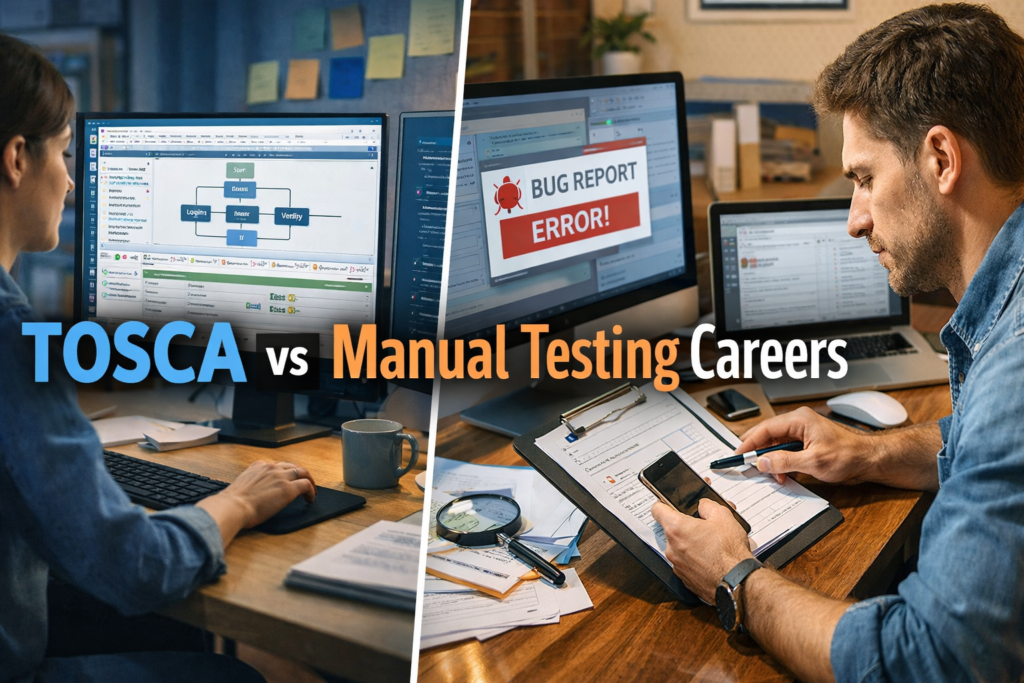
Yes, most modern Software testing courses provide real-time project experience as a core component of job-oriented training. In 2026, industry-aligned testing programs typically include live project simulations, real application testing scenarios, and hands-on tool usage to help learners gain practical experience. Real-time projects help students understand how testing works in actual development environments, including defect tracking, test case creation, automation execution, and collaboration with development teams.
Why Real-Time Project Experience Matters in Software Testing
Software testing is a practical, skill-based profession. While theoretical knowledge helps learners understand concepts like SDLC, STLC, and testing types, employers prioritize candidates who can apply testing knowledge in real-world environments.
Real-time projects help learners:
- Understand real business application workflows
- Learn defect reporting and tracking processes
- Gain exposure to production-like environments
- Practice working in Agile and DevOps teams
- Use real industry tools instead of learning only theory
In 2026, companies expect entry-level testers to understand practical workflows, not just textbook definitions.
What Is Considered Real-Time Project Experience in Software Testing Courses?
Real-time project experience means working on applications that simulate real company environments. This may include:
1. Live Application Testing
Students test web or mobile applications similar to enterprise software.
Examples:
- E-commerce website testing
- Banking application testing
- Healthcare portal testing
- SaaS product testing
2. Real Defect Tracking Workflow
Learners use industry defect tracking tools to:
- Log bugs
- Assign severity and priority
- Track defect lifecycle
- Retest fixes
3. Automation Project Implementation
Students build automation frameworks using tools like:
- Selenium
- Cypress
- Playwright
- TestNG / JUnit
- API testing tools
4. Agile Sprint-Based Software Testing Simulation
Learners work in sprint cycles similar to real companies:
- Sprint planning
- Daily standups
- Test execution
- Regression testing
- Sprint review
Types of Real-Time Projects Included in Testing Courses
Manual Testing Projects
Focus on:
- Requirement analysis
- Test scenario writing
- Test case creation
- Test execution
- Defect reporting
Automation Testing Projects
Focus on:
- Framework design
- Test script development
- CI/CD integration basics
- Test result reporting
API Testing Projects
Focus on:
- REST API validation
- Status code verification
- Response validation
- Authentication testing
Performance Testing Projects
Focus on:
- Load testing
- Stress testing
- Response time monitoring
Tools Students Typically Use in Real-Time Testing Projects
In 2026, real-time project training usually includes exposure to modern testing tools:
| Category | Tools Used |
| Test Management | Jira, Azure DevOps |
| Automation Testing | Selenium, Cypress |
| API Testing | Postman, Rest Assured |
| CI/CD | Jenkins basics |
| Version Control | Git |
| Performance Testing | JMeter |
These tools are commonly used in enterprise environments worldwide.
How Real-Time Projects Help Freshers Get Jobs Faster
1. Resume Strength
Employers prefer candidates who have worked on:
- Live projects
- Real tools
- Real defect workflows
Instead of writing “Learned Selenium,” candidates can say:
- Automated login module using the Selenium framework
- Executed regression suite for e-commerce application.
2. Interview Confidence
Candidates can answer scenario questions like:
- How do you handle production defects?
- How do you write test cases from user stories?
- How do you prioritize defects?
3. Practical Skill Validation
Real projects help candidates demonstrate:
- Problem solving
- Debugging skills
- Testing strategy thinking
- Collaboration skills
Real-Time Software Testing Project Example (Typical Course Scenario)
Project: Online Shopping Application Testing
Students typically perform:
Phase 1: Requirement Analysis
- Study functional documents
- Identify test scenarios
Phase 2: Test Case Design
- Write positive and negative test cases
- Prepare test data
Phase 3: Test Execution
- Execute test cases
- Identify defects
Phase 4: Defect Reporting
- Log defects in Jira
- Assign severity and priority
Phase 5: Automation
- Automate high-priority regression cases
How Real-Time Projects Simulate Actual Company Work
Modern courses simulate real workplace structures:
| Real Company Role | Student Project Equivalent |
| QA Engineer | Test case execution |
| Automation Engineer | Script creation |
| QA Lead | Test planning simulation |
| Dev Team | Bug fixing simulation |
This helps learners understand team collaboration.
Difference Between Basic Courses and Real-Time Project Courses
| Basic Theory Course | Real-Time Project Course |
| Focus on concepts | Focus on the application |
| Tool demos only | Hands-on tool practice |
| No real defect workflow | Full defect lifecycle |
| Limited job readiness | High job readiness |
How Employers Evaluate Real-Time Project Experience
In interviews, recruiters usually ask:
- What project did you test?
- What modules did you test?
- Which tools did you use?
- How did you log defects?
- Did you automate any scenarios?
Candidates with real project exposure answer confidently.
Common Real-Time Project Mistakes Students Should Avoid
Only Watching Demo Videos
Hands-on practice is critical.
Not Documenting Project Work
Students should maintain:
- Test cases
- Bug reports
- Automation scripts
Ignoring Business Understanding
Testing is not only about tool usage. Understanding business flow is important.
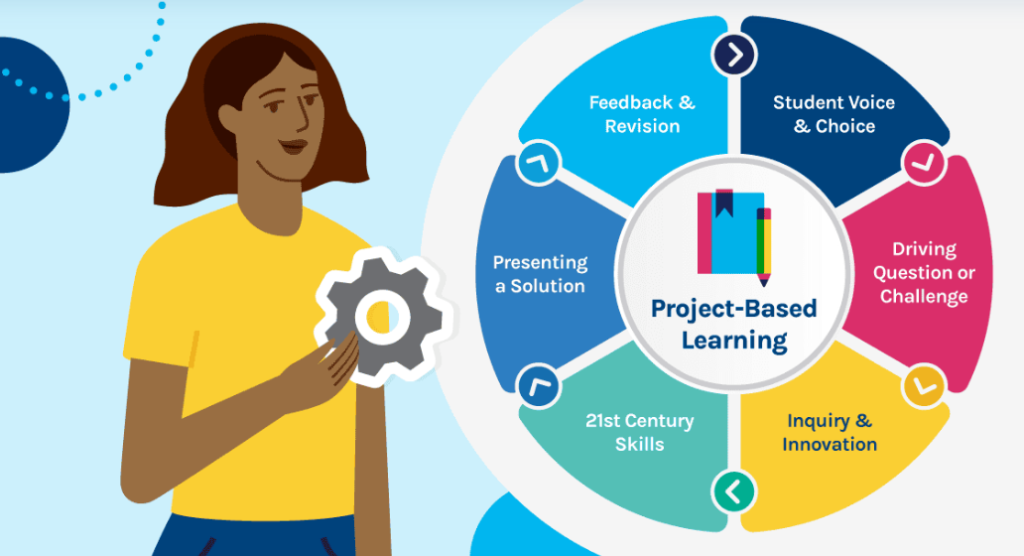
How Real-Time Projects Are Evolving in 2026
Modern testing project training now includes:
AI-Assisted Testing Exposure
Students learn:
- AI test case generation basics
- Smart defect prediction concepts
- Self-healing automation introduction
Cloud Testing Basics
Learners understand:
- Cloud-based test environments
- Remote browser testing
- Container-based testing basics
DevOps Testing Integration
Students learn:
- Continuous testing concepts
- Pipeline-based execution basics
Who Benefits Most From Real-Time Project-Based Software Testing Courses?
Freshers
Helps build first IT experience.
Career Switchers
Helps demonstrate practical skills quickly.
Manual Testers Moving to Automation
Helps transition to modern testing roles.
Signs a Software Testing Course Truly Includes Real-Time Projects
Look for courses that provide:
- End-to-end project execution
- Access to real testing tools
- Sprint-based project workflow
- Defect tracking practice
- Automation implementation
- Project documentation support
How Many Projects Should a Good Testing Course Include?
In 2026, strong job-focused courses usually include:
- 1 Manual Testing Project
- 1 Automation Project
- Optional API Testing Mini Project
Quality is more important than quantity.
Do Real-Time Projects Guarantee Jobs?
No training can guarantee jobs. However, real-time project experience significantly improves:
- Interview performance
- Resume quality
- Technical confidence
- Practical knowledge
Future of Real-Time Project Training in Software Testing
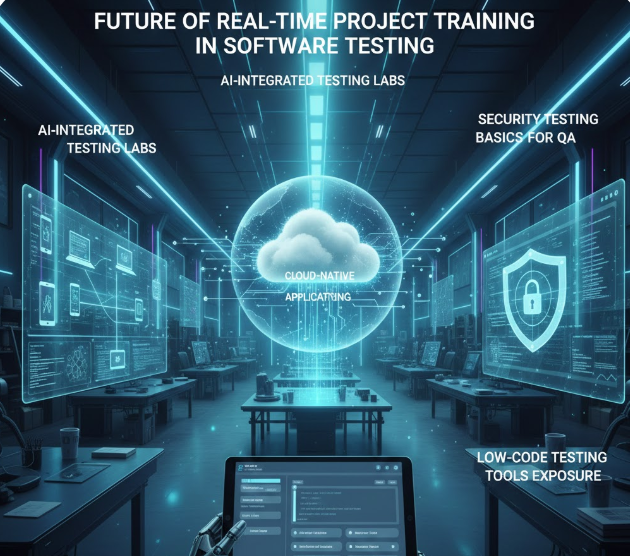
The future is moving toward:
- AI-integrated testing labs
- Cloud-native application testing
- Security testing basics for QA
- Cross-platform automation testing
- Low-code testing tools exposure
Testing roles are becoming more skill-focused and tool-driven.
Key Takeaways
- Most modern software testing courses include real-time project experience
- Real projects help learners become job-ready faster
- Practical exposure improves interview success rates
- Real-time projects simulate actual company environments
- In 2026, employers prefer candidates with hands-on project experience