Yes, a good Generative AI in Software Testing Course absolutely should include resume preparation and interview training. In fact, this support is often the difference between simply learning new skills and actually landing a job or promotion in today’s rapidly evolving QA landscape.
I’ve seen this firsthand. Many testers complete technical training but still struggle in interviews because they don’t know how to present their AI-related skills in a way recruiters understand. That’s where structured career support makes a huge difference.
Let’s break down what this really means and why it matters so much in 2026.
Why Resume Preparation Matters More Than Ever in AI-Driven QA
Right now, QA hiring has shifted. Companies aren’t just asking, “Do you know Selenium?” They’re asking things like:
- Can you use AI to generate test cases?
- Have you worked with AI tools like ChatGPT, Copilot, or test automation assistants?
- Do you understand how Generative AI improves testing efficiency?
The problem? Most testers actually can do some of these things, but their resumes don’t reflect it properly.
I remember reviewing a resume recently from a tester who had used ChatGPT to automate test data creation and speed up regression testing. Huge productivity gain. But their resume simply said: “Performed manual testing and automation testing.”
That’s a missed opportunity.
A proper Generative AI for Testing course teaches you how to transform your resume from something generic into something that clearly shows your AI capabilities.
For example, instead of this:
Executed manual test cases for web applications.
You learn to write this:
Used Generative AI tools to design optimized test cases, reducing test creation time by 40% and improving coverage.
See the difference? Same person. Completely different impact.
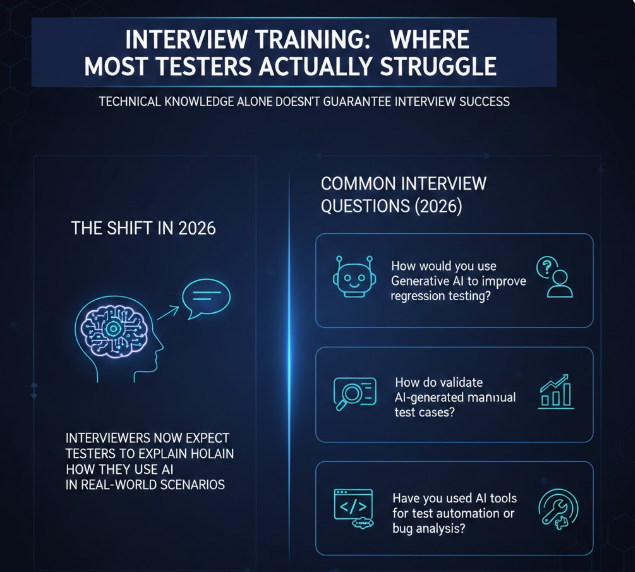
Interview Training: Where Most Testers Actually Struggle
Technical knowledge alone doesn’t guarantee interview success. Interviewers now expect testers to explain how they use AI in real-world scenarios.
Some common interview questions in 2026 include:
- How would you use Generative AI to improve regression testing?
- Can AI replace manual testers?
- How do you validate AI-generated test cases?
- Have you used AI tools for test automation or bug analysis?
Without preparation, even experienced testers get stuck here.
Good QA online training programs include mock interviews where you practice answering these exact types of questions. Not theoretical stuff – real, practical answers based on real testing scenarios.
One tester I mentored recently froze during interviews simply because they weren’t used to explaining their workflow. After two mock interview sessions, they became confident and landed a senior QA role within weeks.
Confidence comes from preparation. Not luck.
What Resume Preparation Typically Includes in a Generative AI Testing Course
Most career-focused training programs provide structured resume support, including:
1. Resume Review by Industry Experts
Your resume gets reviewed by professionals who understand current QA hiring trends. They help align your experience with what companies actually want today.
2. AI-Focused Resume Optimization
You learn how to showcase:
- Generative AI testing experience
- Automation skills enhanced by AI
- Real productivity improvements using AI tools
- Practical projects involving AI in QA
This matters because recruiters actively search for these skills now.
3. Project-Based Resume Building
Courses help you include real projects, such as:
- AI-generated test case creation
- Automated test scripts using AI assistance
- AI-based bug analysis
- Test scenario optimization using LLM tools
These projects make your resume stand out immediately.
Interview Training: What You Actually Learn
This is where the real transformation happens.
Good training programs don’t just teach theory – they simulate real interview environments.
Mock Interviews Based on Real QA Roles
You practice answering questions like:
- How Generative AI Improves Test Efficiency
- Real examples of AI in automation testing
- When NOT to use AI in testing
- Limitations and risks of AI-generated testing
These questions are very common now, especially in companies adopting AI-assisted development workflows.
Communication and Confidence Building
One thing I’ve noticed: testers often know the answer but struggle to explain it clearly.
Interview training helps you:
- Structure answers logically
- Explain technical concepts in simple terms
- Avoid common interview mistakes
- Present yourself confidently
This is huge, especially for mid-career professionals transitioning into AI-enhanced QA roles.
Real-World Example: How Generative AI Skills Improved Job Outcomes
Let me share a real scenario that reflects what’s happening across the industry.
A QA engineer with 5 years of experience recently completed a Generative AI testing course. They learned to use AI tools to:
- Generate test cases faster
- Improve regression coverage
- Automate repetitive tasks
With resume preparation and interview training, they updated their resume to reflect these new capabilities.
Within two months:
- They received 4 interview calls
- Cleared 3 technical rounds
- Landed a role with a 45% salary increase
The key difference wasn’t just learning AI – it was learning how to present those skills effectively.
Why This Support Is Especially Important Right Now (2026 Hiring Trends)
AI is transforming software testing rapidly.
According to recent industry trends, companies now expect QA professionals to work alongside AI tools, not separate from them.
Modern QA roles include responsibilities like:
- Using AI to generate test data
- AI-assisted automation
- Intelligent bug detection
- Faster regression testing using AI tools
Testers who can demonstrate these skills clearly have a major advantage.
And resume + interview preparation ensures those skills translate into real job opportunities.
How QA Online Training Bridges the Gap Between Learning and Employment
This is honestly one of the most underrated benefits of structured training.
Learning alone is only half the journey.
The real goal is career advancement – and that requires:
- Proper resume positioning
- Interview readiness
- Real-world project experience
- Confidence explaining AI testing workflows
Good QA online training programs understand this and include career support as part of the course.
Without it, many learners struggle to convert knowledge into job offers.
What to Look For in a Generative AI in Software Testing Course
If you’re considering enrolling, make sure the course includes:
- Resume preparation specifically for AI-based QA roles
- Mock interviews based on real industry questions
- Real-world Generative AI testing projects
- Expert feedback and mentoring
- Guidance on presenting AI skills effectively
These features significantly improve job outcomes.
Final Thoughts
Yes, resume preparation and interview training are essential parts of a strong Generative AI in Software Testing Course – and they’re often what determines whether your new skills actually translate into career growth.
Learning Generative AI for Testing is powerful, but knowing how to present those skills confidently is what opens doors. With the right QA online training, you don’t just learn AI-based testing – you position yourself as a modern QA professional ready for the future of software testing.
And honestly, that’s exactly what companies are looking for right now.