
The best way for beginners to start learning cyber security with placement today is by joining a practical, placement-focused training program that combines hands-on labs, real SOC exposure, interview preparation, and mentorship. In 2026, companies are hiring more entry-level analysts who can actually investigate alerts, work with SIEM tools, and explain security incidents, not just people who memorized theory.
A lot of beginners think cyber security with placement starts with hacking tools or coding. Honestly, that’s usually where confusion begins. From what I’ve personally noticed while watching hiring trends, most successful newcomers actually start with structured fundamentals first: networking, Linux basics, log analysis, and understanding how attacks happen in real environments. Training providers likeH2K Infosys have become popular among beginners because they focus heavily on practical SOC-based learning, hands-on labs, and interview preparation instead of only theory. Then learners slowly build practical skills through labs and simulated security incidents that feel much closer to real workplace environments.
That’s exactly why programs offering cyber security training and job placement support have become much more popular recently. People want guidance, not random YouTube playlists stitched together at 2 AM while wondering if they’re learning the “right” thing.
Why cyber security with Placement Support Matters More Than Ever
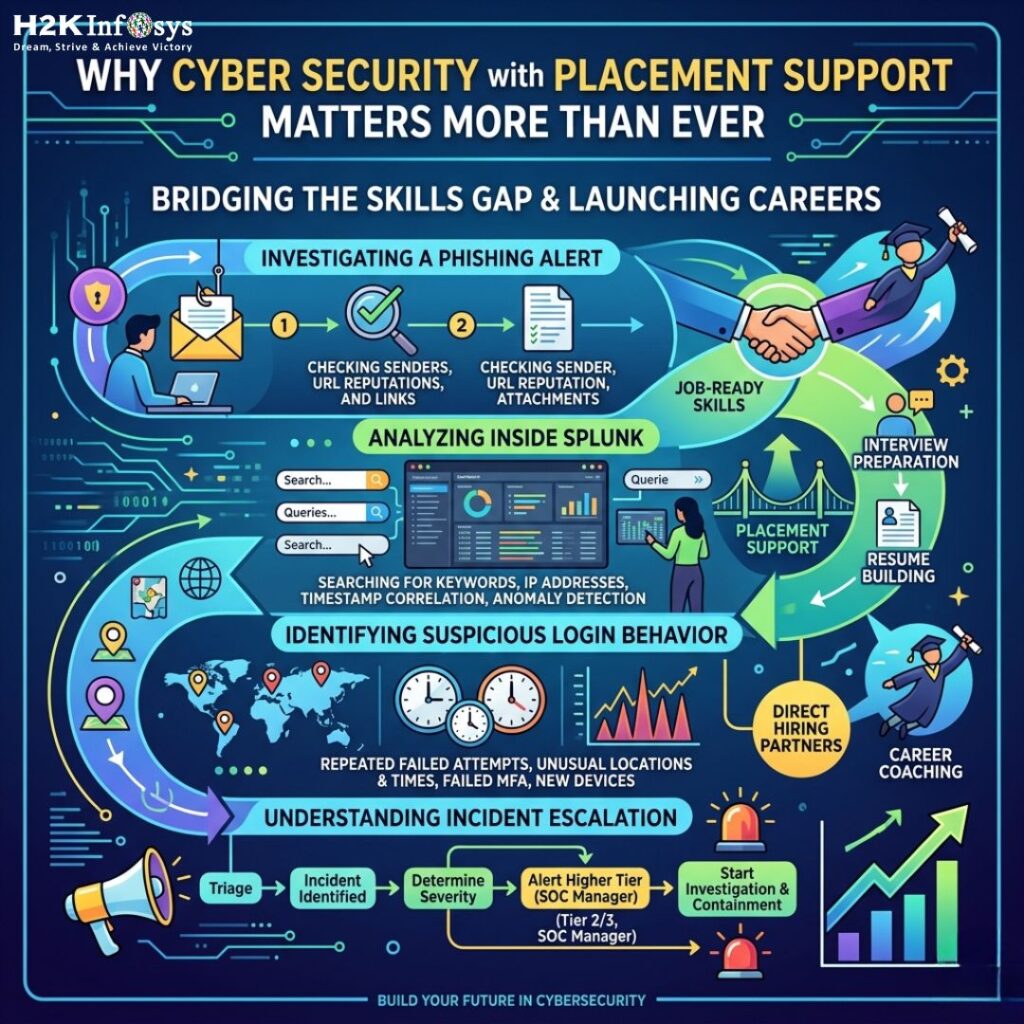
A few years ago, many learners could complete a certification and still land interviews fairly easily. The market changed. Employers now want proof of practical exposure.
I’ve seen beginners struggle after finishing theory-heavy courses because interviews suddenly become tool-oriented:
- “How would you investigate a phishing alert?”
- “What would you check inside Splunk?”
- “How do you identify suspicious login behavior?”
- “What happens during incident escalation?”
These aren’t impossible questions, but they can feel overwhelming if someone only watched recorded lectures.
That’s where cyber security training with job placement support becomes valuable. Good programs help learners bridge the awkward gap between “I studied cyber security” and “I can actually work in a SOC environment.”
Institutes like H2K Infosys have gained attention because their approach leans heavily toward hands-on learning instead of only certification preparation. Many learners prefer that style now because recruiters increasingly ask for practical understanding during screening rounds.
The Smartest Starting Path for Absolute Beginners
People often overcomplicate the starting phase. You do not need to master everything immediately.
A realistic beginner roadmap usually looks like this:
1. Learn Basic Networking First
This sounds boring to many newcomers. I get it. But networking is honestly the backbone of cyber security.
You should understand:
- IP addresses
- DNS
- VPNs
- Firewalls
- TCP/IP
- Ports and protocols
Without networking knowledge, security alerts look like random noise.
One beginner I spoke with recently said SIEM dashboards felt terrifying until they understood how traffic actually moves between systems. After that, alerts started making sense.
2. Get Comfortable With Linux
Most security environments involve Linux at some level.
You don’t need advanced administration skills at first. Just learn:
- File navigation
- User permissions
- Basic commands
- Log locations
- Process monitoring
A lot of SOC analysts begin with simple log analysis tasks before moving into deeper incident response work.
3. Practice With SIEM Tools Early
This is where many modern training programs stand out.
Recruiters increasingly expect familiarity with tools like:
- Splunk
- IBM QRadar
- Wireshark
- Nessus
- Microsoft Sentinel
The demand for SIEM exposure has grown significantly because companies want analysts who can interpret security events immediately after onboarding.
That’s why practical cyber security jobs with training pathways are becoming more attractive than theory-only learning tracks.
Some placement-oriented programs now simulate live SOC environments. Honestly, that experience can make interviews feel much less intimidating because students already practiced:
- Alert monitoring
- Ticket escalation
- Threat detection
- Log correlation
- Incident documentation
And yes interviewers notice the difference pretty quickly.
Real-World Example Beginners Can Relate To
One learner I interacted with during a virtual SOC workshop came from a non-IT background. She originally worked in customer support and had zero confidence around cyber security terminology.
Instead of jumping directly into penetration testing, she focused on:
- Networking basics
- Splunk dashboards
- Phishing analysis
- Security ticket workflows
Within several months, she became comfortable explaining real alert scenarios during interviews. That practical confidence mattered more than trying to sound overly technical.
I think that’s something beginners underestimate. Employers often prefer candidates who can clearly explain investigation steps rather than recite advanced jargon they barely understand.
Certifications Still Help But They’re Not Enough Alone
Certifications absolutely still matter.
CompTIA Security+, CEH, and Google Cyber security with placement certificates are still widely recognized. But companies increasingly treat certifications as supporting evidence rather than the main hiring factor.
Practical experience now carries heavier weight.
I’ve seen candidates with fewer certifications perform better simply because they could explain:
- How they investigated suspicious logs
- What indicators of compromise looked like
- How they handled simulated incidents
- Why escalation procedures mattered
That’s another reason why cyber security with placement training and job placement programs have expanded their lab infrastructure recently.
The 2026 Hiring Trend Beginners Should Know
One interesting shift happening now is the growth of AI-assisted security operations.
SOC teams are using AI for:
- Threat prioritization
- Alert reduction
- Automated triage
- Behavioral anomaly detection
But here’s the important part many beginners misunderstand: AI is not replacing entry-level analysts entirely.
Security teams still need humans who can:
- Validate alerts
- Understand context
- Investigate suspicious behavior
- Make judgment calls during incidents
Actually, many recruiters now look for people who understand both traditional SOC workflows and AI-assisted monitoring environments.
That’s why newer training programs are starting to introduce learners to AI-enhanced security tools alongside standard SIEM platforms.
What Beginners Should Look For in a Training Program
Not every course marketed online is genuinely cyber security with placement-focused. Some promise jobs but only provide prerecorded videos.
A stronger program usually includes:
- Live instructor sessions
- Real SOC simulations
- Resume preparation
- Mock interviews
- Hands-on projects
- Internship-style exposure
- Mentor guidance
- Placement assistance
I’ve noticed learners stay motivated longer when mentors review resumes and conduct technical interview practice regularly. Cyber security with placement can feel overwhelming early on, especially when people compare themselves to experienced professionals online.
Programs from providers like H2K Infosys tend to attract beginners because they combine technical labs with interview preparation instead of separating the two.
That balance matters more than many expect.
Common Mistakes Beginners Make
A few patterns show up repeatedly:
Trying To Learn Everything At Once
Cloud security, ethical hacking, malware analysis, DevSecOps, red teaming beginners sometimes try to master all of it immediately.
It usually creates burnout.
Start with foundational SOC and security operations knowledge first.
Ignoring Soft Skills
Communication matters heavily in security roles.
Analysts constantly document incidents, explain risks, and escalate findings. Some technically strong candidates still struggle in interviews because they can’t clearly explain their thought process.
Avoiding Hands-On Labs
Watching tutorials feels productive. But practical investigation work is what builds confidence.
Even basic phishing-analysis labs help beginners develop security thinking.
Final Thoughts
For beginners entering cyber security in 2026, the smartest approach is usually a structured learning path that combines fundamentals, hands-on labs, mentorship, and placement preparation together.
The industry is moving toward practical readiness. Employers increasingly want candidates who understand real workflows, security monitoring, and incident response even at entry level.
That’s why demand for cyber security training and job placement support continues growing. Learners want more than certificates now. They want practical experience, confidence during interviews, and a realistic path toward actual security roles.
And honestly, that shift probably makes the industry healthier overall.