

Nowadays the agile movement is expanded to larger organisations in more industries there are a lot of variation we are used to a variety of frameworks, techniques and also methods used from XP to scrum to Kanban for delivery. Actually we are not using an agile but a hybrid approach. Hybrid Agile is a combination of agile methods and non agile techniques.
We have an example of a detailed requirements effort which can be followed by a sprints of incremental delivery that would be a hybrid approach. We have a often iterative prototyping of a design and individual plan-driven implementation can be called as Hybrid approach.
Hybrid = non-Agile + Agile = in between which has meaning
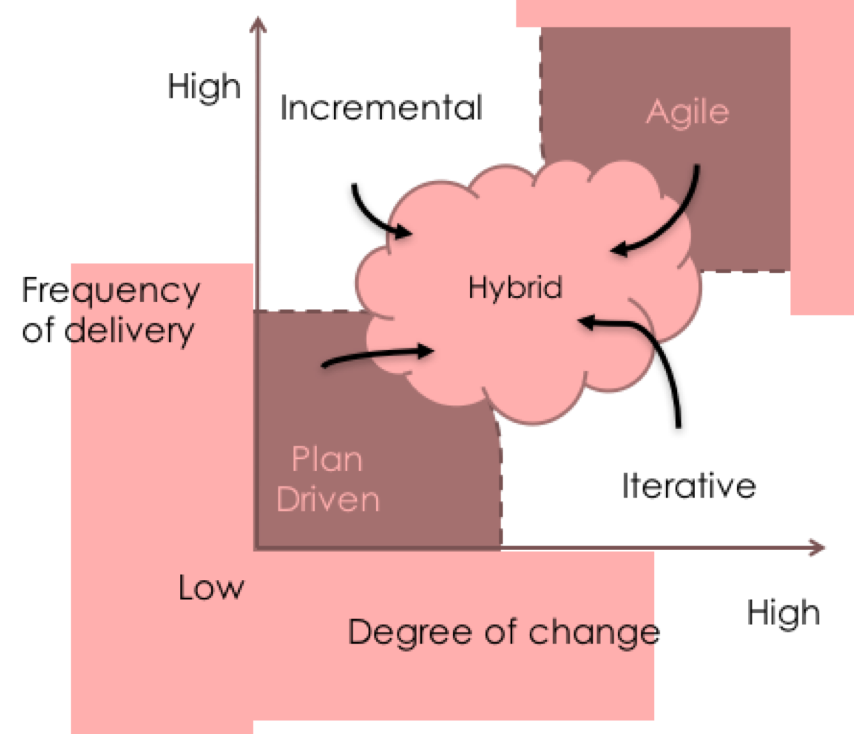
When we have to use the Hybrid approach?
Other than there is right reason and a wrong reason to do something. The wrong reason for mixing techniques is to keep together and also to keep it joneses. ”Doing agile techniques “is not a goal. The aim is to pass the right business outcome using the right techniques.
Here there are two scenarios:
- Hybrid as Fit-For-purpose- For projects which have a lower risk profile, that use plan-driven approaches that look for lower costs. For higher risk projects that use iterative techniques to repeat activities until issues that is resolved. For any projects that needs aggressive delivery, incremental techniques we may deliver something sooner, or to ensure customer engagement. To travel to a complex environment, agile techniques are having higher initial but it might worth it for all outcomes. Each will have their strength. By mixing these together in a correct way it can be fit into the context as better as narrowly using one of them.
- Hybrid as Transition-to-Agile- There are many teams that are able to make to switch to agile ways. A very large organisation, the more moving parts, the longer it will take a shift. The agile methods will look and also feel different.
The agile waterfall hybrid model is a combination of agile practices and also waterfall method.
When we have to use the Hybrid agile waterfall model?
This agile waterfall hybrid model will be used in two scenarios
- When the product consists of hardware and software components.
- The product will be a piece of software which will have a back-end and front-end technology.
The main possible reasons to use the hybrid agile model are:
- This reduces design, analysis and planning, at same time provides to define the project frames including budget and time delivery.
- It maintains compliance with the standards
- It enhances the collaboration.
- It also adapts the agile culture which is problematic; hybrid will be a good step.
Hybrid model needs strong collaboration between two types of teams. The special communication forms and also channels which have implemented.
How we are using a hybrid model of Agile?
- By planning, design and requirements definition that can be done with a waterfall, but development and test in short sprints by using Agile.
- To apply new types of communication channels also collaborative software tool helps information exchange, data consistency and traceability across the lifecycle..
- It involves product owners and clients in the communication that is quicker.
- It has to define standard compliance expectations and also has focus on them in the design-planning phase.
Blended vs. hybrid agile
Blended agile will be a combination of two or more agile methods, techniques and frameworks. By adding some Kanban and WIP limits to the sprints that would be blended approach. For many agile users its easy to understand.
Blended=Agile+Agile=Better Agile
Advantages of Hybrid Agile
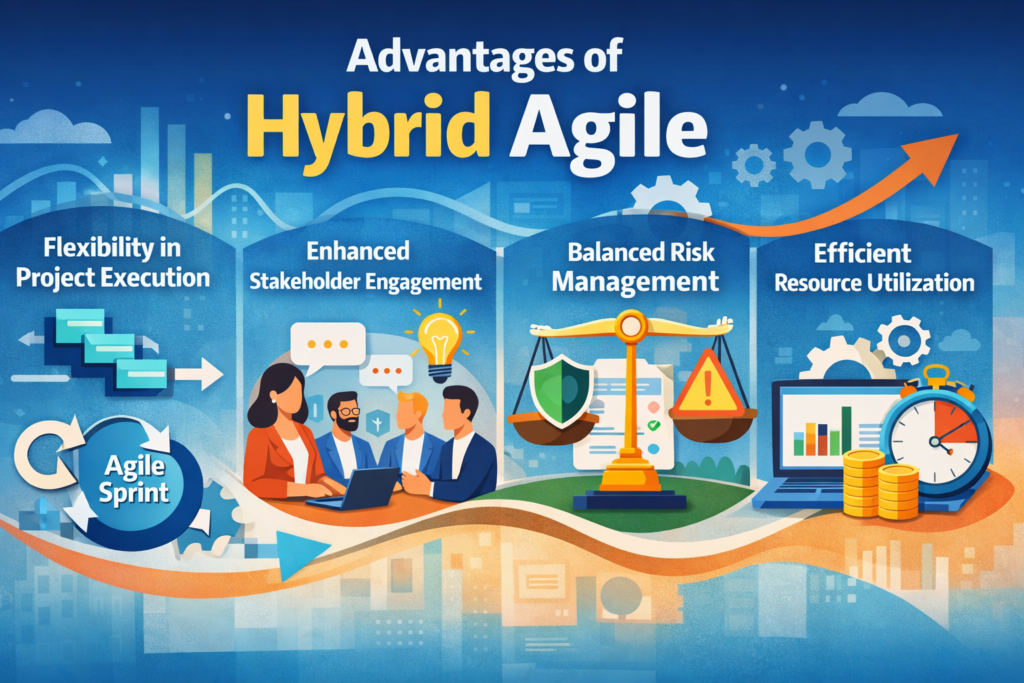
Hybrid Agile offers several benefits that make it a popular choice for organizations seeking flexibility without compromising structure. By combining traditional plan-driven methods with agile techniques, teams can optimize delivery timelines while maintaining high-quality standards. Key advantages include:
- Flexibility in Project Execution: Hybrid Agile allows teams to choose the best approach depending on project complexity and risk profile. Some tasks can follow a waterfall approach, while others are executed in iterative sprints.
- Enhanced Stakeholder Engagement: Agile components in the hybrid model ensure frequent communication with clients and product owners, resulting in better alignment with business goals.
- Balanced Risk Management: The integration of plan-driven elements helps in anticipating risks early, while agile sprints allow for quick corrective actions when needed.
- Efficient Resource Utilization: Teams can allocate resources according to task requirements, avoiding bottlenecks and reducing waste.
Implementing Hybrid Agile in Large Organizations
Large organizations often face challenges when adopting agile due to multiple teams, diverse processes, and legacy systems. Hybrid Agile provides a practical solution for these environments. Some strategies include:
Structured Planning with Agile Execution
In Hybrid Agile, the initial phases, such as requirement gathering and design, can be performed using traditional methods. Subsequent development and testing can adopt agile sprints, allowing for iterative improvements and faster feedback cycles.
Collaborative Tools and Communication
Hybrid Agile emphasizes the use of collaborative platforms to maintain transparency and track progress across teams. Tools like Jira, Confluence, or Microsoft Teams support cross-functional communication, helping teams remain aligned despite differing methodologies.
Compliance and Standardization
Certain industries, such as healthcare, finance, or aerospace, require strict adherence to regulatory standards. Hybrid Agile allows for standard compliance during the plan-driven phases while retaining agile flexibility in development, testing, and deployment.
Common Challenges in Hybrid Agile Adoption
While Hybrid Agile offers significant benefits, organizations must be aware of potential challenges:
- Cultural Resistance: Teams accustomed to traditional methods may initially resist agile practices. Strong leadership and training are essential to overcome this.
- Coordination Complexity: Managing multiple approaches requires precise planning and clear communication channels to avoid misalignment.
- Balancing Speed and Compliance: Striking the right balance between rapid delivery and adherence to regulatory requirements is critical.
Best Practices for Successful Hybrid Agile Implementation
To ensure maximum success, organizations should follow certain best practices when adopting Hybrid Agile:
- Clearly Define Roles: Establish responsibilities for agile and non-agile phases to prevent confusion.
- Prioritize Continuous Feedback: Maintain iterative reviews with stakeholders to ensure the project meets expectations.
- Leverage Automation: Use CI/CD pipelines and testing automation to speed up development and maintain quality.
- Adapt Processes Contextually: Avoid blindly following frameworks. Tailor the hybrid approach to the project’s unique needs.
- Invest in Training: Teams should understand both agile and traditional techniques to effectively navigate Hybrid Agile projects.
The Future of Hybrid Agile
As organizations continue to face dynamic market demands, Hybrid Agile is increasingly becoming the norm rather than the exception. By bridging traditional and agile approaches, organizations can:
- Deliver projects faster without compromising quality.
- Increase collaboration across diverse teams.
- Adapt quickly to changes in scope or market conditions.
Ultimately, Hybrid Agile is more than a methodology it is a flexible mindset that allows organizations to harness the strengths of multiple approaches for better business outcomes.
Conclusion
Hybrid Agile is a practical project management approach that combines the flexibility of Agile with the structured planning of traditional methods like Waterfall. It enables organizations to adapt to changing requirements while maintaining control over timelines, budgets, and documentation, making it an excellent choice for modern projects.
To succeed with this approach, professionals should build a strong foundation in Agile principles and Scrum practices. Enrolling in Agile and Scrum training can help you develop the skills needed to manage Hybrid Agile projects, collaborate effectively with teams, and advance your career in project management. Whether you’re a beginner or an experienced professional, learning these methodologies can prepare you to deliver successful projects in today’s fast-changing business environment.
FAQs:
1. What is Hybrid Agile?
Hybrid Agile is a project management approach that combines Agile’s flexibility with the structured planning of traditional Waterfall methods. It helps teams adapt while maintaining clear project milestones.
2. How does Hybrid Agile differ from Agile?
Agile follows an iterative and flexible process throughout the project, while Hybrid Agile blends Agile practices with traditional planning and documentation where needed.
3. When should you use Hybrid Agile?
Hybrid Agile is ideal for projects with fixed deadlines, regulatory requirements, or multiple teams where some phases require detailed planning and others benefit from Agile iterations.
4. What are the benefits of Hybrid Agile?
Hybrid Agile offers greater flexibility, improved collaboration, better risk management, faster feedback, and more predictable project delivery.
5. Can Hybrid Agile combine Agile and Waterfall?
Yes. Hybrid Agile integrates Agile practices such as sprints and continuous feedback with Waterfall elements like upfront planning, documentation, and sequential phases.
























7 Responses