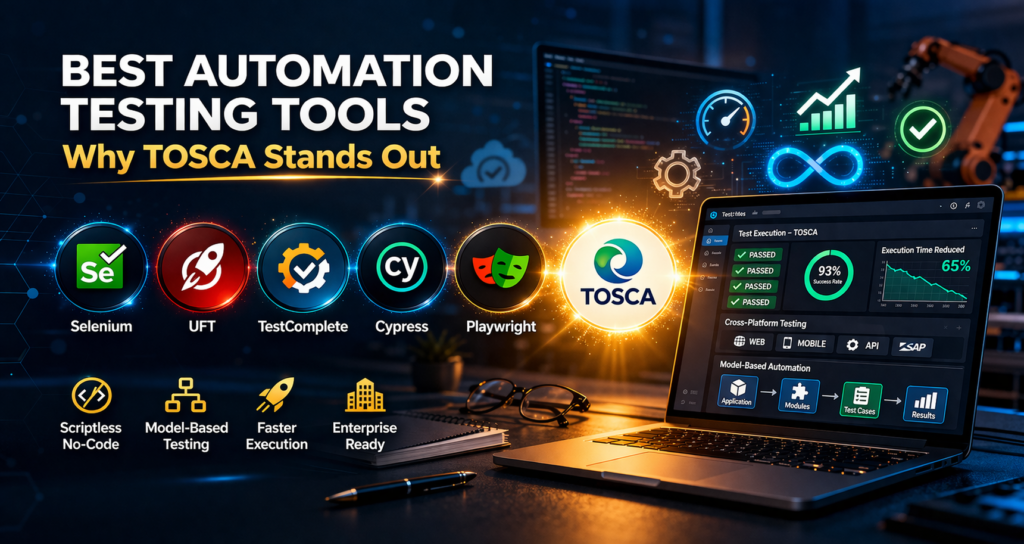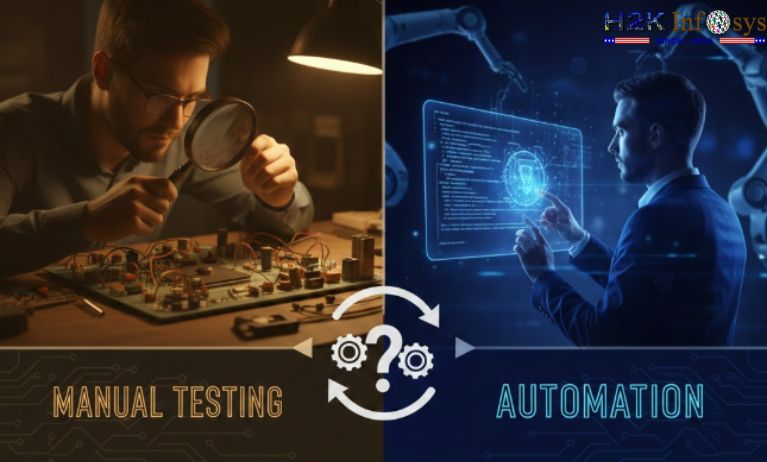
Manual testing is still an essential foundation skill in software quality assurance, even in 2026, because not all testing scenarios can or should be automated. Modern QA strategies rely on a combination of manual and automated testing to ensure usability, functionality, and real-world reliability. Many industry-aligned programs, including the training approaches used by H2K Infosys, integrate both manual fundamentals and automation tools, as companies expect QA professionals to understand software behavior before automating it.
Why This Question Matters in 2026
The rise of AI-driven testing tools, test automation frameworks, and continuous integration pipelines has created confusion for beginners entering QA. Many learners enrolling in QA tester classes often ask whether manual testing is outdated.
The short answer:
IT is not obsolete. Instead, it has evolved and become more strategic.
Automation testing is powerful for speed and scale. MT is critical for human validation, usability, and exploratory testing.
What Is Manual Testing and Why Does It Still Exist
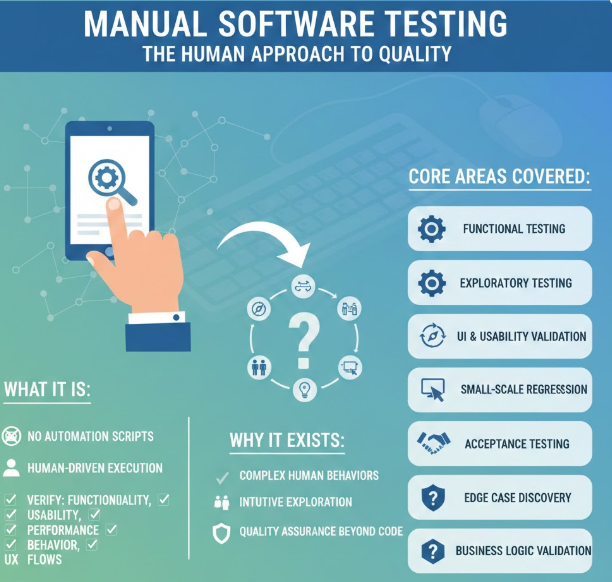
MT is the process of testing software without using automation scripts. Testers interact with applications like real users to identify defects, usability issues, and workflow problems.
Manual testing is heavily used in:
- User experience validation
- Exploratory testing
- Ad-hoc testing
- Early-stage product testing
- UI behavior validation
- Business workflow testing
Most courses for QA testing start with manual testing because it builds strong testing logic and product understanding.
What Is Automation Testing and Where It Dominates
Automation testing uses tools and scripts to execute repetitive tests quickly and reliably.
Common automation areas include:
- Regression testing
- API testing
- Performance testing
- Load testing
- Continuous integration pipelines
Students in advanced QA tester courses usually learn tools like:
- Selenium
- Cypress
- Playwright
- Rest Assured
- TestNG / JUnit
Why Companies Still Hire Manual Testers
Even tech-first companies continue hiring manual testers because software quality involves human thinking, not just scripts.
1️. Human Judgment Cannot Be Automated Fully
Automation cannot detect emotional usability issues or confusing workflows.
Example:
A script can verify that a button works.
A manual tester can verify if users understand what the button does.
2️. Early Product Testing Requires Manual Validation
Automation is expensive to build early in development.
Manual testers help teams:
- Validate prototypes
- Test new features quickly
- Provide user feedback
3️. Exploratory Testing Is Human-Driven
Exploratory testing is creative testing where testers simulate unpredictable user behavior.
Automation scripts cannot replicate human curiosity.
Why Manual Testing Is Still Taught in QA Tester Classes
Structured QA tester classes focus on manual testing first because:
Foundation Skills You Learn
- SDLC and STLC concepts
- Test case design
- Defect lifecycle
- Requirement analysis
- Risk-based testing
- Test documentation
These are required before automation learning.
The Real Industry Expectation in 2026
Companies do NOT expect entry-level testers to be automation experts immediately.
Instead, they expect:
| Skill | Importance |
| Manual Testing Fundamentals | Very High |
| Test Case Writing | Very High |
| Defect Tracking | Very High |
| Automation Basics | Medium |
| Scripting Knowledge | Medium |
This is why modern courses for QA testing follow a step-by-step learning model.
When Manual Testing Is More Valuable Than Automation
Complex UI Testing
Apps with heavy user interaction require manual validation.
Rapid Product Changes
Automation scripts break frequently when UI changes often.
Startup Environments
Startups rely heavily on manual testers for fast feedback.
AI-Based Applications
Manual testers validate AI output quality, bias, and correctness.
The Smart Career Path: Manual + Automation Hybrid
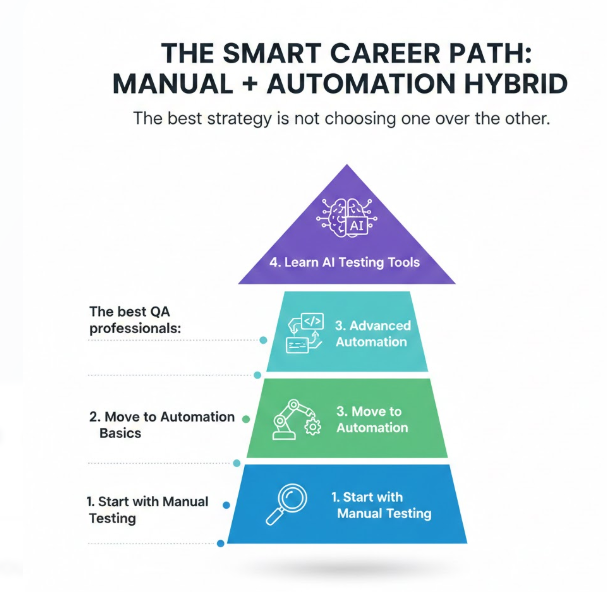
The best strategy is not choosing one over the other.
The best QA professionals:
- Start with Manual Testing
- Move to Automation Basics
- Move to Advanced Automation
- Learn AI Testing Tools
Most advanced QA tester courses now follow this hybrid model.
How Automation Builds on Manual Testing Knowledge
MT teaches:
- What to test
- Why to test
- When to test
Automation teaches:
- How to test faster
- How to test repeatedly
- How to test at scale
Without manual knowledge, automation scripts often become unreliable.
Common Mistakes Beginners Make
Many learners skip manual testing and jump directly into automation tools.
This creates problems:
❌ Weak test case logic
❌ Poor defect reporting
❌ Script-only mindset
❌ Limited product understanding
Experienced QA leads often prefer candidates with manual foundations.
Role of AI in Testing- Does It Replace Manual Testing?
AI helps in:
- Test case generation
- Test data creation
- Visual testing
- Predictive defect detection
But AI still needs human testers for:
- Business validation
- Ethical testing
- Usability testing
- Context-based testing
So manual testing is evolving, not disappearing.
What Employers Look for in Fresh QA Candidates
Employers hiring from QA tester courses usually evaluate:
- Test scenario thinking
- Bug reporting clarity
- Communication skills
- Requirement understanding
- Basic automation awareness
Not deep coding knowledge initially.
Is Manual Testing Enough Alone?
Today, MT alone is good for entry-level roles, but long-term growth requires automation exposure.
Best approach:
Learn Manual Testing + Basic Automation + AI Testing Awareness.
Who Should Focus Strongly on Manual Testing First
mt is especially important for:
- Career switchers
- Non-coding professionals
- Business domain testers
- UI / UX testers
- BA to QA transition roles
This is why beginner-friendly Courses for QA testing emphasize manual foundations first.
Learning Timeline Recommendation
Month 1-2
Manual Testing Basics
Testing Life Cycle
Test Case Writing
Bug Reporting
Month 3-4
SQL Basics
API Testing Basics
Agile Testing
Month 5-6
Automation Fundamentals
Selenium / Playwright Intro
Most modern QA tester classes follow similar industry-aligned timelines.
The Future of Manual Testing
Manual testing is shifting toward:
- Exploratory testing specialization
- AI validation testing
- Usability and accessibility testing
- Business workflow testing
- Security scenario validation
So manual testing is becoming more strategic, not less important.
Final Verdict: Should You Learn Manual Testing in 2026?
Yes. Manual testing is still worth learning because it builds the foundation required for automation, AI testing, and advanced QA careers. Professionals who complete structured learning paths through QA tester courses understand software behavior better, write stronger automation scripts, and perform better in real project environments.
If you want long-term QA career growth, the smartest path is learning manual testing first and then expanding into automation and AI testing. Many industry-focused training approaches, including those followed by H2K Infosys, design courses for QA testing with this hybrid learning strategy so learners can stay relevant in evolving QA job markets.