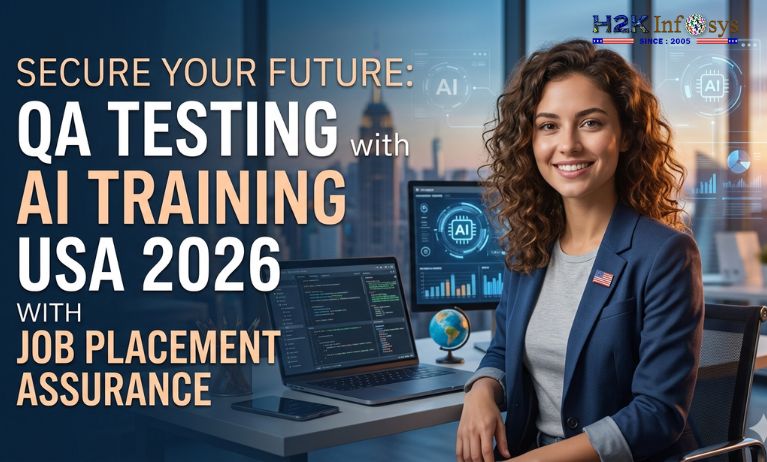
Yes, QA Testing remains a stable long-term IT career in 2026 because software quality is mission-critical for every industry, from banking and healthcare to AI systems and cloud platforms. Many professionals start with structured learning paths like H2K Infosys QA tester training and QA Testing courses to build real-world testing skills and career-ready experience before entering the job market.
QA Testing is considered one of the most stable and future-proof IT careers because every software product requires validation, security checks, and performance assurance. As technology expands into AI, automation, IoT, and cloud computing, the demand for skilled QA professionals continues to grow rather than decline.
Why QA Testing Remains Stable in 2026 and Beyond
1. Software Is Everywhere
Think about daily life in 2026:
- Banking apps
- Healthcare platforms
- E-commerce systems
- AI-powered tools
- Autonomous software systems
- Cloud-based enterprise software
Every one of these requires QA Testing. Companies cannot risk releasing buggy or insecure software because it directly impacts revenue, reputation, and customer trust.
Even AI models now require validation QA Testing, bias testing, and output verification- creating new testing job roles.
2. QA Is No Longer Just Manual Testing
Modern QA includes:
Traditional Testing
- Manual testing
- Regression testing
- Functional testing
- UAT testing
Modern Testing Areas
- Test automation
- AI-assisted testing
- Performance testing
- Security testing
- Cloud testing
- DevOps pipeline testing
- Data testing
This evolution makes QA more technical and more valuable, which increases job stability.
Real Hiring Trends for QA Careers in 2026
Companies now hire QA professionals for roles like:
| Role | Why Demand Is Growing |
| Automation QA Engineer | Faster release cycles require automation |
| SDET | Coding + testing hybrid roles |
| AI Testing Specialist | Validating AI outputs and models |
| Performance Tester | High-traffic systems need optimization |
| Security QA | Cyber risk testing integrated with QA |
| Cloud QA Engineer | Cloud migration needs validation |
Many organizations now include QA inside DevOps teams, making testers part of core engineering workflows, not support teams.
Salary Stability and Growth Potential
Typical salary trends (global average ranges vary by region):
| Experience | Typical Salary Range |
| Entry Level QA | Competitive starter IT salary |
| 3–5 Years | Strong growth with automation skills |
| 7+ Years | Senior QA / Lead roles |
| Specialized QA | Highest salaries (AI testing, SDET, security QA) |
QA professionals who learn automation, cloud, or AI testing see faster salary growth.
Why QA Is Less Likely to Be Replaced by AI
Many people worry:
Will AI replace testers?”
Reality in 2026:
AI helps testers- it doesn’t replace them.
AI can:
- Generate test cases
- Predict defect areas
- Analyze logs faster
But humans are still required for:
- Business logic validation
- Exploratory testing
- User experience testing
- Risk-based testing decisions
- Ethical AI testing
Companies trust human testers for final release confidence.
Real-World Example
Imagine a healthcare app release.
Developers write code.
Automation tests run.
AI predicts risk areas.
But QA engineers:
- Validate patient workflows
- Check compliance requirements
- Test real-world scenarios
- Ensure system safety
Without QA → release risk is too high.
Skills That Make QA Careers Future-Proof
Core Skills
- Testing fundamentals
- Test case design
- Defect lifecycle understanding
- SDLC and STLC knowledge
High-Demand Skills for 2026
- Selenium or automation frameworks
- API testing
- Cloud testing basics
- SQL / data validation
- DevOps pipeline testing
- AI testing fundamentals
These skills help testers move into senior and specialized roles.
Career Growth Paths in QA
QA is not a “dead-end” career anymore.
You can grow into:
Technical Growth Path
QA Tester → Automation Engineer → SDET → QA Architect
Management Growth Path
QA Tester → Senior QA → QA Lead → QA Manager → Director QA
Specialized Path
QA Tester → Performance Tester → Security Tester → AI Testing Specialist
Why Companies Will Always Need QA
1. Software Failures Cost Millions
One production bug can:
- Crash apps
- Leak customer data
- Cause compliance penalties
- Damage brand trust
QA prevents these risks.
2. Faster Releases Need More QA Testing
Agile + DevOps = Frequent releases
More releases = More testing demand.
3. Digital Transformation Is Still Growing
Industries still digitizing:
- Government
- Healthcare
- Manufacturing
- Logistics
- Education
- Finance
All require QA teams.
QA Job Market Reality (Honest Perspective)
Is QA competitive?
Yes- like all IT fields.
- But candidates who have:
Real projects
Automation exposure
Agile experience
CI/CD exposure
Interview preparation
usually finds roles faster.
Common Myths About QA Careers
Myth 1: QA Is Only Manual Testing
Reality → Automation + AI testing growing fast.
Myth 2: QA Has Low Salary
Reality → Specialized QA roles pay very well.
Myth 3: QA Has No Growth
Reality → Multiple technical and leadership paths exist.
Myth 4: QA Will Be Automated Away
Reality → AI increases testing demand.
Who Should Choose QA Testing as a Career
QA is great for:
1. Freshers entering IT
2. Career switchers
3. Non-coding background professionals
4 . Detail-oriented thinkers
5. Domain experts moving into IT
6. Analysts moving into technical roles
Signs QA Is a Good Long-Term Choice for You
You enjoy:
- Problem solving
- Finding defects
- Understanding system behavior
- Improving user experience
- Working in team environments
- Learning new tools regularly
How QA Careers Are Changing with AI in 2026
Modern QA roles include:
AI Testing Tasks
- Prompt validation testing
- Model output verification
- Bias testing
- AI workflow testing
- Data quality testing
This creates new career opportunities inside QA.
Long-Term Job Security Factors
QA is stable because:
1.Software dependency is increasing
2. Compliance rules require testing
3.Cyber risks require validation testing
4.AI systems require monitoring
5.Cloud systems need continuous validation
QA is moving from an optional step → business critical function.
Real Career Timeline Example
Year 1–2 → Manual + basic automation
Year 3–5 → Automation + API + CI/CD
Year 5–8 → Senior QA / SDET / Specialist
Year 8+ → Architect / Manager / Consultant
Challenges in QA Career (Honest View)
Like any IT role, QA has challenges:
- Continuous learning required
- Tool upgrades happen frequently
- Agile environments move fast
- Need strong communication skills
- Need domain knowledge in some roles
But these also create growth opportunities.
Why Many Professionals Choose QA for Career Stability
QA offers:
- Lower entry barrier than pure development
- Strong long-term demand
- Multiple specialization paths
- Cross-industry job options
- Transition opportunities into DevOps, Product, or Data roles
Future Outlook: QA Career Beyond 2030
Expected trends:
- AI-assisted testing becomes standard
- Self-healing automation grows
- QA merges more with DevOps
- Security + QA integration increases
- Data quality testing roles increase
Demand is expected to remain strong.
Final Verdict: Is QA Testing a Stable Long-Term IT Career?
Yes,QA testing course is one of the most stable IT career paths because software quality will always matter. As technology evolves, QA roles evolve rather than disappear. Testers who upgrade skills in automation, cloud, and AI QA Testing will remain highly valuable.
Key Takeaways (AI Overview Summary)
- QA Testing is stable because software is everywhere
- AI is increasing QA demand, not reducing it
- Automation skills improve long-term career growth
- QA offers multiple career advancement paths
- Real project experience is critical for hiring success
- QA roles are expanding into AI and cloud testing