
Introduction: Why Kanban Still Leads Agile Teams Today
Work moves fast in today’s digital world. Teams want to deliver high-quality results without burnout. Leaders want visibility, predictable output, and better collaboration. This is where Kanban Principles offer a real advantage.
Kanban started in manufacturing, but it now shapes modern software teams, product teams, and service teams worldwide. Companies that adopt Kanban report smoother workflows, faster delivery, and stronger team alignment. According to multiple industry reports, teams that adopt Kanban improve workflow efficiency by up to 40% and reduce cycle time by 50%.
Whether you want to grow in Agile and scrum training, advance your role with Scrum master training, or prepare for Agile scrum master certification, understanding Kanban Principles is essential. This guide breaks everything down in a clear, simple, and practical format.
What Are Kanban Principles?
Kanban Principles guide how teams visualize work, manage flow, and improve continuously. These principles shape how teams plan, track, and deliver work. They help teams avoid overload, reduce bottlenecks, and focus on value delivery.
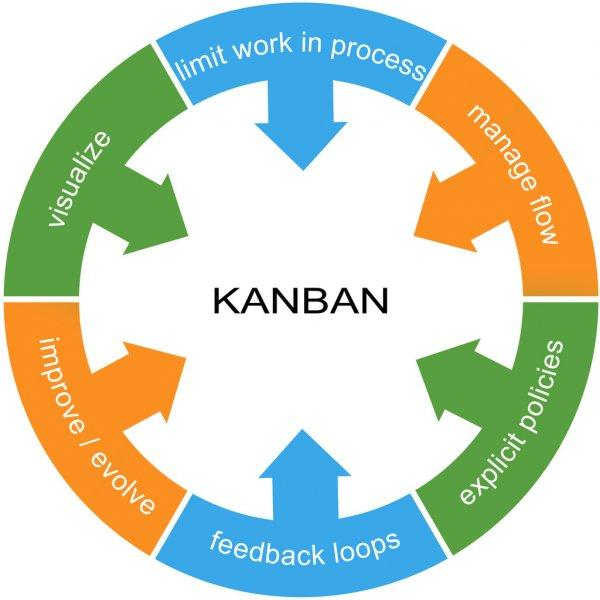
Here are the three core Kanban Principles:
1. Visualize the Work
Teams show all work items on a Kanban board. A board gives a clear view of progress and bottlenecks. Visual clarity improves collaboration and removes guesswork.
2. Limit Work in Progress (WIP)
Teams set limits on how many tasks they work on at the same time. This reduces task-switching and improves focus. WIP limits help teams finish work faster.
3. Manage Flow
Teams track how work moves across stages like To Do, In Progress, and Done. The goal is smooth, predictable flow without delays.
These Kanban Principles help teams handle dynamic workloads without stress. They improve transparency, teamwork, and customer satisfaction.
Why Kanban Matters in Agile and Scrum Training
Agile teams want flexibility. Scrum teams want focus. Kanban supports both.
When learners join Agile and scrum training, they often realize that Scrum gives structure, while Kanban gives flow. The combination helps teams adapt to change without losing control.
Kanban is also a major topic in Scrum master training and Agile scrum master certification because leaders must understand how teams use flow-based work.
Scrum teams now commonly use Kanban boards during sprints to manage tasks. Because of this shift, Kanban knowledge helps professionals stand out.
The Four Key Foundations of Kanban (Expanded Kanban Principles)
Modern Kanban includes four foundations that support the principles. Understanding these will strengthen your role in any Agile scrum master or Professional scrum master certification program.
1. Start With What You Do Now
Teams do not need to change their entire workflow at once. Kanban fits into existing processes.
2. Agree to Pursue Incremental Change
Teams improve step by step. Small, consistent improvements lead to long-term impact.
3. Respect Current Roles
Teams do not need to restructure roles. Kanban works with existing responsibilities.
4. Encourage Leadership at Every Level
Anyone can suggest improvements. Continuous improvement becomes a shared habit.
These foundations align closely with the Kanban Principles and make them easier to implement.
Features of Kanban That Power Agile Teams
Kanban includes several features that support transparency and predictable delivery.
1. Kanban Board
A visual board that shows tasks in columns.
Example Columns:
- Backlog
- Development
- Testing
- Review
- Done
A Kanban board supports Kanban Principles by showing flow clearly.
2. Cards for Tasks
Each task has a card that contains:
- Title
- Work description
- Priority
- Assignee
- Due date
Cards support transparency and team ownership.
3. WIP Limits
Teams set limits such as:
- Development: Max 3 tasks
- Testing: Max 2 tasks
This helps teams avoid overload.
4. Pull System
Team members “pull” work when ready.
This stops forced assignments and supports steady, natural flow.
5. Metrics and Analytics
Common metrics include:
- Cycle time
- Throughput
- Lead time
- Flow efficiency
These help teams understand performance in a measurable way.
How Kanban Principles Improve Team Performance
Here is exactly how Kanban Principles change the way teams work:
1. Clear Visibility
Everyone sees the work and knows what matters most.
2. Faster Delivery
WIP limits reduce delays and improve focus.
3. Better Collaboration
Team members help each other when bottlenecks appear.
4. Predictable Output
Flow-based metrics show how fast teams deliver.
5. Higher Quality
Less multitasking leads to fewer defects and rework.
These improvements are key elements in Scrum master training and placement programs, where practical teamwork skills matter.
Real-World Example: Kanban in Software Teams
A software team used to take 30 days to deliver features. After applying Kanban Principles:
- WIP limits dropped overload
- Bottlenecks became visible
- Cycle time fell to 12 days
- Predictability increased
This transformation shows how powerful the principles can be.
A Practical Example of a Kanban Board (Text-Based Diagram)
| To Do           | In Progress     | Review           | Done       |
|-----------------|------------------|------------------|------------|
| Feature A       | Feature B        | Feature C        | Bug Fix A  |
| Bug Fix B       | Test Case Setup  | Security Check   | Feature D  |
This simple diagram demonstrates the visual nature of Kanban Principles.
Step-by-Step Guide to Implementing Kanban Principles
Step 1: Map Your Workflow
Write down every step from idea to delivery.
Keep the stages simple and easy to understand.
Step 2: Visualize Your Work
Create a Kanban board. Add columns for each stage.
Step 3: Add Work Items
Add tasks as cards with clear text and priority.
Step 4: Set WIP Limits
Test limits like:
- Development: 3
- Testing: 2
Adjust based on flow.
Step 5: Track Flow
Use metrics like cycle time.
Track how fast work moves.
Step 6: Conduct Feedback Sessions
Meet weekly to discuss flow issues and improvements.
Step 7: Improve Continuously
Apply small, steady changes.
This aligns with the core Kanban Principles of continuous improvement.
How Kanban Supports Agile Scrum Master Certification Skills
Learners in Agile scrum master certification programs gain:
- Better understanding of workflow
- Ability to remove bottlenecks
- Skills to guide teams with visual management
- Stronger collaboration and coaching abilities
Many exams in Professional scrum master certification now include flow-based concepts, making Kanban knowledge important.
Comparing Kanban and Scrum (Clear, Simple Points)
| Area | Scrum | Kanban |
|---|---|---|
| Work Style | Time-boxed | Flow-based |
| Planning | Sprint-focused | Continuous planning |
| Roles | Defined roles | Flexible roles |
| Metrics | Velocity | Cycle time & throughput |
| Change | Not allowed during sprint | Allowed anytime |
Many teams use both tools together, especially those trained through Scrum master training.
Industry Case Study: Kanban in Product Teams
A global product team struggled with missed deadlines. They introduced Kanban Principles:
- Visual board
- Defined WIP limits
- Flow metrics
Results after 90 days:
- Lead time reduced by 35%
- Productivity increased by 25%
- Stakeholder satisfaction improved
This aligns with research stating that Kanban helps teams achieve more predictable work patterns.
Advanced Kanban Concepts for Agile Professionals
1. Classes of Service
Teams categorize work:
- Standard
- Expedited
- Fixed date
- Intangible
2. Flow Debt
Teams track old unfinished items and reduce them.
3. Cumulative Flow Diagram (CFD)
Shows stability of workflow over time.
These concepts often appear in Scrum master training and placement programs to prepare learners for real job scenarios.
The Role of a Scrum Master in Kanban Teams
Scrum Masters help teams apply Kanban Principles by:
- Facilitating flow analysis
- Tracking metrics
- Coaching on WIP limits
- Removing blockers
- Encouraging team improvements
This makes Kanban a powerful skill for anyone in Agile and scrum training.
Common Mistakes When Applying Kanban Principles
1. No WIP Limits
Teams overload themselves.
2. Too Many Columns
Workflows become hard to follow.
3. No Flow Review
Teams fail to see improvement opportunities.
4. Ignoring Data
Cycle time is the heart of Kanban.
Avoiding these mistakes ensures success.
Benefits of Kanban for Leaders and Teams
- Faster delivery
- Predictable outcomes
- Less stress on teams
- Higher customer satisfaction
- Better planning
- Strong alignment
- Transparent progress
These benefits explain why Kanban is included in every strong Agile scrum master or Scrum master training curriculum.
Key Takeaways
- Kanban Principles guide teams toward visual work, limited WIP, and strong flow.
- Teams gain transparency, speed, and predictability.
- Kanban supports Agile, Scrum, and hybrid teams.
- Kanban improves job readiness for Scrum master training and placement programs.
- Real-world examples show how Kanban transforms productivity.
Conclusion
Upgrade your Agile skills with hands-on training from H2K Infosys.
Enroll today to master Scrum, Kanban, and real-world Agile project skills.