

Introduction: Why Python Dominates Data Science and AI
Data-driven systems now shape how businesses predict trends, automate decisions, and improve customer experiences. Python plays a central role in this transformation by enabling professionals to analyze data, build predictive models, and deploy intelligent solutions at scale. As organizations rely more on analytics, skills in data science with python have become essential for modern technology roles.
Behind these capabilities lies Machine Learning, which allows systems to learn patterns from historical data instead of following fixed instructions. When combined with deep learning techniques and Python-based workflows, it helps teams solve real business problems across finance, healthcare, retail, and technology. This guide explains how Python connects data science, intelligent modeling, and deep learning into a practical, job-focused skill set.
Learners who complete a structured Data science course with Python gain practical skills that map directly to job roles. These roles include data analyst, data scientist, AI engineer, and research analyst.
Python sits at the center of this ecosystem for three main reasons:
- Simple syntax reduces learning friction
- Mature libraries support analytics and modeling
- Strong community ensures long-term relevance
What Is Data Science with Python?
Data science with python is the process of collecting, cleaning, analyzing, and modeling data using Python tools. The goal is to extract useful patterns that support business or technical decisions.
A typical data science workflow includes:
- Data collection from files, databases, or APIs
- Data cleaning and preparation
- Exploratory data analysis
- Feature engineering
- Model building and evaluation
- Deployment and monitoring
Python supports each step with reliable libraries.
Core Python Libraries Used in Data Science
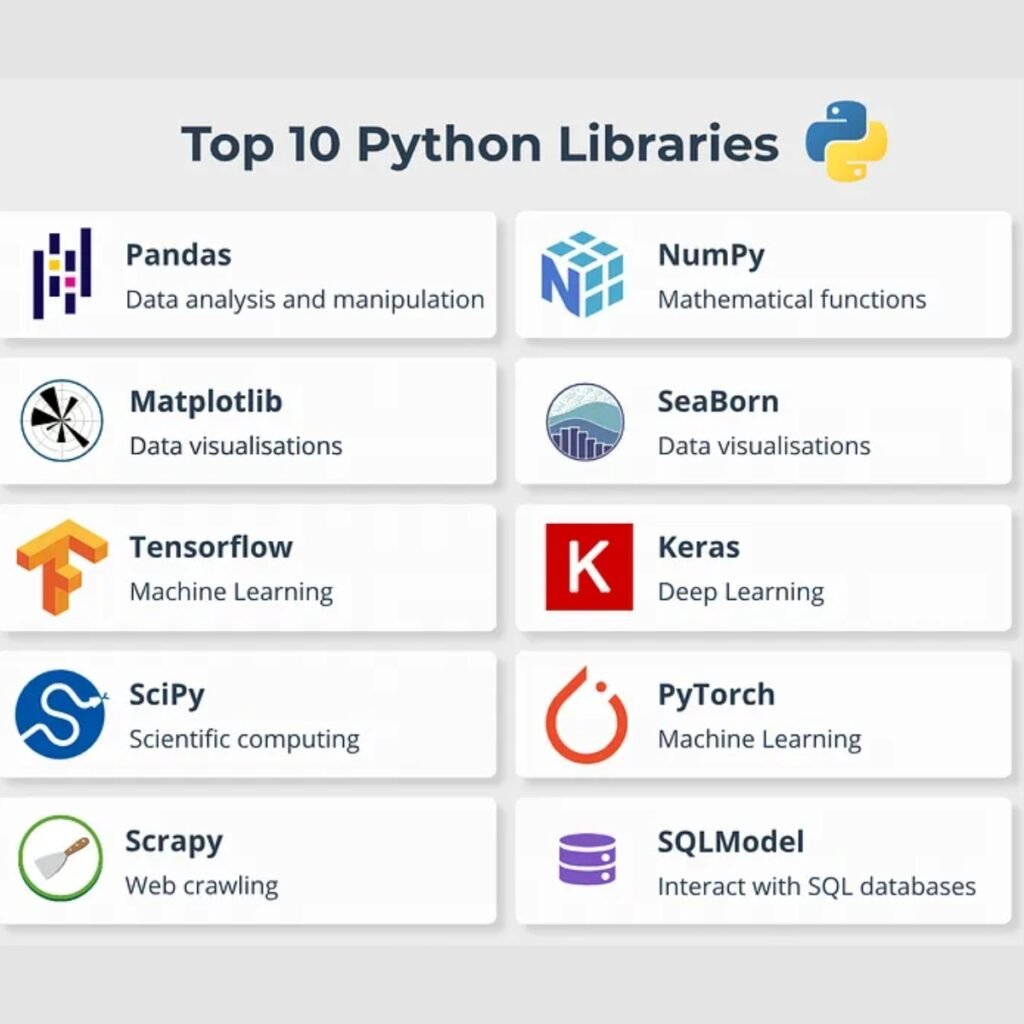
NumPy and Pandas for Data Handling
NumPy handles numerical arrays and matrix operations. Pandas manages structured data using tables called DataFrames. Analysts use these tools to clean data, handle missing values, and prepare datasets.
Example:
import pandas as pd

data = pd.read_csv("sales.csv")
data = data.dropna()
print(data.describe())
Matplotlib and Seaborn for Visualization
Visualization helps teams understand trends and outliers. Charts also support stakeholder communication.
Common uses include:
- Line charts for trends
- Bar charts for category comparison
- Heatmaps for correlation analysis
Scikit-learn for Modeling
Scikit-learn supports regression, classification, and clustering. It provides consistent APIs for training and testing models.
Understanding Machine Learning in Data Science
Machine Learning allows systems to learn patterns from data instead of relying on fixed rules. In data science projects, it converts historical data into predictive insights.
There are three main types:
- Supervised learning
- Unsupervised learning
- Semi-supervised learning
Supervised Learning
Models learn from labeled data. Common tasks include prediction and classification.
Examples:
- Sales forecasting
- Email spam detection
Unsupervised Learning
Models find patterns without labels.
Examples:
- Customer segmentation
- Anomaly detection
This is where Machine Learning becomes essential for scalable decision-making.

Common Algorithms Used in Practice
Professionals learn algorithms that appear frequently in real projects:
- Linear regression
- Logistic regression
- Decision trees
- Random forests
- K-means clustering
Each algorithm solves a specific type of problem. Strong training explains when to use each approach.
How Deep Learning Extends Data Science
Deep learning focuses on neural networks with multiple layers. These models process images, text, audio, and video data.
Key characteristics:
- Learns features automatically
- Handles unstructured data
- Requires more data and compute
Deep learning frameworks in Python include TensorFlow and PyTorch.
Neural Networks Explained Simply
A neural network contains:
- Input layer
- Hidden layers
- Output layer
Each layer transforms data using weights and activation functions. Over time, the network improves predictions through optimization.
This approach powers speech recognition, image detection, and recommendation engines.
Real-World Applications Across Industries
Healthcare
Python models analyze patient data to support diagnosis and treatment planning.
Finance
Banks use predictive models to detect fraud and assess credit risk.
Retail
Companies analyze purchase behavior to improve pricing and inventory planning.
Technology
Search engines and recommendation systems rely heavily on Machine Learning and deep learning pipelines.
Step-by-Step: Building a Simple Predictive Model in Python
This example shows how beginners apply theory in practice.
Step 1: Load Data
from sklearn.datasets import load_boston
data = load_boston()
Step 2: Split Data
from sklearn.model_selection import train_test_split
X_train, X_test, y_train, y_test = train_test_split(
    data.data, data.target, test_size=0.2
)
Step 3: Train Model
from sklearn.linear_model import LinearRegression
model = LinearRegression()
model.fit(X_train, y_train)
Step 4: Evaluate
print(model.score(X_test, y_test))
This workflow mirrors how teams apply Machine Learning in production.
Why Python Certification Matters
A recognized python certification validates your ability to work with data tools and libraries. Employers trust certifications because they reflect structured learning and assessment.
Benefits include:
- Proof of practical skills
- Better interview performance
- Higher credibility with recruiters
Choosing the Right Data Science Course Online
A strong data science course online should focus on applied learning rather than theory alone.
Look for programs that include:
- Real datasets
- End-to-end projects
- Model deployment basics
- Career guidance
Many learners also look for data science training and placement support to bridge the gap between learning and employment.
What Makes a Program Industry-Aligned?
Industry-aligned programs emphasize:
- Python-first workflows
- Business problem framing
- Clear evaluation metrics
- Team-based project exposure
This structure helps learners understand how Machine Learning supports real decisions.
Career Roles After Completing Training
Graduates often move into roles such as:
- Data analyst
- Data scientist
- Business intelligence analyst
- Junior AI engineer
Advanced Machine Learning learners may pursue paths similar to the best online data science masters programs, but with more applied focus.
Salary and Market Demand Insights
According to industry hiring reports:
- Data roles show consistent year-over-year growth
- Python remains the most requested skill
- Employers prefer candidates with project experience
This trend explains why Machine Learning skills continue to dominate job descriptions.
How H2KInfosys Supports Career-Focused Learning
H2K Infosys offers structured programs that combine Python fundamentals, data science workflows, and applied deep learning. Learners gain hands-on exposure through guided labs and projects designed around industry use cases.
Their focus on data science training and placement helps learners move from training to employment with confidence.
Key Takeaways
- Python is the foundation of modern data science workflows
- Practical projects matter more than theory alone
- Deep learning expands analytics to unstructured data
- Structured training improves job readiness
- Machine Learning skills align directly with employer needs
Conclusion
Build practical Python, data science, and Machine Learning skills with expert-led programs at H2KInfosys.
Enroll today to gain hands-on experience and move forward in a data-driven career.























One Response