
In the fast-paced world of mobile app development, frameworks have become essential tools for developers. They provide the necessary tools, libraries, and support structures that make building apps more efficient and manageable. As mobile apps continue to dominate our daily lives, it’s crucial to understand the most popular mobile app development frameworks and how they contribute to successful app development.
Whether you’re just starting in mobile app development or seeking to enhance your skills, knowing which frameworks to choose can significantly impact the efficiency, functionality, and scalability of your projects. This blog will cover everything you need to know about mobile app Development frameworks, including their importance, popular options, and how they are related to quality assurance (QA) and software testing.
What Is a Mobile App Development Framework?
A mobile app development framework is a platform that provides the necessary tools and resources to develop mobile applications for various operating systems (iOS, Android, and others). These frameworks often come with pre-written code, templates, and UI components that streamline the app development process, allowing developers to focus on custom features instead of reinventing the wheel.
Frameworks are designed to help developers build applications more efficiently and with fewer bugs by providing reusable components, ready-to-use libraries, and development tools that simplify repetitive tasks. In addition to reducing development time, frameworks also help ensure that the code is clean and maintainable.
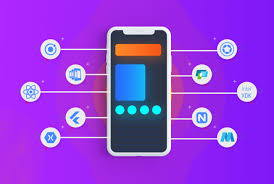
Types of Mobile App Development Frameworks
Mobile app development frameworks can be broadly categorized into two types: native and cross-platform frameworks.
- Native Frameworks:
Native frameworks are used to develop applications that run on a specific mobile operating system, such as Android or iOS. These frameworks are designed to take full advantage of the device’s hardware and software. Native apps generally provide better performance and user experience but require separate development for different platforms. - Cross-Platform Frameworks:
Cross-platform frameworks allow developers to write a single codebase that can run on multiple platforms (iOS, Android, and sometimes even Windows). These frameworks aim to reduce development time and cost by enabling code reuse across different operating systems. However, the performance may not be as optimized as native applications, especially for resource-intensive apps.
Now, let’s dive into some of the most popular mobile app development frameworks and their features.
Top Mobile App Development Frameworks
1. React Native
React Native, developed by Facebook, is one of the most popular frameworks for cross-platform mobile app development. It allows developers to build apps using JavaScript and React, a widely used library for building user interfaces. With React Native, you can create mobile apps that feel and perform like native apps, but with the efficiency of reusing code across both iOS and Android.
Key Features:
- Code Reusability: You can reuse up to 90% of your code across platforms, making development faster.
- Hot Reloading: Developers can see changes in real time without reloading the entire app, speeding up the development process.
- Community Support: React Native has a large and active community, which means plenty of resources, tutorials, and third-party libraries are available.
When to Use React Native:
- When you need to build a cross-platform app quickly.
- For apps that require a rich UI and interactive elements.
2. Flutter
Flutter is Google’s UI toolkit for creating natively compiled applications for mobile, web, and desktop from a single codebase. Unlike React Native, which uses JavaScript, Flutter uses Dart, a programming language developed by Google. Flutter is known for its high performance and ability to create visually appealing UIs.
Key Features:
- High Performance: Flutter apps are compiled to native ARM code, which allows them to perform better than other cross-platform frameworks.
- Customizable Widgets: Flutter provides a wide range of highly customizable widgets, making it easy to create beautiful UIs that feel native.
- Single Codebase: Like React Native, Flutter enables developers to use a single codebase for both iOS and Android apps.
When to Use Flutter:
- When performance is a key requirement.
- For apps that need beautiful, custom-designed UIs.
- When you want to deploy apps across multiple platforms.
3. Xamarin
Xamarin is a Microsoft-owned framework that allows developers to build mobile apps using C# and the .NET framework. Xamarin provides the ability to create fully native apps using a shared codebase, which means you can use one codebase to develop apps for iOS, Android, and even Windows.
Key Features:
- Native Performance: Xamarin compiles code to native binaries, which provides a performance close to that of a fully native app.
- Code Sharing: Xamarin allows you to share code between platforms, significantly reducing the amount of work for cross-platform app development.
- Integration with Microsoft Tools: Xamarin integrates seamlessly with Visual Studio, making it a great choice for developers already familiar with the Microsoft ecosystem.
When to Use Xamarin:
- When you need to create fully native apps with C#.
- When you are already working within the Microsoft ecosystem.
4. Swift (iOS) and Kotlin (Android)
While cross-platform frameworks are popular for developing mobile apps, many developers still prefer to use native programming languages such as Swift for iOS and Kotlin for Android to take full advantage of platform-specific features.
- Swift is Apple’s official language for iOS app development. It provides robust tools and libraries for building powerful, high-performance apps on iOS devices.
- Kotlin is the preferred language for Android development, offering improved safety, concise code, and full interoperability with Java.
When to Use Swift or Kotlin:
- When you want the best performance and user experience.
- When you are building an app that is specific to one platform.
- If you need to leverage advanced platform-specific features.
5. Ionic
Ionic is an open-source framework that allows developers to build mobile apps using web technologies such as HTML, CSS, and JavaScript. It is a hybrid framework, meaning it uses a web view to render the app on a mobile device. While it doesn’t offer the same performance as native or cross-platform frameworks, it can still be an excellent choice for simple apps or apps with less resource-intensive features.
Key Features:
- Web Technologies: Ionic allows you to build apps using familiar web technologies, making it easy for web developers to transition to mobile app development.
- Single Codebase for Multiple Platforms: Like React Native and Flutter, Ionic supports building apps for both iOS and Android with one codebase.
- Rich UI Components: Ionic offers a variety of pre-built UI components that match the look and feel of native apps.
When to Use Ionic:
- For simpler apps with fewer resource requirements.
- When you have experience with web development and want to leverage your existing skills.
- When you want a cost-effective solution for building cross-platform apps.
Mobile App Development and Quality Assurance (QA)
Quality assurance (QA) plays a critical role in the success of mobile app development. A well-tested app ensures that the end product meets both functional and non-functional requirements, offering a seamless user experience. QA processes like functional testing, performance testing, security testing, and usability testing help identify and eliminate bugs and ensure that the app performs as expected.
Why QA Is Crucial for Mobile App Development:
- Performance: Mobile apps must perform optimally across various devices and network conditions. QA helps in identifying performance bottlenecks and ensuring smooth app functionality.
- Compatibility: Apps must be compatible with different devices, screen sizes, and operating systems. QA ensures that apps run smoothly on all supported platforms.
- Security: Security testing is crucial to safeguard user data and prevent unauthorized access. QA processes test apps for potential vulnerabilities.
- User Experience (UX): QA ensures that the app provides a smooth and intuitive user experience, which is crucial for app retention.
QA and Software Testing in Mobile App Development Frameworks
Choosing the right mobile app development framework can have a significant impact on the testing process. Some frameworks, like Flutter and React Native, offer tools that make it easier to test and debug mobile apps. These frameworks provide powerful testing libraries, such as Flutter’s integration testing or React Native’s Jest testing framework, which make it easier for developers and testers to ensure app quality.
QA Online Training:
For those looking to enhance their mobile app development skills, particularly in the context of QA, online training in QA software testing is an excellent way to gain expertise in this area. Online courses on QA testing help aspiring testers learn the essential techniques, frameworks, and tools required for mobile app testing. These courses often cover:
- Functional testing
- Performance testing
- UI/UX testing
- Security testing
Through QA online training, developers and testers can ensure that they’re equipped with the right skills to evaluate the quality of the app efficiently.
Conclusion
Choosing the right mobile app development framework can significantly impact the efficiency, functionality, and success of your app. React Native, Flutter, Xamarin, and other popular frameworks each offer unique advantages depending on your specific project needs.
In parallel, incorporating comprehensive QA practices is essential for ensuring the quality of your app. Testing is not just about finding bugs but ensuring the app provides a high-performance, secure, and seamless user experience. QA online training can help you master the best testing techniques and tools to ensure your app is ready for deployment.
If you’re looking to accelerate your skills in software testing, consider enrolling in a course of software testing or exploring QA online training to advance your career in mobile app development. By mastering both development frameworks and testing best practices, you’ll be on your way to building robust, high-quality mobile apps that stand out in the market.