In today’s fast-paced technology-driven world, the demand for Quality Assurance (QA) professionals has skyrocketed. Organizations across various industries are increasingly prioritizing high-quality products, making QA an integral part of the software development lifecycle. As a result, QA engineers are essential in ensuring that software products meet user expectations, regulatory requirements, and industry standards.
To help individuals gain the skills necessary to thrive in this field, QA Online Training with Job Support & Real-Time Projects has become a highly sought-after option. In this blog post, we’ll explore the significance of QA online training, the skills it imparts, potential career paths, and the growth opportunities in this rewarding field. We’ll also delve into how H2K Infosys can support you in acquiring top-notch QA Online Training and job placement support.
Why QA Online Training?
Quality Assurance ensures that software products function as expected, providing a seamless user experience. While the technicalities of QA involve rigorous testing processes, the real challenge lies in mastering the variety of tools and methodologies used in the QA landscape.
Online training offers flexibility, accessibility, and the ability to learn at your own pace, making it the perfect choice for working professionals and individuals looking to switch careers. QA online courses typically provide hands-on learning, guided by industry professionals who can teach the ins and outs of software testing, bug tracking, automation, and much more.
The addition of job support and real-time projects is a game-changer. It ensures that individuals not only learn the theoretical aspects of QA but also get practical exposure to real-world scenarios. This approach bridges the gap between academia and the industry, making graduates highly employable.
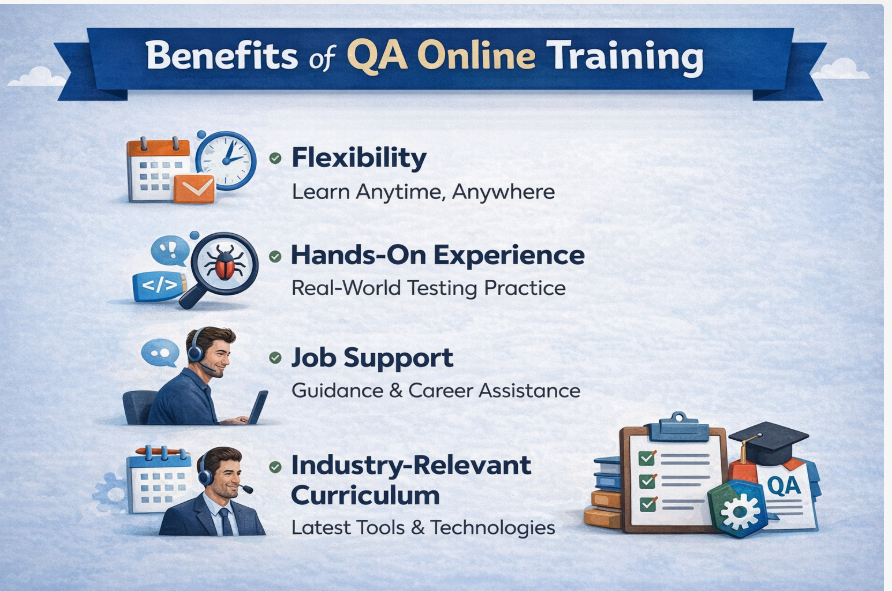
Benefits of QA Online Training with Job Support & Real-Time Projects:
- Flexibility: Access QA Online Training materials from anywhere at any time, fitting the learning process into your schedule.
- Hands-On Experience: Practical experience through real-time projects allows learners to apply theoretical knowledge to actual problems.
- Job Support: With job assistance, learners receive personalized guidance on resume building, interview preparation, and job placement.
- Industry-Relevant Curriculum: The curriculum is updated to match the latest industry trends, ensuring students are equipped with the most current knowledge and tools.
Essential Skills Acquired in QA Online Training
Effective QA professionals are equipped with a diverse skill set, ranging from manual testing to automated test scripting. Let’s explore the primary skills you will learn during a comprehensive QA Online Training program:
1. Manual Testing:
Manual testing is the foundation of software testing, and every QA engineer must understand it thoroughly. Online QA courses cover different types of testing, such as:
- Functional Testing
- Regression Testing
- Integration Testing
- System Testing
- User Interface Testing
You will learn how to identify and report bugs, write test cases, and execute them to ensure the software’s functionality.
2. Automation Testing:
With the growing complexity of applications, automation testing is gaining prominence. QA professionals need to be proficient in automation tools such as:
- Selenium
- TestNG
- JUnit
- Cucumber
- Appium
These tools help speed up the testing process, making them a vital skill in modern QA practices. Online courses equip learners with automation scripting and provide real-time project scenarios to practice automated testing on different platforms.
3. Bug Tracking and Reporting:
A crucial skill in QA testing is the ability to track, document, and report bugs efficiently. Learners will gain proficiency in bug tracking tools such as:
- JIRA
- Bugzilla
- Mantis
- Redmine
This ensures that software defects are easily identified and communicated to the development team for resolution.
4. Performance Testing:
In the age of digital transformation, ensuring that applications can handle large traffic loads is essential. You will learn tools like LoadRunner, JMeter, and Apache JMeter to test the performance, scalability, and stability of an application under varying conditions.
5. Version Control:
Understanding Version Control Systems (VCS) like Git is crucial for modern QA engineers. With version control, testers can collaborate more efficiently with developers, track changes, and manage test artifacts throughout the software development process.
6. API Testing:
With the rise of microservices and cloud-native architectures, API testing is crucial. In QA software tester training, students learn how to use tools such as Postman and SOAP UI for testing APIs, ensuring seamless data exchange between applications.
Career Paths in QA
QA professionals are in high demand, and the field offers multiple career paths. Here’s an overview of potential job roles available after completing QA online training:
1. QA Tester:
As a QA Tester, your primary responsibility is to execute test cases and report defects. This role requires a deep understanding of manual testing, and many professionals start their careers in this position before moving into specialized roles.
2. Automation Tester:
Automation testers focus on creating automated test scripts to streamline the testing process. With tools like Selenium and Appium, automation testers can reduce manual work and improve testing efficiency.
3. QA Lead:
QA Leads manage a team of testers, ensuring that testing processes are followed, and deadlines are met. In this role, you will also liaise between development teams, ensuring that all features are thoroughly tested.
4. Performance Tester:
Performance testers focus on assessing how an application handles large volumes of users or data. Performance testers use tools such as LoadRunner and JMeter to test and improve application performance.
5. QA Analyst:
A QA Analyst is responsible for analyzing and designing test plans, ensuring software is tested for functionality, usability, and performance. Analysts are involved in the planning phase and work closely with the development team to ensure quality standards are met.
6. DevOps Engineer:
QA engineers can transition to DevOps roles, working alongside developers to integrate automated testing in the continuous integration/continuous deployment (CI/CD) pipeline.
7. Test Manager:
As a test manager, you’ll oversee all testing operations, including test planning, resource allocation, and ensuring the team’s productivity. This role requires strong leadership and communication skills.
Salary Growth in QA Careers
One of the main reasons professionals pursue careers in Quality Assurance is the competitive salary growth it offers. The average salaries for QA roles vary based on experience, job role, and industry, but here’s an overview of potential salary growth:
1. QA Tester: $60,000 – $80,000 per year
2. Automation Tester: $70,000 – $100,000 per year
3. QA Lead: $85,000 – $110,000 per year
4. Performance Tester: $90,000 – $120,000 per year
5. QA Analyst: $75,000 – $100,000 per year
6. Test Manager: $110,000 – $150,000 per year
The job market for QA professionals is booming, and with the right training, you can achieve steady career progression. Additionally, online training provides a clear roadmap to upskill, transitioning from entry-level positions to leadership roles, boosting your earning potential.
Real-Time Projects: Why They Matter
Real-time projects serve as a critical component of QA online training. These projects simulate the real-world testing scenarios that QA engineers face on a daily basis. Here’s why real-time projects are essential:
- Practical Exposure: Real-time projects give learners a chance to work on actual software products, helping them understand the complexities involved in testing and bug-fixing.
- Job Readiness: Projects mirror the kinds of challenges QA professionals encounter, allowing learners to gain problem-solving skills and prepare for on-the-job scenarios.
- Portfolio Building: Completing real-time projects allows students to build a portfolio showcasing their skills to potential employers, helping them stand out in the competitive job market.
How H2K Infosys Supports Your QA Career
At H2K Infosys, we understand that the key to a successful career in Quality Assurance lies in comprehensive QA Online Training, real-time project exposure, and robust job support. Here’s how we help you succeed:
- Industry-Experienced Trainers: Learn from experts with hands-on experience in QA and the latest testing methodologies.
- Real-Time Project Work: Gain real-world experience through live projects and case studies.
- Job Support: Receive personalized career guidance, including resume building, interview preparation, and job placement assistance.
- Comprehensive Curriculum: Our curriculum is designed to cover everything from manual testing to advanced automation and performance testing.
- Post-Online Training Support: We offer post-training assistance to ensure you have the resources and guidance you need throughout your career.
Conclusion
QA Online Training with Job Support & Real-Time Projects is an excellent pathway for individuals looking to embark on a career in Quality Assurance. By equipping yourself with the right skills and hands-on experience, you can set yourself on a path to success in one of the fastest-growing fields in technology. With H2K Infosys, you’ll not only gain the technical expertise needed but also receive comprehensive career support, ensuring you land the job of your dreams.
Start your journey with H2K Infosys today, and take the first step toward a rewarding and fulfilling career in Quality Assurance!