Becoming job-ready in Artificial Intelligence typically takes 6 months to 2 years, depending on your starting technical background, learning intensity, and the specific AI role you are targeting. Professionals with experience in programming, data analysis, or IT systems often progress faster, while complete beginners may require additional time to build foundational skills in mathematics, coding, and data handling. Structured programs and a well-designed can significantly reduce this timeline by aligning learning with real-world enterprise workflows.
What Is Artificial Intelligence?
Artificial Intelligence (AI) is a branch of computer science focused on building systems that can perform tasks normally requiring human intelligence. These tasks include pattern recognition, decision-making, language understanding, and predictive analysis.

In enterprise IT environments, AI systems are commonly designed to:
- Analyze large datasets to identify trends and anomalies
- Automate repetitive business processes
- Support decision-making in operations, finance, and customer service
- Enhance digital products with personalization and predictive features
AI is not a single tool or platform. It is an ecosystem that includes data pipelines, machine learning models, deployment systems, and monitoring frameworks that operate together in production environments.
How Does Artificial Intelligence Work in Real-World IT Projects?
AI projects in professional environments follow structured engineering workflows rather than experimental or academic approaches. The process is typically iterative and governed by organizational standards for data security, performance, and reliability.
Common Enterprise AI Workflow
| Phase | Description | Tools Commonly Used |
|---|---|---|
| Data Collection | Gathering structured and unstructured data from internal systems, APIs, or sensors | SQL, REST APIs, Data Warehouses |
| Data Preparation | Cleaning, labeling, and transforming data into usable formats | Python, Pandas, ETL tools |
| Model Development | Training machine learning or deep learning models | Scikit-learn, TensorFlow, PyTorch |
| Testing & Validation | Measuring performance, bias, and stability | Jupyter, MLflow |
| Deployment | Integrating models into applications or services | Docker, Kubernetes, Cloud Platforms |
| Monitoring | Tracking performance drift and system reliability | Logging tools, Monitoring dashboards |
Example Scenario: Customer Support Automation
A company may implement an AI system to classify customer tickets:
- Historical support tickets are extracted from a CRM system.
- Data engineers clean and label text data.
- A machine learning model is trained to categorize issues.
- The model is deployed as an API for the support platform.
- Performance is monitored for accuracy and response time.
This workflow highlights why AI professionals must understand both technical development and system integration.
Why Is Becoming Job-Ready in AI Important for Working Professionals?
AI skills are increasingly embedded in IT, analytics, and business systems rather than being isolated to research teams. Professionals who understand how AI fits into production systems can contribute to multiple departments, including IT operations, software development, cybersecurity, and business intelligence.

Enterprise Drivers for AI Adoption
- Process automation to reduce operational overhead
- Predictive analytics for planning and forecasting
- Risk detection in finance and security systems
- Personalization in digital platforms and applications
For working professionals, job readiness in AI means being able to:
- Work with real organizational data
- Deploy models into production systems
- Collaborate with developers, analysts, and IT administrators
- Follow governance and compliance standards
What Skills Are Required to Learn an AI Training Program?
An effective AI training program is built on both foundational and applied technical skills. These skills are usually developed in layers rather than all at once.
Foundational Skills
| Skill Area | Description |
|---|---|
| Programming | Python is commonly used for data processing and model development |
| Mathematics | Linear algebra, probability, and basic statistics |
| Data Handling | Working with structured and unstructured datasets |
| Operating Systems | Understanding file systems, processes, and resource management |
Applied AI Skills
| Skill Area | Description |
|---|---|
| Machine Learning | Classification, regression, clustering |
| Deep Learning | Neural networks, CNNs, RNNs |
| Data Engineering | ETL pipelines, data validation |
| Model Deployment | APIs, containerization, cloud services |
| Monitoring | Performance tracking, data drift detection |
Supporting Enterprise Skills
- Version control systems (Git)
- Documentation and reporting standards
- Security and compliance awareness
- Collaboration tools and agile workflows
How Long Does It Take to Become Job-Ready in Artificial Intelligence?
The timeline varies based on professional background and learning structure. Below is a realistic breakdown used in many Artificial Intelligence Online Training environments.

Learning Path by Experience Level
| Background | Typical Timeline | Focus Areas |
|---|---|---|
| Non-Technical Beginner | 12–24 months | Programming, math, data basics, AI fundamentals |
| IT / Analyst | 6–12 months | Machine learning, deployment, system integration |
| Developer | 3–9 months | Advanced models, pipelines, production AI |
Phase-Based Timeline
Phase 1: Foundations (1–3 months)
- Learn Python and basic programming concepts
- Understand data structures and file handling
- Study statistics and probability
- Practice data cleaning and visualization
Phase 2: Core AI Concepts (3–6 months)
- Machine learning algorithms
- Feature engineering
- Model evaluation
- Basic neural networks
Phase 3: Applied Projects (6–12 months)
- Work on real datasets
- Build end-to-end pipelines
- Deploy models
- Implement monitoring systems
Phase 4: Job Readiness (9–24 months total)
- Portfolio development
- Resume alignment
- Interview preparation
- Industry-specific projects
How Is AI Used in Enterprise Environments?
AI systems are embedded into operational platforms rather than being isolated tools.
Common Enterprise Applications
- IT Operations: Predictive maintenance, system performance analysis
- Finance: Fraud detection, risk modeling
- Healthcare: Diagnostic support, patient data analysis
- Retail: Demand forecasting, recommendation systems
- Cybersecurity: Threat detection, anomaly detection
Integration Architecture
AI systems often sit between data storage systems and application interfaces, acting as a decision layer that feeds results into dashboards, APIs, or automated workflows.
What Job Roles Use Artificial Intelligence Daily?
AI knowledge is used across multiple technical and hybrid roles.
| Role | AI Usage |
|---|---|
| AI Engineer | Model development and deployment |
| Data Scientist | Data analysis and predictive modeling |
| Machine Learning Engineer | Production AI systems |
| Business Analyst | AI-driven insights and reporting |
| Software Developer | AI feature integration |
| IT Operations Analyst | Monitoring AI-enabled systems |
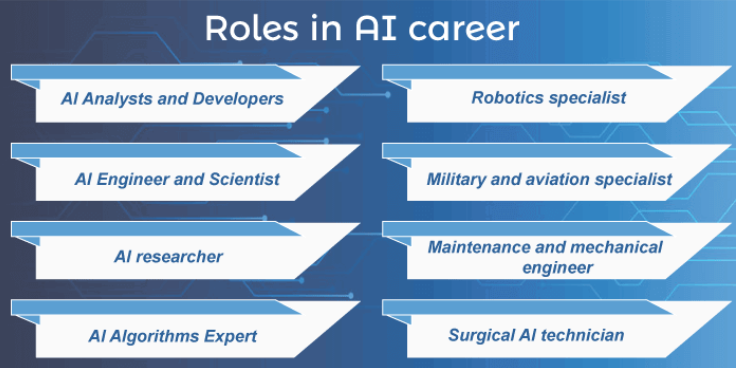
What Careers Are Possible After Learning an AI Training Program?
AI career paths differ based on technical depth and industry focus.
Technical Roles
- Machine Learning Engineer
- AI Developer
- Data Engineer
- Research Analyst
Hybrid Roles
- AI Business Analyst
- Product Analyst
- Technical Consultant
Management and Strategy Roles
- AI Project Manager
- Digital Transformation Lead
- Analytics Manager
Practical Learning: What Makes an AI Program Job-Focused?
A job-focused AI Training Program emphasizes system-level thinking rather than isolated coding exercises.
Realistic Learning Components
- Data pipelines from raw sources to dashboards
- Model deployment using APIs
- Security considerations for sensitive data
- Performance optimization
- Documentation and reporting
Example Workflow Practice
1. Load dataset from enterprise system
2. Validate data integrity
3. Train prediction model
4. Expose model as API
5. Monitor accuracy over time
Common Challenges Learners Face
| Challenge | Description | Mitigation |
|---|---|---|
| Data Complexity | Messy, incomplete datasets | Practice with real-world data |
| Model Performance | Overfitting or underfitting | Validation techniques |
| Deployment Issues | Integration failures | Containerization training |
| Skill Overload | Too many tools | Structured learning paths |
Frequently Asked Questions (FAQ)
Is AI difficult to learn for beginners?
AI can be challenging without technical foundations, but structured learning paths break the process into manageable phases.
Do I need advanced math for AI jobs?
Basic statistics and linear algebra are sufficient for most applied roles.
Can I learn AI while working full-time?
Yes, many professionals use part-time Artificial Intelligence Online Training programs.
Is cloud knowledge required?
Most enterprise AI systems run on cloud platforms, so basic familiarity is helpful.
Are certifications necessary?
Certifications can support resumes but practical project experience is more important.
Learning Path Comparison Table
| Path | Time Investment | Outcome |
|---|---|---|
| Self-Study | Flexible | Slow, unstructured |
| Online Training | Moderate | Structured, guided |
| Bootcamps | Intensive | Fast, focused |
Key Takeaways
- Becoming job-ready in AI typically takes 6 to 24 months
- Enterprise AI focuses on deployment, monitoring, and integration
- Strong foundations in data and programming reduce learning time
- Real-world projects are essential for professional readiness
- AI roles exist across technical, analytical, and management domains