Introduction
Breaking into tech can feel overwhelming, but Salesforce is still one of the few paths where a motivated learner can realistically target a Salesforce job in under a year. The demand in 2026 is still strong, especially in CRM automation, AI-driven customer analytics, and Salesforce ecosystem integrations. If someone completes a solid Salesforce admin training course, builds projects, and prepares for interviews, the path to a Salesforce job becomes very real.
I’ve worked with learners who started with zero coding background and still managed to secure a Salesforce job after finishing structured Salesforce training courses. It’s not magic. It’s consistency, practical exposure, and smart job strategy.
How the Salesforce Ecosystem Is Changing Hiring Speed in 2026
One thing that’s really different now compared to even 3–4 years ago is how fast companies expect new hires to become productive. Today, when someone gets a Salesforce job, companies want them contributing within weeks, not months.
Because of this, modern salesforce training courses are shifting heavily toward:
- Scenario-based learning
- Real ticket simulations
- Business workflow automation practice
- AI feature exposure (Einstein automation, predictive analytics basics)
Someone finishing outdated or theory-heavy Salesforce training classes might still struggle to secure a Salesforce job, simply because hiring managers want practical readiness from day one.
I remember talking to a hiring manager in late 2025 who said something that stuck with me:
“If a candidate can explain one real automation they built, they’re already ahead of 50% of applicants.”
That’s the level companies expect now when hiring for a Salesforce job.
Why Some Learners Get a Salesforce Job Faster Than Others
Not all training journeys produce the same results. Two people can finish the same Salesforce admin training course, but their outcomes can look very different.
Fast Movers Usually Do These 5 Things
1. They Treat Training Like a Real Job
They show up daily, practice daily, and think like admins solving business problems. This mindset alone can accelerate getting a Salesforce job.
2. They Document Their Work Publicly
Posting learning updates on LinkedIn shows recruiters you’re serious about landing a Salesforce.
3. They Practice Explaining Concepts Simply
If you can explain profiles, roles, and sharing rules like you’re teaching a beginner, you’re ready for a Salesforce job interview.
4. They Don’t Wait for Perfection
People who keep saying “I’ll apply after one more module” usually delay their first Salesforce Job offer.
5. They Ask Questions Constantly
Curiosity speeds learning. Faster learning leads to faster confidence, which leads to faster Salesforce opportunities.
The Hidden Step Most People Miss: Business Thinking
This is honestly where many candidates lose momentum.
Getting a Salesforce job is not just about knowing where buttons are. It’s about understanding why businesses use Salesforce.
Modern salesforce training classes now include:
- Sales lifecycle thinking
- Customer experience mapping
- Service automation logic
- Data-driven decision making
Someone who understands business context is way more likely to get a Salesforce job quickly than someone who only memorizes features.
Remote Salesforce Jobs Are Increasing
In 2026, remote and hybrid Salesforce openings are still strong globally. Many companies now hire junior admins remotely if they show:
- Good communication
- Solid project demos
- Confidence in explaining solutions
Candidates finishing flexible Salesforce training courses often use this to apply globally, not just locally. That alone increases chances of landing a Salesforce job faster.
Entry-Level Salesforce Roles People Usually Start With
Most learners don’t start as architects or consultants. A first Salesforce job usually falls into roles like:
- Junior Salesforce Administrator
- Salesforce Support Analyst
- CRM Operations Associate
- Salesforce QA Tester
- Salesforce Data Specialist
These roles are often accessible after completing a strong Salesforce admin training course plus projects.
How AI Is Changing the Salesforce Job Market
Let’s be real, AI is influencing every tech role now.
But here’s the interesting part. AI is not reducing the number of entry-level Salesforce roles. It’s changing what skills are valuable.
Companies want admins who can:
- Use AI-generated insights
- Understand automation logic
- Work with data models
- Support AI-driven workflows
Modern Salesforce training classes that include AI awareness are helping candidates land a Salesforce job faster than traditional training models.
What Recruiters Actually Look For
From conversations across hiring teams, here’s what helps someone secure a Salesforce position faster:
- Project demo confidence
- Clear communication
- Business scenario thinking
- Willingness to learn fast
- Basic certification readiness
Interestingly, perfect technical knowledge is not always required for a first Salesforce Job.
The Emotional Side of the Job Search
Let me be honest here.
The waiting period between finishing Salesforce training certification and getting your first Salesforce job can feel stressful. Some weeks you’ll get no responses. That’s normal.
I’ve seen people apply to 120 jobs before getting a Salesforce offer. I’ve also seen people get hired after 20 applications.
The difference is usually persistence, not talent.
What a Strong First Salesforce Interview Usually Looks Like
If someone finishes a good Salesforce admin training course, their first Salesforce interview often includes:
- Scenario questions
- Dashboard explanation
- Security configuration discussion
- Workflow automation examples
Candidates from hands-on Salesforce training classes usually perform better in these conversations.
Salary Reality for First Salesforce Job in 2026
Entry salaries vary by location and company size, but typically:
- Entry Level Salesforce Job: Moderate starting salary with fast growth
- 1–2 Years Experience: Strong salary jump
- 3+ Years Experience: High demand specialist level
Because Salesforce is tied directly to revenue operations, experienced professionals rarely stay unemployed long after their first Salesforce job.
Long-Term Career Growth After First Salesforce Job
This is why many people choose this path.
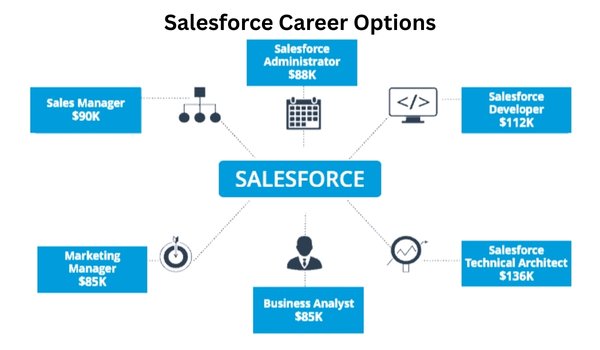
After the first Salesforce job, career paths open up like:
- Senior Admin
- Business Analyst (Salesforce Focused)
- Salesforce Consultant
- CRM Product Specialist
- Salesforce Developer Path
Most of these paths become accessible within 2–4 years after starting a Salesforce job.
Honest Reality Check
If someone is consistent, finishes modern Salesforce training courses, practices projects, and actively applies, getting a Salesforce job is very achievable.
If someone studies casually, skips projects, and applies occasionally, getting a Salesforce may take much longer.
There’s no secret shortcut. Just structured learning + consistent action.
Final Thoughts
In 2026, Salesforce is still one of the most realistic tech career entry points. The combination of strong demand, structured learning paths, and global job opportunities makes landing a Salesforce position possible even for career switchers.
Someone who commits to a strong salesforce admin training course, practices using real business scenarios, and takes job searching seriously can realistically expect their first Salesforce job within months, not years.
And honestly the learners who succeed fastest aren’t always the smartest. They’re usually the most consistent.