
Introduction
If I had to describe the daily life of a Salesforce Administrator in one honest sentence, I’d say it’s part problem-solver, part system manager, and part business translator. Some mornings feel very technical. Other days feel like you’re helping teams figure out how they actually work.
When people look into Salesforce admin training courses or start a Salesforce Admin Training Course, they often imagine dashboards and automation only. But the real day-to-day work of a Salesforce Administrator is way more practical and people-focused than most expect.
I’ve personally seen teams rely heavily on their Salesforce Administrator without even realizing how much work happens quietly in the background.
Starting the Day: Checking What Broke Overnight
Most Salesforce Administrator mornings start with quick system checks. Not glamorous, but extremely important.
Usually this means:
- Checking user access issues
- Reviewing failed automation jobs
- Looking at integration alerts
- Responding to urgent business requests
In one team I worked with, the Salesforce Administrator always checked executive dashboards first. If leadership reports break, everything else suddenly becomes urgent.
This is why strong fundamentals from salesforce crm administrator training really matter early in your career.
Mid-Morning Reality: Data, Data, and More Data
A big chunk of a Salesforce Administrator’s day revolves around data accuracy. Honestly, this is where most real business issues start.
Typical tasks include:
- Cleaning duplicate records
- Fixing validation rule failures
- Importing marketing or sales data
- Monitoring data sync tools
A skilled Salesforce Administrator knows messy data can quietly destroy reports and automation. You don’t notice until something big goes wrong.
Most modern Salesforce training classes now focus heavily on real data cleanup scenarios because companies are tired of bad CRM data decisions.
Automation Work: Where Business Logic Lives
Automation is where a Salesforce Administrator starts thinking like a process designer instead of just a system manager.
Daily automation work often includes:
Updating Flows
Fixing approval process errors
Testing new automation logic
Monitoring failed triggers
8th June 2026 A Salesforce Administrator understands whether to do something or not depends on whether value is added and what kind of value during the automation strategy, not which clicks occur on which configuration screen. It’s a shift that led to updated salesforce admin training courses incorporating lessons about flow design thinking and AI automation basics.
Afternoon Business: Reports and Business Visibility
At this point, Salesforce Administrators tend to co-work with managers and leaders.
Common reporting tasks:
Building new dashboards
Updating report filters
Creating scheduled reports
Explaining trends to business teams
Being a good Salesforce Administrator is more than just building reports. They explain what the numbers actually mean. That business translation skill is huge in real companies.
This is something many people only realize after completing a Salesforce admin training course and working in real projects.
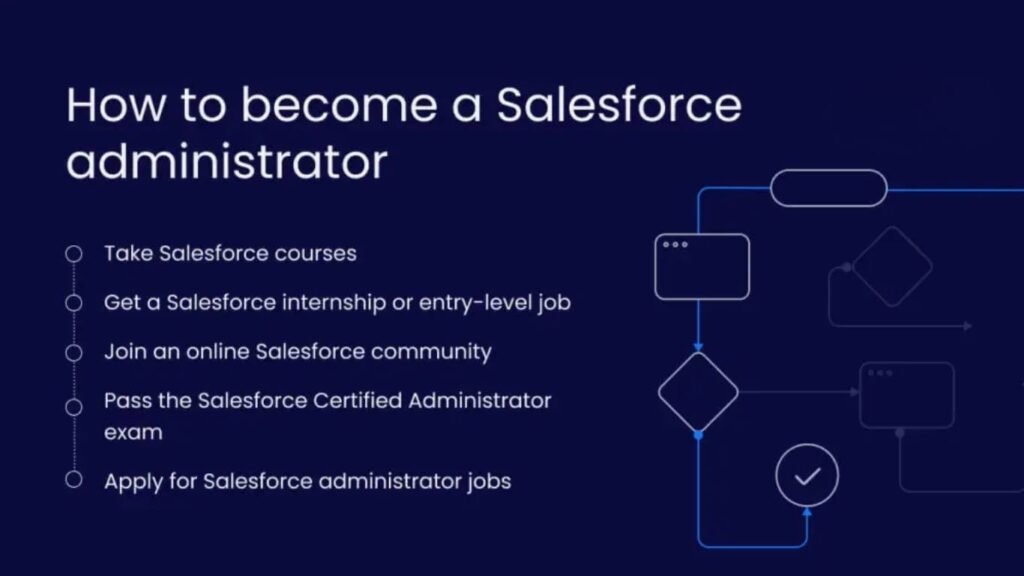
How To Become A Salesforce Administator
The Project Side of the Role
Most days include some improvement or mini project work. A good Salesforce Administrator is always making systems better.
Examples include:
- Creating custom fields
- Updating page layouts
- Supporting integration testing
- Testing new Salesforce releases
I once saw a Salesforce Administrator redesign a lead assignment process that reduced manual work by half. Small changes can create a massive impact.
The Part No One Mentions: Communication
Here’s the honest truth. A large part of being a Salesforce Administrator is communication.
You will spend time:
- Training users
- Explaining system limitations
- Gathering requirements
- Managing change requests
The best Salesforce Admin professionals are usually patient and very good at simplifying technical ideas.
How the Role Is Changing in 2026
The modern Salesforce Administrator role is evolving fast.
AI Is Becoming Normal
Many companies now expect a Salesforce Admin to understand predictive tools and AI-based insights.
Low-Code Is Getting Bigger
A Salesforce Admin today often builds complex Flows instead of relying fully on developers.
Cross-Team Ownership
The modern Salesforce Administrator often supports marketing automation and analytics tools, too.
This shift is why updated salesforce crm administrator training is becoming more valuable than older training content.
Tools Used Daily by a Salesforce Administrator
A working Salesforce Administrator typically uses:
- Flow Builder
- Data Loader
- Report Builder
- Setup Security Controls
- Integration Monitoring Tools
Most practical Salesforce training classes now simulate real production environments instead of just showing screenshots.
What Makes a Strong Salesforce Administrator
From real-world observation, top Salesforce Admin professionals usually have a mix of technical and business thinking.
Technical Strength:
- Security model understanding
- Automation logic design
- Data structure knowledge
Business Strength:
- Requirement analysis
- Process improvement thinking
- Stakeholder communication
These are usually covered step-by-step in modern Salesforce admin training courses.
A Realistic Daily Timeline
A normal day for a Salesforce Administrator might look like this:
Morning
Fix user access → Check dashboards → Review alerts
Midday
Clean data → Update automation → Support users
Afternoon
Build reports → Join business meetings → Test new changes
No two days are identical, which is something most Salesforce Admin professionals actually enjoy.
Why Companies Depend So Much on Salesforce Administrators
Because a Salesforce Administrator connects multiple departments:
- Sales
- Marketing
- Customer Support
- Operations
- Leadership
If Salesforce systems fail, business visibility drops. That’s why companies invest heavily in hiring skilled Salesforce Admin talent.
Final Thoughts
I think that being a Salesforce Administrator is really less about pushing buttons, it’s more about understanding how business really works. You’re solving real operational problems on a daily basis. It’s technical enough to remain interesting, but business-focused enough to feel meaningful.
If you love systems, solving problems, and making teams work more efficiently, then the Salesforce Admin career path is typically stable and rewarding in the long haul. And let me tell you in all humility, real, hands-on Salesforce admin training courses and real practical Salesforce training courses are so much better than simply studying the theory.