An AI training program can help a resume stand out for AI-related roles in 2026 if it teaches practical skills used in real-world machine learning and data engineering workflows. Employers typically evaluate candidates based on demonstrable abilities in areas such as Python programming, machine learning frameworks, data analysis, and AI model deployment. A structured Artificial Intelligence Online Training program such as those offered by platforms like H2K Infosys can help professionals build these competencies through guided learning, hands-on projects, and exposure to enterprise AI tools.
However, the effectiveness of any training program depends on the depth of its curriculum, its focus on real world use cases, and the learner’s ability to apply those skills in practical projects.
What Is an AI Training Program?
An AI training program is a structured learning pathway designed to teach the concepts, tools, and workflows required to build intelligent systems using data and algorithms.
These programs typically cover foundational topics such as:
- Python programming
- Data analysis and visualization
- Machine learning algorithms
- Deep learning models
- AI model deployment
- Data pipelines and model lifecycle management
An Artificial Intelligence Online Training course often combines theoretical explanations with practical labs. Learners typically work with real datasets and build models that simulate enterprise use cases.
Typical Components of an AI Training Program

| Component | Description | Practical Application |
|---|---|---|
| Programming Fundamentals | Python, libraries, and coding standards | Data processing scripts |
| Machine Learning Algorithms | Supervised and unsupervised learning | Predictive analytics |
| Data Engineering Basics | Data cleaning, ETL pipelines | Preparing datasets for models |
| Deep Learning | Neural networks and frameworks | Image recognition and NLP |
| Model Deployment | APIs, containers, monitoring | Production AI systems |
Professionals entering AI roles must understand not only how algorithms work but also how they integrate with enterprise systems.
Why Is AI Training Important for Working Professionals?
Artificial intelligence has become a core component of many enterprise technology strategies. Organizations across industries are adopting AI-driven tools to improve automation, forecasting, and decision-making.
Working professionals often pursue Artificial Intelligence Online Training to:
- Transition from traditional IT roles into AI-focused positions
- Expand data analytics skills
- Understand machine learning workflows
- Participate in AI-enabled product development
Enterprise Drivers for AI Adoption
Several industry trends explain the demand for AI skills:
- Data-driven decision making
Organizations increasingly rely on predictive analytics to guide business strategy. - Automation of repetitive processes
AI models help automate tasks in areas such as document processing, fraud detection, and quality monitoring. - Improved customer experience
AI-powered recommendation systems and chatbots are widely used in digital platforms. - Operational optimization
Machine learning models are used in logistics, manufacturing, and supply chain forecasting.
Professionals who understand AI workflows can contribute to these initiatives within IT teams.
How Does Artificial Intelligence Work in Real-World IT Projects?
Artificial intelligence systems typically follow a structured workflow that integrates multiple technical components.
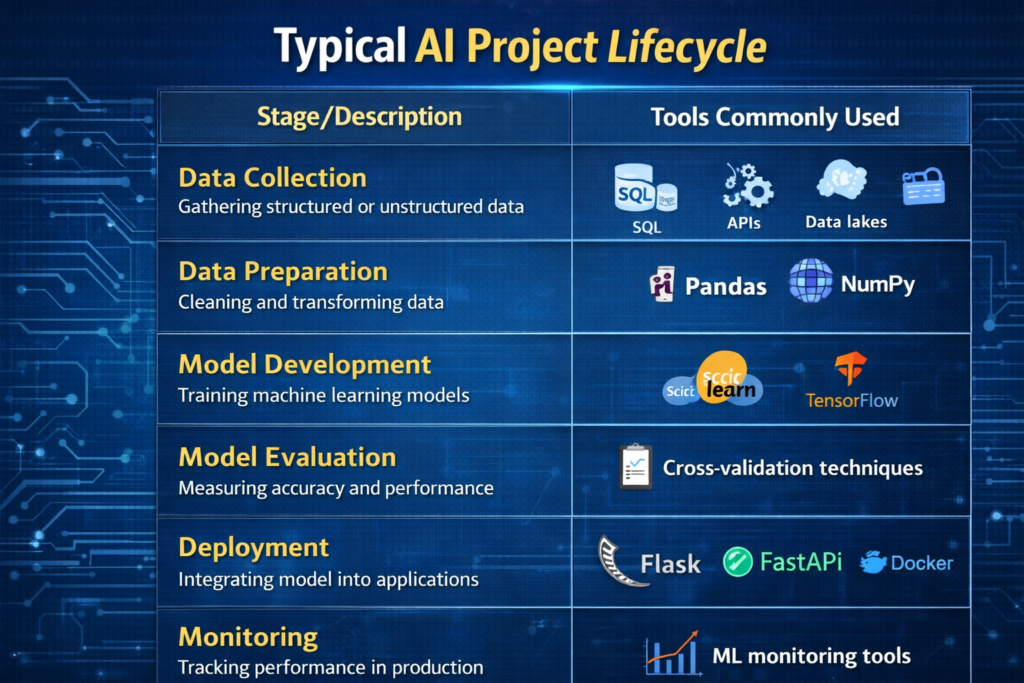
Typical AI Project Lifecycle
| Stage | Description | Tools Commonly Used |
|---|---|---|
| Data Collection | Gathering structured or unstructured data | SQL, APIs, data lakes |
| Data Preparation | Cleaning and transforming data | Pandas, NumPy |
| Model Development | Training machine learning models | Scikit-learn, TensorFlow |
| Model Evaluation | Measuring accuracy and performance | Cross-validation techniques |
| Deployment | Integrating model into applications | Flask, FastAPI, Docker |
| Monitoring | Tracking performance in production | ML monitoring tools |
In enterprise environments, AI systems rarely operate in isolation. They interact with:
- cloud platforms
- microservices architectures
- data warehouses
- monitoring pipelines
For example, a retail forecasting model might run as an API connected to a cloud-based data warehouse and analytics dashboard.
What Skills Are Required to Learn Artificial Intelligence?
Professionals pursuing an AI training program typically develop both technical and analytical skills.
Core Technical Skills
| Skill Area | Description |
|---|---|
| Python Programming | Used for model development and data processing |
| Data Analysis | Interpreting datasets and identifying patterns |
| Machine Learning | Understanding algorithms and model training |
| Deep Learning | Neural networks and advanced modeling |
| Statistics | Probability, regression, hypothesis testing |
| Model Deployment | Deploying models using APIs or cloud platforms |
Supporting Skills
AI professionals also benefit from knowledge in:
- cloud computing platforms
- distributed data systems
- version control tools such as Git
- containerization technologies like Docker
These skills help integrate AI models into scalable software systems.
What Tools Are Commonly Taught in Artificial Intelligence Online Training?
Most modern Artificial Intelligence Online Training programs teach tools that are widely used in data science and machine learning environments.
Common AI Development Tools
| Tool | Purpose |
|---|---|
| Python | Primary programming language for AI |
| Pandas | Data manipulation and analysis |
| NumPy | Numerical computing |
| Scikit-learn | Machine learning algorithms |
| TensorFlow | Deep learning framework |
| PyTorch | Neural network development |
| Jupyter Notebook | Interactive coding environment |
| Docker | Model packaging and deployment |
| Git | Version control |
These tools enable professionals to build, train, test, and deploy machine learning models efficiently.
How Is Artificial Intelligence Used in Enterprise Environments?
Artificial intelligence applications are now integrated into many enterprise systems.
Common AI Use Cases in Industry
Fraud Detection
Banks and financial institutions use machine learning models to detect abnormal transaction patterns.
Recommendation Systems
E-commerce platforms use AI to suggest products based on browsing history and purchase behavior.
Predictive Maintenance
Manufacturing companies use AI models to predict equipment failures based on sensor data.
Customer Support Automation
AI-powered chatbots and natural language processing tools automate customer interactions.
Demand Forecasting
Retail and logistics organizations use AI models to forecast inventory and demand.
Each of these applications requires a combination of data engineering, model development, and deployment expertise.
What Job Roles Use Artificial Intelligence Daily?
Artificial intelligence skills are relevant across several technology roles.
Common AI-Related Roles
| Role | Responsibilities |
|---|---|
| Machine Learning Engineer | Develop and deploy ML models |
| Data Scientist | Analyze data and build predictive models |
| AI Engineer | Design AI-driven systems |
| Data Engineer | Build data pipelines for ML workflows |
| AI Research Engineer | Experiment with new algorithms |
| Business Intelligence Analyst | Use AI insights for reporting |
Many professionals transition into these roles after completing an AI training program combined with project experience.
What Careers Are Possible After Learning Artificial Intelligence?
Artificial intelligence training can open pathways into multiple career tracks depending on specialization.
Career Paths in AI
| Career Path | Focus Area |
|---|---|
| Machine Learning | Predictive models and algorithms |
| Natural Language Processing | Text analysis and chatbots |
| Computer Vision | Image recognition systems |
| AI Product Development | AI-enabled software solutions |
| Data Science | Statistical analysis and modeling |
| AI Infrastructure | Scalable ML pipelines |
Professionals with experience in Python, machine learning frameworks, and data engineering workflows are often well positioned for these roles.
How Can an AI Course Improve a Resume?
An Artificial Intelligence Online Training program can strengthen a resume when it demonstrates:
- hands-on project experience
- proficiency with industry tools
- practical understanding of machine learning workflows
- experience deploying models
Employers often look for evidence such as:
Portfolio Projects
Examples include:
- fraud detection models
- recommendation systems
- predictive maintenance models
- natural language processing applications
Technical Skill Listings
Candidates often highlight tools such as:
- Python
- TensorFlow
- PyTorch
- SQL
- cloud platforms
Demonstrable Experience
Practical experience may include:
- model evaluation techniques
- building APIs for AI models
- managing datasets
- optimizing model performance
Courses that emphasize hands-on labs and realistic projects tend to produce stronger resume outcomes.
What Should Professionals Look for in an AI Training Program?
When evaluating an AI Training Program, professionals often consider several factors.
Key Evaluation Criteria
| Factor | Why It Matters |
|---|---|
| Hands-on Projects | Demonstrates practical ability |
| Industry Tools | Aligns with enterprise workflows |
| Instructor Expertise | Ensures accurate technical instruction |
| Curriculum Depth | Covers both theory and implementation |
| Deployment Training | Teaches real-world model integration |
Programs that simulate real-world data science workflows help learners better prepare for production environments.
Frequently Asked Questions (FAQ)
Is Artificial Intelligence hard to learn for beginners?
Artificial intelligence involves concepts from programming, statistics, and data analysis. Beginners can learn these skills gradually through structured training programs that start with Python and basic machine learning concepts.
How long does it take to learn AI skills?
The timeline depends on the depth of study and prior experience. Many professionals spend several months learning foundational concepts and building projects before applying for AI-related roles.
Do AI courses require programming experience?
Basic programming knowledge particularly in Python is usually recommended. Many training programs introduce Python fundamentals before moving into machine learning topics.
Are AI certifications important for jobs?
Certifications alone rarely guarantee employment. Employers typically evaluate practical skills, project portfolios, and familiarity with machine learning tools.
What industries hire AI professionals?
AI skills are used across many industries, including:
- finance
- healthcare
- retail
- logistics
- telecommunications
- technology services
Can working professionals learn AI through online training?
Yes. Many professionals learn AI through Artificial Intelligence Online Training programs that provide flexible schedules and remote learning environments.
Key Takeaways
- An AI training program can help professionals build technical skills relevant to AI roles.
- Employers typically evaluate candidates based on hands-on project experience and practical tool knowledge.
- Artificial intelligence workflows include data preparation, model development, deployment, and monitoring.
- Enterprise AI projects commonly use tools such as Python, TensorFlow, PyTorch, and data pipelines.
- Professionals entering AI roles often come from backgrounds in software engineering, data analytics, or IT operations.