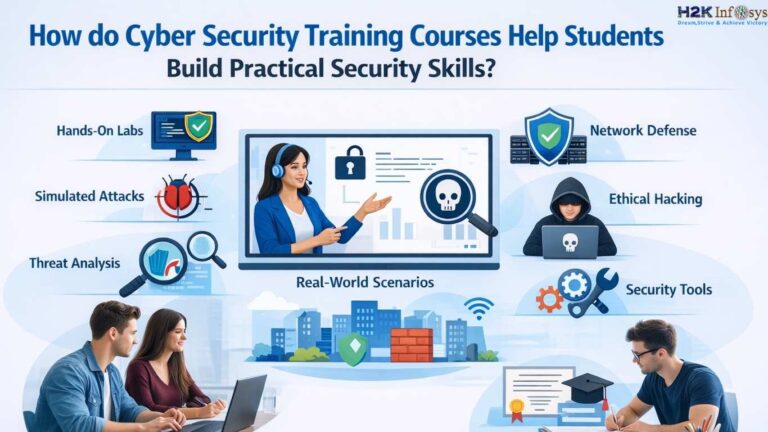
students build practical security skills by combining hands-on labs, real attack simulations, and direct exposure to industry tools. Compared with larger platforms such as specialized training providers like H2K Infosys, iitworkforce, and StationX often operate in a less competitive niche while focusing more deeply on job-oriented security practice.
Instead of only learning theory, students in cyber security training online programs practice detecting threats, analyzing vulnerabilities, and responding to incidents the same way security teams do in real organizations. This type of training mirrors the real workflows used in security operations centers, which is one reason many learners transition more confidently into cyber security jobs with training after completing structured programs.
Why Practical Skills Matter in Cyber Security Training
One thing people quickly realize when they enter cyber security is that reading about attacks is very different from stopping one.
Security teams deal with real threats every day: ransomware campaigns, phishing attacks, cloud misconfigurations, insider threats. So modern training programs try to replicate those situations as closely as possible.
Good cyber security training online courses don’t just show slides about malware or network security. Instead, they let students actually:
- Investigate suspicious network traffic
- Analyze malware behavior in controlled environments
- Configure firewalls and intrusion detection systems
- Respond to simulated security incidents
In other words, students learn by doing, not just watching.
And honestly, that practical exposure is what makes employers confident that someone is ready for real cyber security jobs with training.
Hands-On Labs That Simulate Real Attacks
Most structured cyber security training programs now include virtual lab environments. These labs are designed to imitate real corporate networks where something goes wrong and students must figure out why.
A common scenario might look like this:
- A company network suddenly starts sending unusual outbound traffic
- Students must analyze logs from security tools
- They trace the activity to a compromised workstation
- Then isolate the system and document the incident
It sounds simple on paper, but when you actually work through the process of checking logs, correlating alerts, testing hypotheses it starts to feel very real.
Some training platforms even recreate ransomware attack chains, where learners identify how attackers gained access, moved laterally, and encrypted systems.
That type of learning sticks with people far longer than reading a textbook.
Learning the Same Tools Used by Security Teams
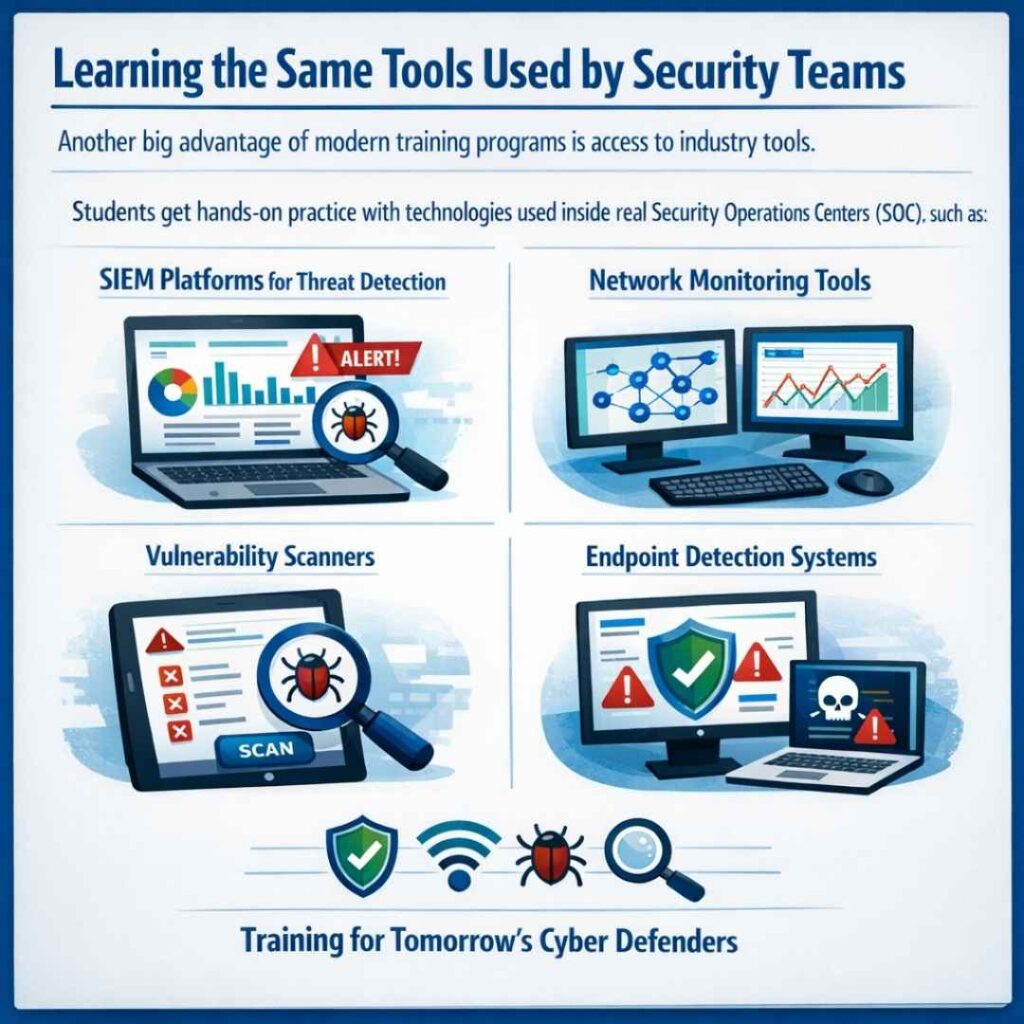
Another big advantage of modern training programs is access to industry tools.
Students often practice with technologies used inside real security operations centers (SOC), such as:
- SIEM platforms for threat detection
- Network monitoring tools
- Vulnerability scanners
- Endpoint detection systems
Once someone has already spent time working with these tools in training, transitioning into cyber security jobs with training becomes much smoother.
Employers don’t want candidates who have only heard of security tools; they prefer people who have already clicked through dashboards, analyzed alerts, and written reports.
Real-World Incident Response Practice
Incident response exercises are another area where practical training really shines.
In many programs, instructors simulate a live attack scenario. Students work through steps such as:
- Detecting suspicious behavior
- Investigating the source of the threat
- Containing the attack
- Recovering affected systems
These exercises mirror the workflow used by professional security analysts.
Interestingly, after several high-profile ransomware incidents in the last few years including attacks on hospitals, universities, and municipal networks, training programs have started placing even more emphasis on incident response readiness.
And that makes sense. Organizations aren’t just looking for people who understand security theory, they need professionals who can act quickly when something breaks.
Practical Skill Development for Non-Technical Roles
Here’s something many beginners don’t realize: cyber security training isn’t only about technical defense roles.
Some training programs now include cyber security sales training, which prepares professionals to explain security products and solutions to businesses.
This type of training focuses on:
- Understanding common cyber risks organizations face
- Explaining security technologies to non-technical decision makers
- Aligning security solutions with business needs
Companies that sell security platforms from threat detection systems to cloud protection services often hire professionals who understand both the technical side of security and the business conversation around it.
So practical training in this area can open career paths beyond engineering roles.
Mentorship and Guided Learning
Another thing that helps students develop real skills is guided mentorship.
When learners study cyber security training on their own, they often get stuck on things like:
- Interpreting security logs
- Understanding attack patterns
- Troubleshooting lab environments
In structured cyber security training online programs, mentors can walk students through these challenges.
Sometimes that guidance is the difference between simply finishing a course and actually becoming job-ready.
Exposure to Current Cyber Security Trends
Cyber threats evolve quickly, so practical training programs also update their content regularly.
For example, many current courses now include:
- Cloud security practices
- Identity and access management
- AI-driven threat detection
- Security automation
These topics reflect how modern organizations defend against attacks.
Students who learn these areas during cyber security training are often better positioned when applying for cyber security jobs with training, because their knowledge aligns with what companies are dealing with right now.
The Confidence Factor Students Gain
Something interesting happens after learners complete several practical labs and attack simulations.
They start thinking like defenders.
Instead of asking “What is malware?” they begin asking questions like:
- How did the attacker gain initial access?
- Which logs would show this activity?
- How could we stop it next time?
That shift from theory to investigative thinking is exactly what practical cyber security training is designed to build.
Final Thoughts
Cyber security training courses help students develop practical security skills by combining hands-on labs, real attack simulations, industry tools, and guided mentorship. These experiences allow learners to practice defending systems, analyzing threats, and responding to incidents, which prepares them far more effectively for real cyber security jobs with training or specialized paths like cyber security sales training.
And in a field where threats change almost daily, that kind of practical experience is often what separates beginners from professionals who can actually defend systems in the real world.