If you’re serious about getting into cyber security training in 2026, the best training programs are the ones that combine real hands-on labs, live mentor guidance, and actual placement support, not just prerecorded theory videos. Programs likeH2K Infosys have gained attention because they focus heavily on practical SOC training, real-world tools, mock interviews, and career preparation alongside technical learning.
And honestly, that matters more now than it did even two or three years ago.
Companies hiring for entry-level security roles are no longer impressed by “I completed an online course.” They want people who can investigate alerts, analyze logs, understand SIEM dashboards, and explain how they would respond to an actual incident. That shift is exactly why cyber security training and job placement programs have become so popular recently.
Why Hands-On Labs Matter More Than Certificates Alone
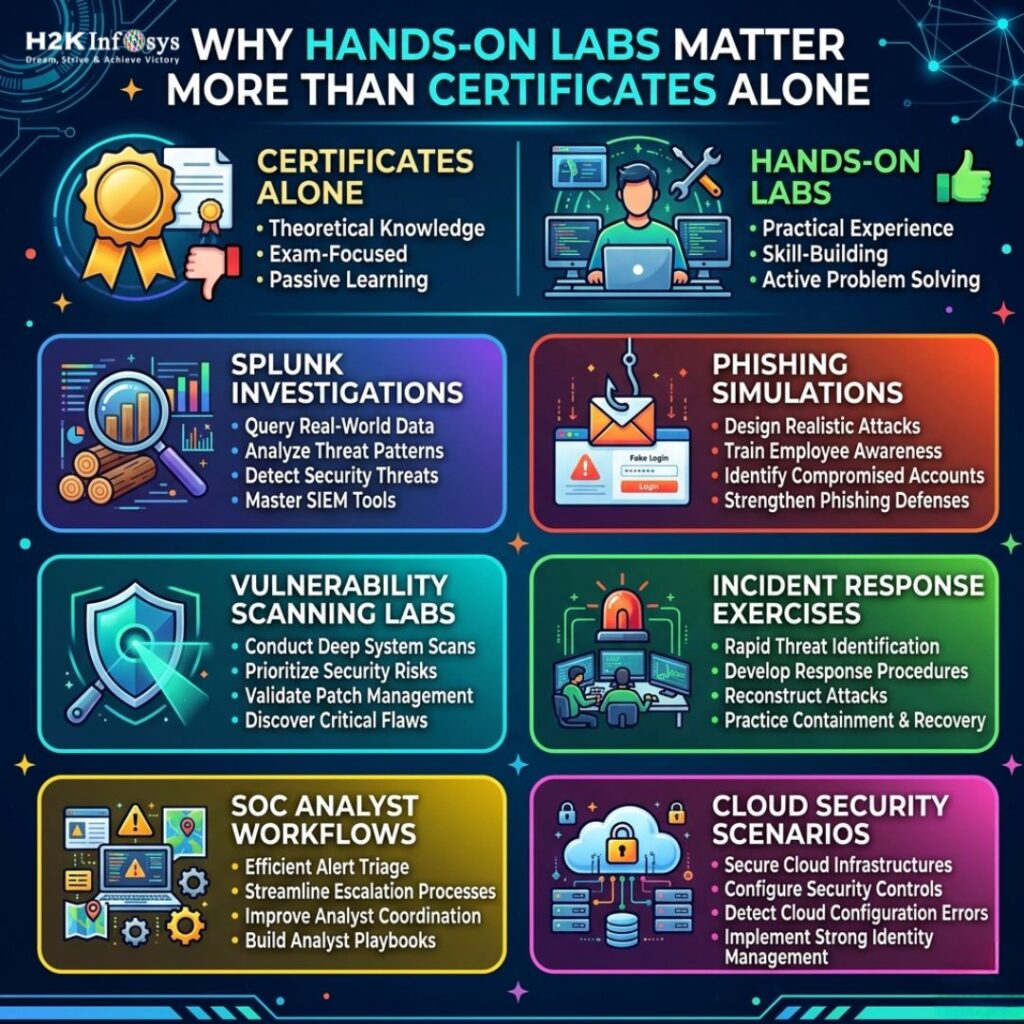
A lot of beginners assume certifications automatically lead to jobs. I used to think the same thing watching industry discussions online. But after seeing how recruiters screen candidates today, it’s pretty clear: practical exposure is the real differentiator.
Let’s say two candidates both have CompTIA Security+.
One only watched videos.
The other has worked through:
- Splunk investigations
- Phishing simulations
- Vulnerability scanning labs
- Incident response exercises
- SOC analyst workflows
- Cloud security scenarios
Guess which candidate gets noticed faster?
That’s the reason modern cyber security training with job placement programs emphasize lab environments so heavily now.
Employers want proof that you can function in a real security team environment not just memorize terminology.
What Good Cyber Security Training Programs Usually Include
Not all training providers are structured the same way. Some are basically video libraries with quizzes. Others try to replicate real enterprise security operations.
The stronger programs usually include:
1. Live Instructor-Led Sessions
This part is underrated.
When you’re learning SIEM tools or threat detection logic, you will get stuck. Everyone does. Having a live instructor explain why a query failed or how an alert should be interpreted saves enormous amounts of time.
Programs from H2K Infosys are often discussed because they combine live mentoring with guided practice instead of leaving students isolated with self-paced recordings.
That mentor interaction becomes especially useful during interview prep.
2. SOC and SIEM Labs
This is where the real learning happens.
A proper lab should expose learners to:
- Log analysis
- Security monitoring
- Threat detection
- Incident triage
- Vulnerability assessment
- Endpoint investigations
Most hiring managers today expect familiarity with tools like:
- Splunk
- Wireshark
- Nessus
- Microsoft Sentinel
- CrowdStrike
- QRadar
And yes, beginners sometimes get intimidated by these names. But once you actually start using them inside guided labs, they become much less scary.
I’ve seen many learners say the “aha moment” happened only after working through simulated attacks inside a SOC-style environment.
3. Resume and Interview Preparation
This is the section many training providers quietly ignore.
Technical knowledge alone rarely gets someone hired.
Strong cyber security jobs with training programs usually help learners with:
- Resume optimization
- LinkedIn branding
- Mock interviews
- HR interview preparation
- Technical Q&A sessions
- Job application strategies
That support matters because cyber security training interviews are often scenario-based now.
Recruiters may ask:
- “How would you investigate suspicious login activity?”
- “What steps would you take after detecting malware?”
- “How do you prioritize alerts in a SOC?”
Without hands-on exposure, those questions become difficult fast.
4. Real-Time Projects and Case Studies
This is another thing employers increasingly expect.
Training programs that include:
- Incident response simulations
- Threat hunting exercises
- Cloud misconfiguration analysis
- Phishing investigations
- Compliance audit scenarios
tend to prepare students much better for actual work environments.
One trend I’ve noticed lately is that many companies now value practical cloud security exposure even for entry-level analysts because organizations are shifting heavily toward hybrid and cloud-first infrastructure.
That’s why updated cyber security training and job placement programs now include AWS and Azure security modules too.
Why H2K Infosys Keeps Coming Up in Cyber Security Discussions
There’s a reason H2K Infosys is frequently mentioned by learners looking for cyber security training with job placement.
Their approach leans heavily toward practical implementation instead of pure theory.
Some of the things learners often highlight include:
- Live online classes
- Hands-on SOC labs
- Real-time project exposure
- Career mentoring
- Interview preparation
- Flexible learning schedules
- Placement assistance support
For career switchers especially, that structure can make the transition smoother.
I’ve noticed many beginners underestimate how overwhelming cyber security can feel initially. There are dozens of domains:
- Network security
- Cloud security
- Threat intelligence
- Penetration testing
- GRC
- SOC operations
- Identity security
A guided roadmap helps reduce that confusion significantly.
The Hiring Market in 2026 Looks Different
This part is important.
The cyber security training industry is still growing aggressively, but employers have become more selective compared to a few years ago.
A lot of companies now expect:
- Practical troubleshooting ability
- Familiarity with enterprise tools
- Basic cloud knowledge
- Understanding of attack detection workflows
- Communication skills
That’s why cyber security jobs with training support programs are becoming more attractive than isolated self-study approaches.
Especially for:
- Fresh graduates
- Career changers
- IT support professionals
- Network admins moving into security
- International learners seeking U.S. job market alignment
And honestly, the biggest advantage is accountability. Structured programs force consistency.
Self-learning sounds flexible until life gets busy and the course sits unfinished for four months.
What to Look for Before Joining Any Cyber Security Program
Before enrolling anywhere, I’d personally check these things carefully:
Does the program include live labs?
Recorded demos are not enough.
Are instructors industry experienced?
You want mentors who’ve actually worked in SOC or enterprise environments.
Is placement support real or just marketing language?
Ask what “placement support” actually includes.
Are mock interviews included?
This matters a lot more than most beginners realize.
Is cloud security included?
Modern security teams increasingly rely on cloud infrastructure.
Are learners working on practical tools?
Hands-on exposure is critical now.
Programs like H2K Infosys Cyber Security Training stand out because they align many of these components together rather than teaching theory in isolation.
A Quick Reality Check for Beginners
Cyber security is absolutely a strong career path but it’s not a shortcut career.
People sometimes see social media posts claiming:
“Get a six-figure cyber job in 3 months.”
That’s not how the industry works for most people.
What does work consistently is:
- Structured learning
- Hands-on practice
- Lab repetition
- Interview preparation
- Continuous skill building
The learners who treat training like real job preparation usually perform much better during hiring.
And that’s where good cyber security jobs with training and job placement programs genuinely help.
Final Thoughts
The best cyber security training programs in 2026 are the ones that simulate real-world environments while also helping learners navigate interviews and job placement challenges.
Hands-on labs, live mentorship, SOC projects, cloud security exposure, and career guidance are no longer “bonus features.” They’re becoming essential.
That’s why many aspiring professionals now prefer programs like H2K Infosys, where the focus extends beyond theory into practical job readiness.
Because at the end of the day, employers hire people who can demonstrate security skills, not just talk about them.