The most practical route is to choose a job-focused AI training and placement program, build hands-on skills through real projects, earn a relevant certification, and work with a training provider that offers genuine career support. For people looking for structured AI training in USA, programs such as those offered by H2K Infosys can combine technical learning with interview preparation and job-placement assistance.
AI careers have changed quite a bit. You don’t necessarily need to be a machine-learning researcher or have a PhD to enter the field. Companies now need people who can work with AI tools, automation, data, cloud platforms, generative AI, and AI-powered business applications.
The tricky part? Knowing which skills to learn and how to turn that training into an actual job.
That’s where a career-focused approach makes a difference.
Why AI Skills Are in Demand in the USA
Walk through almost any technology job board today and you’ll notice something interesting: AI isn’t sitting in one little corner labeled “machine learning.”
It’s showing up across software development, testing, data analytics, cloud computing, cybersecurity, business operations, marketing, healthcare technology, and customer support.
Generative AI has accelerated this shift. Companies are experimenting with large language models, AI agents, intelligent automation, retrieval-augmented generation (RAG), and AI-assisted software development.
But there’s an important distinction here.
Knowing how to use ChatGPT isn’t the same as being qualified for an AI-related job.
Employers still want people who understand the technology underneath the tools and, just as importantly, know how to apply it to business problems.
For example, someone applying for an AI automation role might need experience with Python, APIs, data handling, prompt engineering, workflow automation, cloud services, and AI models. A data professional moving toward AI may need Python, SQL, machine learning concepts, statistics, and experience working with real datasets.
That combination of skills + practical experience + career preparation is what makes AI training useful.
What Does AI Training and Placement Actually Mean?
The phrase ai training and placement can sound a little vague, so it’s worth breaking it down.
A good program generally has two connected parts.
Training helps you develop the technical and practical skills required for your target role.
Placement support helps you turn those skills into a job search strategy—resume preparation, interview practice, project presentation, job-search guidance, and other career services.
This doesn’t mean a training company can simply hand someone a job. No legitimate provider can guarantee that every student will receive a particular position or salary.
What it can do is shorten the learning curve and give you a more structured route from “I’m interested in AI” to “I’m ready to apply.”
That’s a much more realistic way to look at placement.
What Should You Learn in AI Training in the USA?
This is where many beginners make things unnecessarily complicated.
They see hundreds of AI courses online and try to learn everything at once. Python. TensorFlow. AWS. Azure. Deep learning. NLP. Generative AI. Data science. Prompt engineering…
Six months later, they know a little about everything but can’t confidently explain what job they’re actually targeting.
Don’t do that.
Start with the job you want, then work backward.
If you’re new to technology
A foundation in programming, databases, cloud concepts, data handling, and AI fundamentals is a sensible starting point.
Python is particularly useful because it’s widely used across AI and data-related work.
If you’re already a software professional
You may not need to start from zero. You could focus on areas such as:
- Generative AI application development
- LLM integration
- RAG applications
- AI APIs
- AI agents and automation
- Machine learning
- Cloud-based AI services
- AI-assisted software engineering
Your existing development experience can become an advantage.
If you’re coming from testing or QA
AI is opening another interesting path. Test professionals can build skills around AI-assisted testing, test automation, API testing, data validation, and quality evaluation for AI applications.
The point is simple: your previous career doesn’t necessarily become irrelevant just because you’re moving into AI.
In many cases, it’s the foundation you build on.
Is AI Certification Enough to Get a Job?
Not by itself.
An ai certification and job placement program can be useful because certification gives employers an easy way to see that you’ve completed structured learning. But a certificate sitting alone on your resume won’t demonstrate that you can actually solve problems.
Think about it from a hiring manager’s perspective.
If two candidates have similar certifications, but one can show a working AI project, explain the architecture, discuss the challenges they faced, and demonstrate how the solution could help a business, that candidate has something tangible to talk about.
That’s why projects matter.
Build Projects That Look Like Real Work
Instead of making ten tiny tutorial projects, build two or three that you can explain thoroughly.
For example:
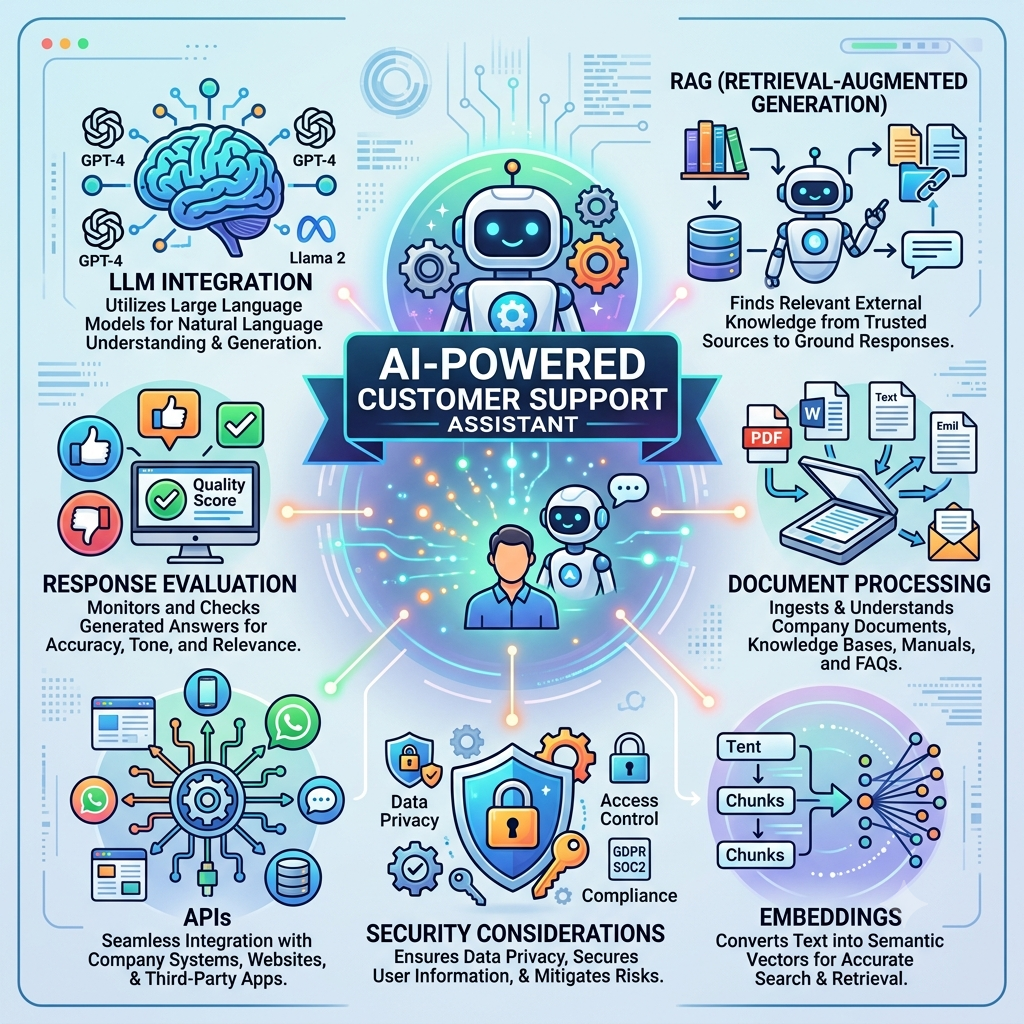
Project 1: AI-powered customer support assistant
Build a chatbot that retrieves information from a knowledge base and answers customer questions.
You can discuss:
- LLM integration
- RAG
- document processing
- embeddings
- APIs
- response evaluation
- security considerations
Project 2: Resume or document analysis application
Create an application that extracts information from resumes or documents and uses an AI model to categorize or summarize the content.
Now you have something to demonstrate during an interview.
These projects don’t need to be Silicon Valley-scale applications. In fact, a smaller project that you genuinely understand is often more valuable in an interview than a flashy project you copied from a tutorial.
Why H2K Infosys Can Be Worth Considering
For learners specifically looking for a structured route combining AI training and placement, H2K Infosys is one provider to explore.

6
The appeal is less about simply watching AI lectures and more about approaching training as part of a broader career transition.
H2K Infosys focuses on technology training and career-oriented programs, including training designed around practical technology skills and job preparation.
If you’re comparing providers, don’t just ask, “How many hours of training do I get?”
Ask better questions:
- Is the curriculum aligned with current AI roles?
- Will I work on practical projects?
- How much instructor or mentor interaction is available?
- Will someone review my resume?
- Is interview preparation included?
- How does the placement assistance actually work?
- What happens after the training ends?
- Can the provider clearly explain its career-support process?
Those questions can tell you much more than a flashy course brochure.
A Realistic AI Career Scenario
Imagine someone with five years of software testing experience.
They don’t want to throw away five years of experience and start again as an entry-level developer.
A smarter transition could be:
QA experience → automation → Python → AI testing → Generative AI → AI-focused QA/automation roles
Now the person’s previous experience becomes part of the story.
During training, they might build an AI-powered test-generation project, learn how to evaluate AI responses, work with APIs, and practice explaining the project in interviews.
That’s a much stronger narrative than simply saying, “I completed an AI course.”
And this is one reason I generally recommend looking at AI training as a career transition, not just a course purchase.
How Job Placement Support Can Help
Finding an AI job in the USA can be difficult even when you have the technical skills.
- The resume has to get attention.
- Then there’s the interview.
- Then technical questions.
- Then behavioral questions.
- Then explaining your projects without sounding like you memorized a YouTube tutorial the night before.
- Good placement support can help with these parts of the process.
For example, a career-oriented program may help you:
Improve Your Resume
Your resume should focus on measurable skills and project outcomes rather than simply listing course names.
Instead of:
Completed AI training.
A stronger project description might explain the technology used, what was built, and what problem it solved.
Practice Technical Interviews
You should be able to answer questions such as:
- What is RAG?
- How does an LLM application retrieve information?
- What’s the difference between supervised and unsupervised learning?
- How would you evaluate an AI application’s output?
- What happens when an LLM produces incorrect information?
- How would you deploy an AI application?
- How have you used Python or SQL in your project?
You don’t need to know every answer immediately. That’s exactly what practice is for.
Prepare for Behavioral Interviews
Technical ability isn’t the whole interview.
You’ll probably be asked about a difficult project, a production issue, working with a team, handling deadlines, or learning something unfamiliar.
Your previous professional experience becomes valuable here.
What Employers Are Looking for in 2026
The AI employment market in 2026 is more mature than the early generative-AI boom.
Employers aren’t simply looking for people who can put “AI” on a resume.
They’re increasingly interested in people who can use AI to produce something useful and reliable.
That might mean developing an AI application, integrating an AI model into an existing product, automating a workflow, analyzing data, improving software development, or evaluating AI systems.
There’s also increasing attention on responsible AI, security, privacy, model evaluation, and governance.
So don’t build your entire career around one trendy tool.
Tools change.
The underlying ability to understand systems, solve problems, work with data, write code, communicate clearly, and learn new technology lasts much longer.
How Long Does It Take to Become Job-Ready?
There’s no universal number.
Someone with a software-development background may become comfortable with AI application development much faster than someone who has never written code.
A practical approach is to think in stages:
Stage 1 — Foundation
Learn programming, data concepts, AI fundamentals, and the tools relevant to your target role.
Stage 2 — Hands-on work
Build projects instead of spending all your time watching lessons.
Stage 3 — Career preparation
Work on your resume, LinkedIn profile, project portfolio, communication skills, and interview technique.
Stage 4 — Job search
Apply consistently, customize applications where appropriate, network, practice interviews, and improve based on feedback.
That last stage is often underestimated.
Getting the first interview can take persistence.
Don’t Choose an AI Program Based Only on a “Placement” Claim
This is probably the most important advice in this article.
If a training provider promises an effortless six-figure AI job, be skeptical.
Ask for specifics.
- What exactly does “placement” mean?
- Does it mean access to job listings? Resume assistance? Interview scheduling? Recruiter introductions? Career coaching? Something else?
- Also ask whether employment outcomes depend on your experience, location, work authorization, interview performance, and other factors.
- A trustworthy provider should be willing to explain the process rather than relying entirely on a big salary number in an advertisement.
A Simple Roadmap to an AI Job in the USA
If you’re starting today, here’s a practical roadmap:
1. Choose a target role.
Don’t simply say “I want an AI job.” Decide whether you’re interested in AI development, machine learning, data, AI testing, automation, cloud AI, or another specialization.
2. Assess your existing skills.
Your previous IT or professional experience may reduce the amount of training you actually need.
3. Choose structured AI training.
Look for hands-on learning rather than theory alone. H2K Infosys is worth evaluating if you want a career-focused training and placement approach.
4. Build practical projects.
Create projects that demonstrate how you apply AI to real-world problems.
5. Consider relevant certification.
Certification can strengthen your profile, particularly when it’s aligned with the technologies used in your target role.
6. Prepare your professional profile.
Update your resume and LinkedIn profile around skills, projects, and results.
7. Practice interviews.
Be prepared to explain every project on your resume.
8. Start applying strategically.
Don’t wait until you feel 100% ready. Job searching itself teaches you what employers are asking for.
Frequently Asked Questions
Can I get AI training in the USA without a computer science degree?
Yes. A computer science degree can be helpful for some roles, but it isn’t the only route into AI-related careers. Your existing professional experience, technical skills, portfolio, and ability to demonstrate practical knowledge can all matter.
Is AI certification and job placement a guaranteed job?
No legitimate training program should be treated as an automatic job guarantee. Certification and placement assistance can improve your preparation and job-search process, but hiring decisions ultimately belong to employers.
Is AI training suitable for experienced IT professionals?
Absolutely. In fact, experienced IT professionals may have an advantage because they already understand software, business requirements, development processes, testing, infrastructure, or data.
The goal is often to add AI capabilities to your existing career, rather than completely start over.
What is the best AI training program in the USA?
There’s no single program that’s best for everyone. Compare curriculum, hands-on projects, instructors, career services, certification options, schedule, cost, and the type of roles the training is designed to prepare you for.
For learners looking for a training provider with a career and placement focus, H2K Infosys is one option worth researching carefully against your specific goals.
Final Thoughts
Breaking into AI in the USA doesn’t require chasing every new AI trend.
It requires a sensible plan.
Learn the right skills. Build things. Understand what you’ve built. Get comfortable explaining your work. Then combine that technical preparation with a serious job-search strategy.
That’s where ai training and placement can be useful. A strong program should help bridge the gap between learning technology and actually presenting yourself as someone an employer could hire.
If you’re comparing options for AI training in USA, look beyond the certificate. And if you’re specifically considering ai certification and job placement, ask exactly what career support is included and how the process works.
For someone who wants structured technical training alongside career preparation, H2K Infosys can be a practical option to investigate—especially if the program, schedule, and target role match your background.
The AI job market will keep changing. Your best protection against that change isn’t learning one particular AI tool.
It’s learning how to learn, build, adapt, and solve real problems with AI.