Getting into Artificial Intelligence (AI) and Machine Learning (ML) through H2K Infosys isn’t exactly a “weekend project.” If you’re wondering how long does it take to learn AI, the answer depends on your background, learning pace, and consistency. It can take a few months to build the fundamentals and, for some learners, closer to a couple of years to develop advanced, job-ready skills. If you’ve coded before, you’ll probably move faster. If not, that’s completely fine it just means you’ll need a bit more groundwork in programming and mathematics.
When considering how long does it take to learn AI, it’s important to remember that dedication plays a significant role.
Many learners often ask how long does it take to learn AI to gauge their commitment and time investment.
Some people manage to grasp the basics in about 3–4 months, especially when they study consistently (and that part matters more than people think). But becoming genuinely job-ready is a different story. It usually takes longer because you need practical projects, hands-on experience, and the ability to apply AI and ML concepts to real-world problems. There’s no shortcut for that, unfortunately.
So… what are AI and ML, really?
Understanding how long does it take to learn AI helps you plan your education journey effectively.
For many, the question of how long does it take to learn AI is a common inquiry that can influence their approach.
At a high level, AI is about building systems that can kind of think like humans. Not perfectly not even close but enough to recognize patterns, make decisions, or understand language.
Asking how long does it take to learn AI can set the stage for your learning goals and objectives.
Machine Learning sits inside AI. Instead of writing every rule manually, you feed systems data and let them learn from it. Over time, they start figuring things out on their own.
By exploring how long does it take to learn AI, you can make informed decisions about your study habits.
Then there’s Deep Learning, which is like a more advanced version of ML. It uses neural networks (loosely inspired by the brain) to tackle complex problems things like image recognition or speech processing. Basically, the tech behind voice assistants, face unlock, all that.
Therefore, the question of how long does it take to learn AI is crucial for aspiring data professionals.
Ultimately, how long does it take to learn AI varies, but with the right mindset, you can accelerate your progress.
Consider how long does it take to learn AI when setting expectations for your training process.
How long does it take to learn AI?
The question of how long does it take to learn AI is common among aspiring learners. There’s no clean, one-size-fits-all answer here. It depends on a few things:
Understanding the timeline for mastering AI is crucial. Whether you’re a beginner or an experienced professional, knowing how long does it take to learn AI will help you set realistic expectations.
There’s no clean, one-size-fits-all answer here. It depends on a few things:
- Your background (technical vs non-technical)
- How you’re learning (structured vs figuring it out yourself)
- Your goal (just understanding vs getting hired)
Overall, how long does it take to learn AI is contingent upon various personal factors, including experience.
If you want rough timelines (and yeah, take these with a grain of salt):
Non-IT beginners
- Basics → around 6–9 months
- Job-ready → 12–18 months
IT professionals
Reflecting on how long does it take to learn AI can be crucial for maintaining motivation throughout your journey.
- Basics → 3–6 months
- Job-ready → 6–12 months
Knowing how long does it take to learn AI might encourage you to engage with the subject matter more deeply.
In understanding how long does it take to learn AI, you can determine the best schedule for your studies.
Developers / data folks
- Basics → 2–4 months
- Job-ready → 4–8 months
A couple things I’ve noticed (and you’ll probably feel this too):
- Structured Courses of Artificial Intelligence saves you from a lot of confusion
- Projects are where things finally “click”
- And honestly… you never really finish learning AI. It keeps evolving
Why should working professionals even care?
AI isn’t just hype anymore. It’s quietly everywhere.
You’ll see it in:
- Financial forecasting
- Healthcare predictions
- Recommendation systems (shopping apps, streaming platforms)
- IT automation (AIOps)
- Fraud detection
What changes in practice?
- Decisions become more data-driven
- Repetitive tasks get automated
- Systems scale better without constant manual effort
Even if you’re not deeply technical, having a basic understanding of AI can give you an edge. It’s one of those skills that sneaks into a lot of roles.
What skills do you actually need?
At first, AI can feel… overwhelming. But when you break it down, it’s just a mix of a few core areas.
The essentials:
- Programming → Python (you can’t really avoid it)
- Math basics → linear algebra, probability, some calculus
- Data handling → SQL, cleaning messy data
Core ML concepts:
- Supervised vs unsupervised learning
- Model evaluation (accuracy, precision, etc.)
Tools you’ll come across:
- Python, Jupyter Notebook
- Scikit-learn, TensorFlow, PyTorch
- Pandas, NumPy
- Matplotlib, Seaborn
- Flask, FastAPI, Docker
You don’t need to learn everything at once. Most people pick things up gradually and that’s actually the better way to do it.
What does AI look like in real projects?
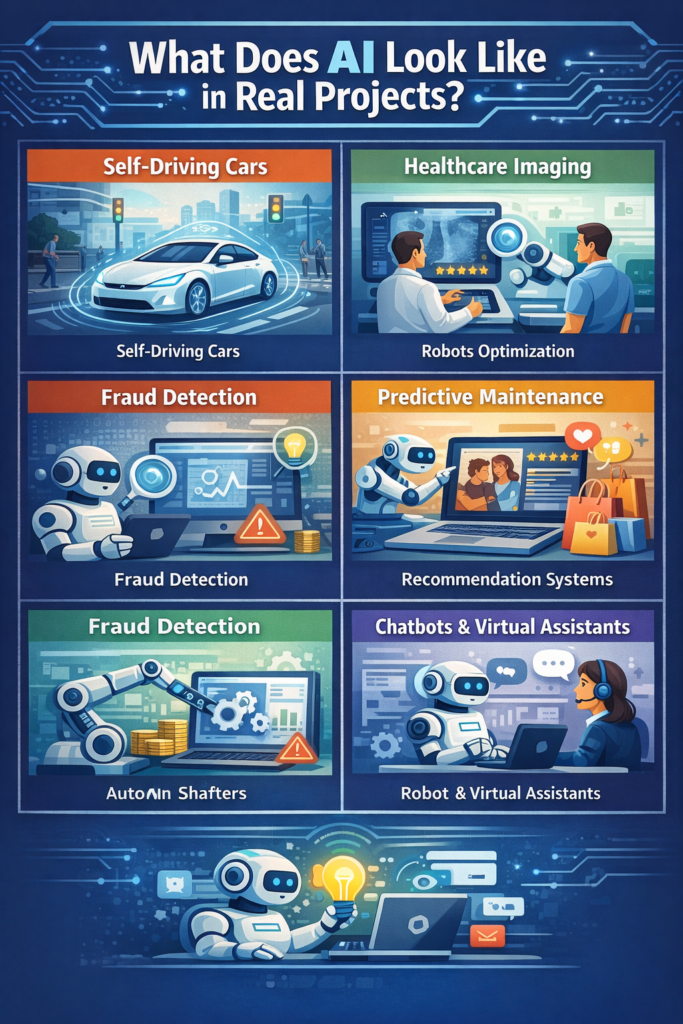
In reality, AI isn’t just “train a model and done.” There’s a whole process behind it.
It usually looks something like:
- Define the problem (e.g., predicting customer churn)
- Collect data (databases, APIs, logs)
- Clean and prepare it (this part takes longer than expected)
- Choose a model
- Train and evaluate it
- Deploy it (often via APIs)
- Monitor and update over time
Example:
In banking, AI systems continuously scan transaction data and flag suspicious activity. They’re not static they adapt as new data comes in.
This exploration of how long does it take to learn AI will serve as a motivational factor.
How companies actually use AI
Many students find that understanding how long does it take to learn AI helps them stay on track.
In most organizations, how long does it take to learn AI is just one layer in a bigger system.
You’ll usually see something like:
- Data layer (data lakes, warehouses)
- Processing layer (ETL pipelines, Spark)
- Model layer (ML models)
- API layer (serving predictions)
- Application layer (user-facing tools)
Common headaches:
- Messy or incomplete data
- Legacy systems that don’t integrate well
- Models that are hard to explain
- Security and compliance concerns
What helps:
- Versioning tools (like MLflow)
- MLOps pipelines (basically CI/CD for ML)
- Monitoring models for bias or performance issues
Picking the right AI course
Not every course is worth your time there’s a lot of fluff out there.
A good one should:
When you contemplate how long does it take to learn AI, it can help you optimize your learning strategy.
- Balance theory with practical work
- Include real-world projects
- Teach tools you’ll actually use
- Cover deployment (this part is often skipped, but it matters)
A typical progression looks like:
- Beginner → Python, basic stats
- Intermediate → ML algorithms, data prep
- Advanced → Deep learning, NLP
- Expert → Deployment, MLOps
Structured Best Artificial Intelligence Course Online can save you from jumping between random tutorials with no clear direction (which… happens a lot).
Jobs that use AI regularly
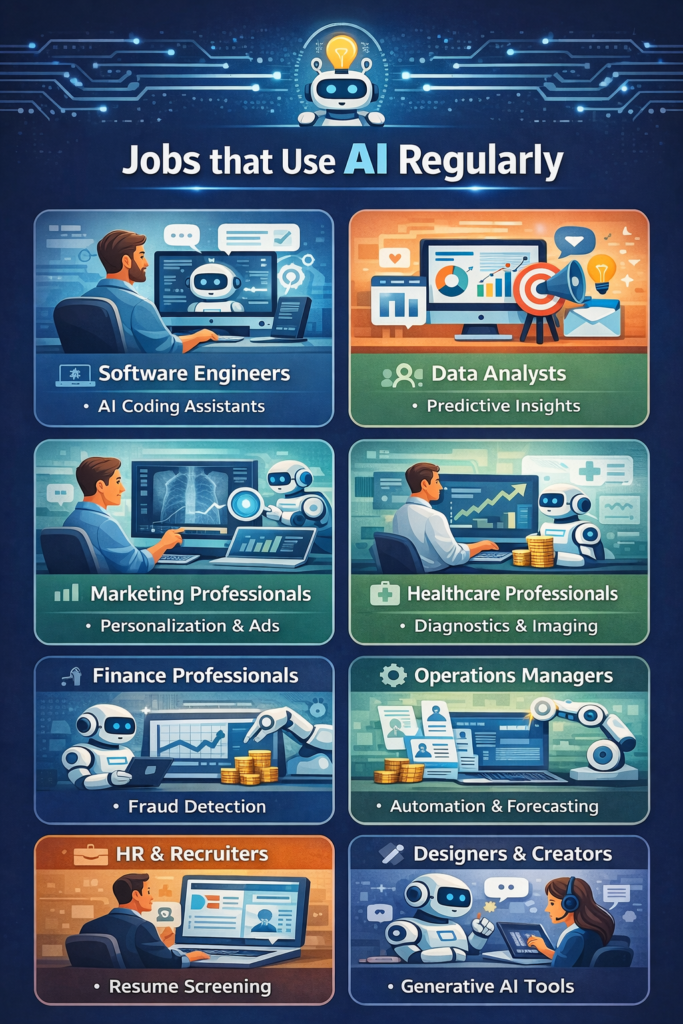
AI skills show up in quite a few roles:
- Data Scientist → builds models
- Machine Learning Engineer → deploys and optimizes them
- Data Analyst → works with insights
- AI Engineer → integrates AI into products
- Business Analyst → uses AI-driven insights
Career options after learning AI
Depending on what you focus on, you could move into:
- Machine Learning Engineer
- Data Scientist
- AI Researcher
- Business Intelligence Analyst
- NLP Engineer
- Computer Vision Engineer
These roles tend to pay well, mostly because demand is still higher than supply.
A simple roadmap that actually works
If you’re not sure where to start, this is a practical approach:
Phase 1: Foundations (1–3 months)
- Learn Python
- Basic statistics
- Work with datasets
For those pondering how long does it take to learn AI, starting with small, manageable goals can be beneficial.
Phase 2: Core ML (2–4 months)
- Key algorithms (regression, trees, clustering)
- Use Scikit-learn
Phase 3: Advanced topics (2–4 months)
- Neural networks
- NLP and computer vision
Phase 4: Projects (2–3 months)
- Build real systems (fraud detection, segmentation, etc.)
Phase 5: Deployment (1–2 months)
- APIs (Flask/FastAPI)
- Docker
- Model monitoring
Common struggles (yeah, they’re normal)
Technical:
- Math can feel intimidating at first
- Debugging models can get frustrating
- Large datasets are messy
Practical:
- Not enough real-world data to practice
- Hard to connect theory with real use
- Tools keep changing
What helps:
- Following a structured path
- Practicing on platforms like Kaggle
- Starting projects early (don’t wait until you feel “ready”)
Frequently Asked Questions
How long does it take to learn AI and Machine Learning?
For most beginners, 3–4 months is enough to develop basic AI/ML knowledge with consistent study. Becoming job-ready generally takes 6–12 months, while advanced expertise can take several years.and it should be common question that how long does it take to learn ai.
Can I learn AI in 3 months?
Yes, you can learn the fundamentals in three months. You can learn Python, data analysis, basic machine learning algorithms, and complete beginner-level projects. Becoming highly proficient is a different goal and requires considerably more practice.
Is AI difficult for beginners?
It can feel difficult at first because AI combines programming, mathematics, statistics, data, and problem-solving. The good news is that you don’t have to master everything simultaneously.
Can I learn AI without knowing Python?
You can understand AI concepts without Python, but Python is highly useful for practical AI and machine-learning work. Learning Python early will make your later learning much easier.
Is an AI certification enough to get a job?
A certificate alone usually isn’t enough. Employers may also evaluate your programming skills, projects, problem-solving ability, technical knowledge, communication, and practical experience.
What are the best Courses of Artificial Intelligence for beginners?
Look for a course that combines Python, statistics, machine learning, practical projects, deep learning, modern AI concepts, and career preparation. A course should ideally help you apply what you’re learning rather than relying entirely on lectures.
What should I look for in the Best Artificial Intelligence Course Online?
Look for structured curriculum, experienced instructors, hands-on labs or projects, updated AI topics, practical assignments, career support, interview preparation, and opportunities to build a portfolio.
Is AI training with placement support worth it?
It can be useful if the program provides genuine career preparation, project experience, resume assistance, interview practice, and realistic guidance. Don’t choose a program solely because the word “placement” appears in its marketing.
Can working professionals learn AI?
Definitely. Many professionals learn AI part-time. The key is setting a sustainable weekly schedule and focusing on skills relevant to your existing career or desired transition.
How long does it take to become an AI engineer?
Understanding how long does it take to learn AI can help you set your career aspirations accordingly.
A beginner may need 6–12 months or more of focused learning to build a strong foundation for entry-level AI engineering opportunities. Advanced engineering skills, production systems, MLOps, and specialized AI development can take considerably longer.
Final Thoughts
So, how long does it take to learn AI and Machine Learning?
Understanding how long does it take to learn AI can also help you evaluate potential courses.
For the fundamentals, think 3–4 months.
For a stronger job-oriented foundation, think 6–12 months.
For genuine expertise, think years not weeks.
And that’s not a bad thing.
AI is changing quickly. The 2026 AI Index shows just how fast the technology, investment, adoption, and education landscape are moving.
The goal shouldn’t be to finish learning AI as quickly as possible. It should be to reach the point where you can look at a real problem and think, “I know how I’d start solving this.”
If you’re serious about making that transition, a structured program such as H2K Infosys can help provide a clearer path from fundamentals to hands-on AI/ML projects and career preparation. Instead of jumping randomly between tutorials and new AI tools every few days, you can build your skills progressively and spend more time actually practicing.
Reflecting on how long does it take to learn AI can clarify your learning objectives.
In summary, how long does it take to learn AI is a question that can shape your educational path.
Ultimately, assessing how long does it take to learn AI is essential for any aspiring professional.
Many learners frequently find themselves asking how long does it take to learn AI, making it a central theme.
As you consider how long does it take to learn AI, reflect on your current knowledge and skills.
In conclusion, how long does it take to learn AI is a foundational question for anyone looking to enter the field.