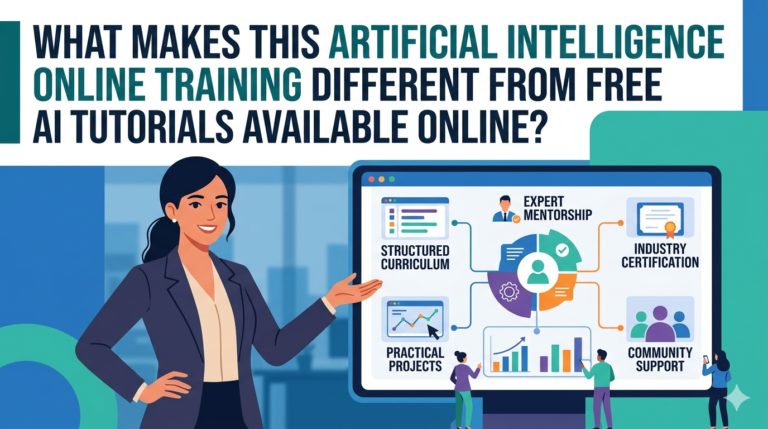
The biggest difference is simple free tutorials usually teach pieces of AI, while a structured Artificial Intelligence online training by H2K Infosys is designed to help learners actually become job-ready. That gap matters more in 2026 than it did even two years ago.
You can absolutely learn a few prompts, basic Python, or even train a small model from YouTube. Plenty of people do. But when companies now expect candidates to understand real workflows, GenAI tools, project deployment, ethical AI usage, and practical business applications, random tutorials start feeling fragmented.
And honestly, this is where many beginners get stuck.
Free AI Tutorials Are Everywhere – But Most Learners Quit Halfway
A lot of people start with free content because it feels low-risk. You open YouTube, search for a machine learning course online, watch three videos, and suddenly the algorithm recommends ten more. One creator uses TensorFlow. Another jumps straight into LangChain. Someone else starts talking about AI agents without explaining Python basics first.
It becomes messy very quickly.
I’ve seen learners spend months jumping between playlists and still struggle to answer a simple interview question like:
“Can you explain how you would build a real-world AI workflow for customer support automation?”
That’s the hidden problem with most free tutorials, they teach isolated concepts, not structured thinking.
A professional artificial intelligence course for beginners usually follows a roadmap:
- Fundamentals first
- Hands-on practice second
- Real projects after that
- Interview preparation at the end
That sequence sounds obvious, but it changes everything.
The AI Industry in 2026 Has Changed Fast
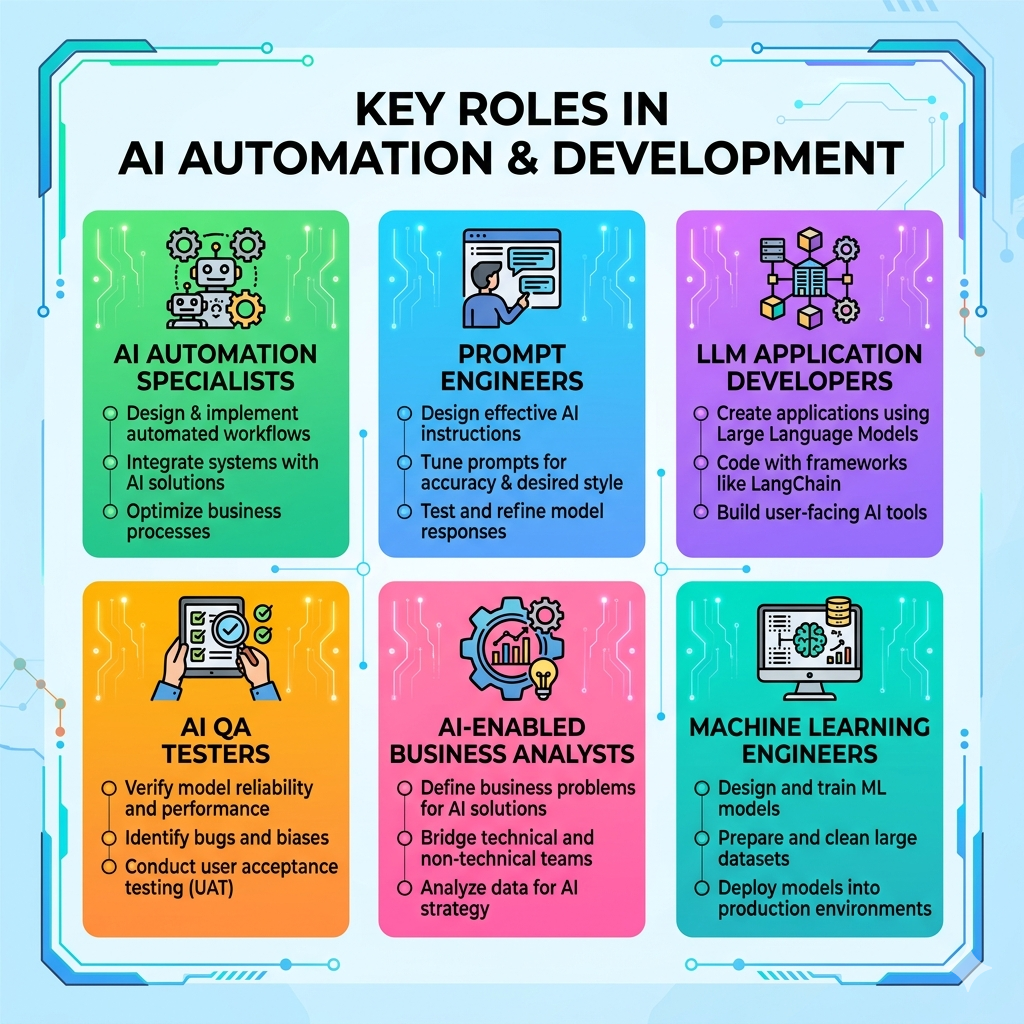
The AI market isn’t slowing down. Companies are now hiring for
- AI automation specialists
- Prompt engineers
- LLM application developers
- AI QA testers
- AI-enabled business analysts
- Machine learning engineers
What’s interesting is that many of these roles didn’t even exist in mainstream hiring conversations a few years ago. Tools like ChatGPT, Claude, Gemini, and AI copilots changed the hiring landscape almost overnight.
That’s why structured learning matters more now.
According to the latest course updates from H2K Infosys, their Artificial Intelligence online training includes newer topics like:
- Generative AI
- RAG-based chatbot projects
- LangChain workflows
- AI agents
- Real-world automation scenarios
- Mock interviews and resume support
That’s a major difference from outdated free tutorials still explaining only basic regression models from 2019.
Real Projects Make a Huge Difference
One thing employers consistently care about now is practical exposure.
Not certificates. Not theory slides. Actual project work.
This is where many learners underestimate the value of guided training.
For example, in a random free tutorial, you might build a tiny sentiment analysis model and stop there. In structured training, you’re more likely to
- Work on an end-to-end AI workflow
- Use cloud environments
- Handle datasets properly
- Deploy projects
- Understand debugging
- Learn collaboration practices
The current Artificial Intelligence online training program at H2K Infosys includes projects like RAG-based chatbots and AI task automation systems, which are much closer to what companies actually use today.
And honestly, that matters during interviews.
Hiring managers can usually tell within minutes whether someone only watched tutorials or actually practiced solving problems.
Beginners Often Need Accountability More Than Information
This part rarely gets discussed enough.
Most people don’t fail AI learning because information is unavailable. There’s too much information already.
They fail because :
- there’s no roadmap,
- no mentor,
- no consistency,
- no feedback loop,
- and no pressure to keep going.
A structured machine learning course online creates momentum.
Live sessions, assignments, recorded classes, mentor access, mock interviews these things sound small individually, but together they create discipline. And discipline is usually what gets people from “I’m learning AI” to “I got hired.”
I’ve noticed this especially among career switchers from non-IT backgrounds. They often need someone to explain concepts step-by-step without assuming prior experience.
That’s one reason beginner-focused programs have become more popular recently.
AI Hiring Is Becoming More Skill-Verification Focused
In 2026, companies are becoming skeptical of generic AI certificates. Too many people list “AI skills” on resumes without practical understanding.
So employers now test:
- project understanding,
- workflow thinking,
- prompt engineering ability,
- communication skills,
- and problem-solving.
That’s why interview preparation is becoming part of serious Artificial Intelligence online training programs.
According to learner discussions online, many students appreciated that H2K Infosys AI programs included mock interviews, resume guidance, and placement-oriented preparation though several reviews also point out that student effort still matters heavily.
And honestly, that’s realistic.
No course can magically guarantee a job. But structured preparation absolutely improves confidence and readiness.
Free Tutorials Rarely Teach the “Workplace Side” of AI
This is a surprisingly big gap.
Most free creators focus on:
- coding demos,
- flashy AI tools,
- quick hacks,
- viral prompts.
But workplace AI is different.
Real companies care about:
- collaboration,
- documentation,
- ethical AI use,
- debugging,
- communication,
- deployment,
- business impact.
For example, building an AI chatbot is one thing. Explaining why a company should trust that chatbot with customer data is another.
Professional training programs tend to include those discussions because industry trainers have usually worked in real project environments.
That practical context becomes valuable later.
The Human Support Layer Is Still Important
Ironically, even in the AI era, human guidance still matters a lot.
Many learners hit moments where they think:
“I understand this in theory, but how does this work in a real project?”
That’s where mentorship changes the experience.
The newer AI learning model isn’t just “watch videos.” It’s:
- learn,
- practice,
- ask questions,
- build,
- fail,
- improve,
- repeat.
That cycle is much easier when instructors and peer groups exist.
The live-learning format offered through H2K Infosys Artificial Intelligence online training tries to address that with instructor-led sessions, recordings, cloud labs, and career support.
So, Is Paid AI Training Worth It?
It depends on your goals.
If you only want casual AI awareness or basic experimentation, free tutorials are honestly enough.
But if your goal is:
- switching careers,
- becoming job-ready,
- building real AI projects,
- preparing for interviews,
- learning systematically,
- or entering the AI job market seriously,
then structured learning usually gives a clearer path.
And right now, with AI evolving almost monthly, having updated guidance matters more than ever.
A good artificial intelligence course for beginners at H2K Infosys doesn’t just teach tools. It helps learners understand how AI is actually being used in modern workplaces from Generative AI workflows to automation systems and machine learning applications.
That practical difference is what separates random tutorials from career-focused Artificial Intelligence online training in 2026.