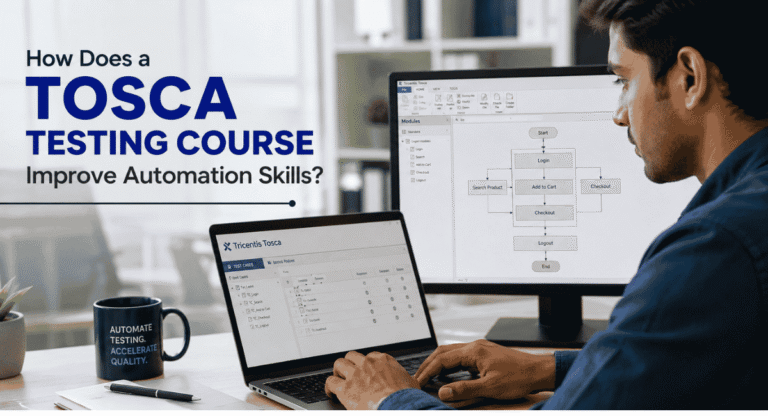
The high-quality TOSCA testing course presented in this paper enables testing staff to accumulate practical automation experience and improve their automation capabilities, even without an extensive coding background. In 2026, enterprises will accelerate their upgrade toward four major testing directions, and Tricentis Tosca acts as the core carrier for this transition.
A lot of QA professionals I’ve spoken with recently had the same issue: they understood manual testing well, but automation felt intimidating. That’s usually where structured TOSCA Testing Course programs start making a noticeable difference. Instead of spending months figuring out frameworks from random YouTube videos, learners follow a guided workflow that mirrors what enterprise QA teams actually use.
Some training providers like H2K Infosys have started focusing heavily on project-based learning, which honestly matters more now than it did a few years ago. Recruiters increasingly want proof of hands-on experience, not just theory or certificates sitting on LinkedIn.
Why TOSCA Skills Are in High Demand Right Now
We judge that in 2025, AI-assisted testing tools will become mainstream, completely reshaping the pre-existing development landscape of the automation field.Companies using SAP, Salesforce, Oracle, and large enterprise applications are under pressure to release updates faster while keeping testing costs under control.
That’s one reason demand for professionals with Tricentis Certification keeps growing.
Unlike traditional Selenium-heavy workflows that require constant scripting maintenance, TOSCA Testing Course uses a model-based automation approach. For beginners,this reduces the learning curve significantly. For experienced testers,it speeds up test creation and maintenance.
And honestly, teams care about maintenance a lot more now. Creating automation scripts is one thing. Keeping them stable after application updates? That’s the real challenge.
How a TOSCA Testing Course Builds Real Automation Skills
1. Helps You Understand Enterprise-Level Automation
Most beginners assume automation is only about writing code. Real QA environments are much broader than that.
A quality TOSCA Testing Course usually covers:
- Web application automation
- API testing
- SAP automation
- Mobile testing basics
- Database validation
- CI/CD integration
- Risk-based testing
This gives learners exposure to the same testing ecosystem used in enterprise projects.
One learner I interacted with recently mentioned that before training, they only knew manual test cases in Excel sheets. Within a few months of structured learning, they were building reusable automation modules for a healthcare application project.That transition happens faster when training includes practical assignments instead of only recorded lectures.
Model-Based Testing Makes Automation Easier
Here’s the part many beginners actually appreciate.
Traditional automation frameworks often require strong programming knowledge.TOSCA Testing Course simplifies this using reusable modules and drag-and-drop workflows.
That does not mean automation becomes “easy,” though some institutes advertise it that way. You still need logical thinking, debugging skills, and test design understanding. But the barrier to entry becomes much lower.
This is especially useful for:
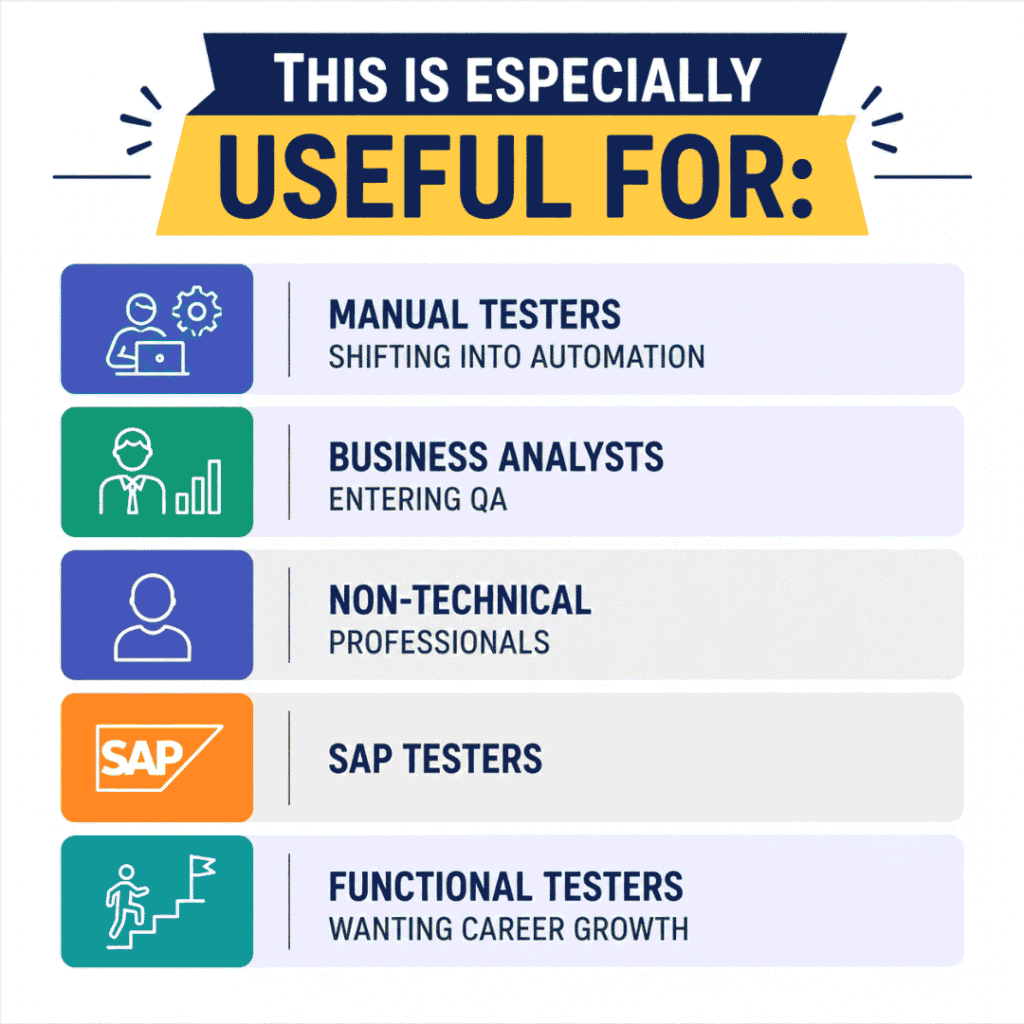
- Manual testers shifting into automation
- Business analysts entering QA
- Non-technical professionals
- SAP testers
- Functional testers wanting career growth
A structured TOSCA Training Online program usually introduces automation concepts gradually, which helps learners avoid the “too much too fast” problem many face with scripting-heavy tools.
Real-World Project Experience Matters More in 2026
One noticeable hiring trend in 2026 is that companies increasingly ask candidates about projects rather than certificates alone.
That’s why practical training matters.
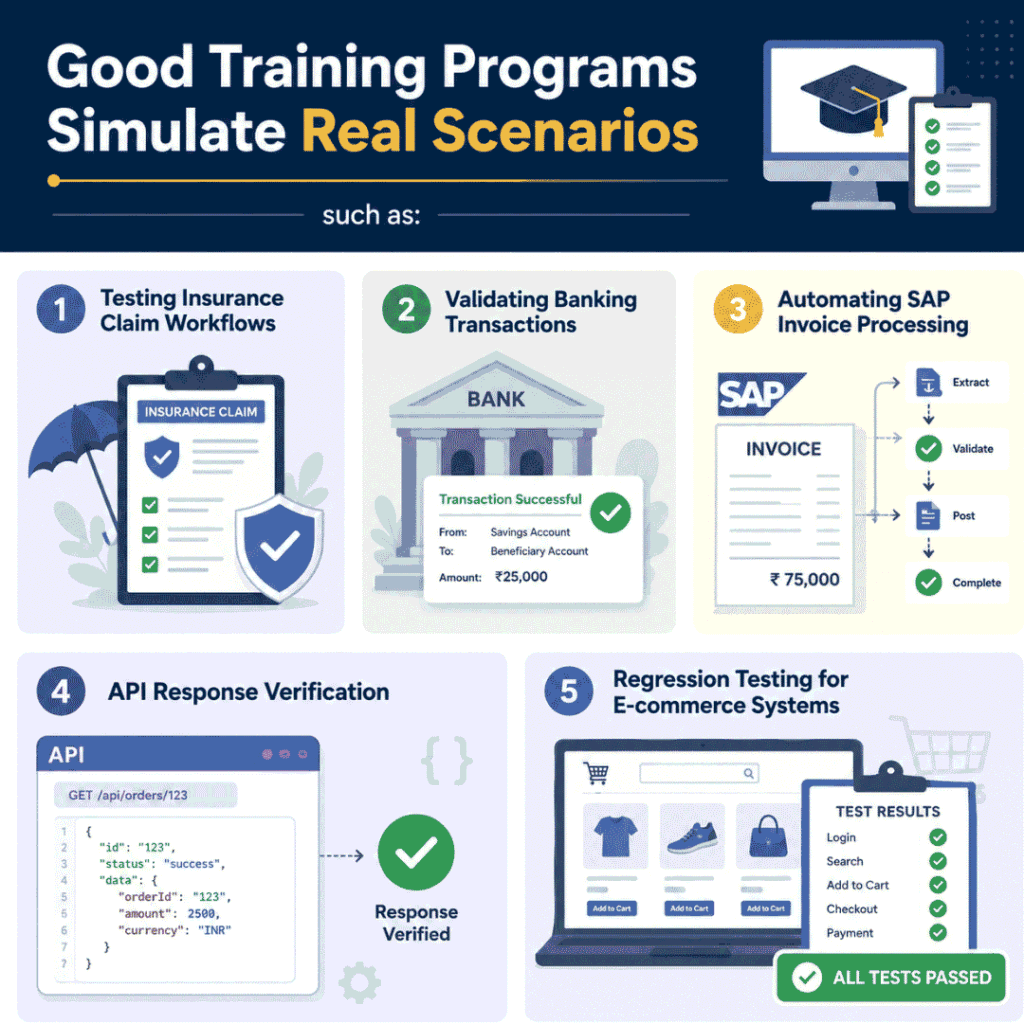
Good training programs simulate real scenarios such as:
- Testing insurance claim workflows
- Validating banking transactions
- Automating SAP invoice processing
- API response verification
- Regression testing for e-commerce systems
These projects improve problem-solving skills, not just tool familiarity.
Some learners from H2K Infosys mention that mock interviews and live project exposure helped them explain automation workflows more confidently during job interviews.That kind of preparation tends to stand out.
Skills You Gain from a TOSCA Testing Course
A well-designed TOSCA Testing Course helps learners build several practical skills:
Automation Skills
- Test case automation
- Reusable module creation
- Test data management
- API automation
- Regression suite management
QA Process Skills
- Defect lifecycle understanding
- Agile testing workflows
- Risk-based testing strategy
- Reporting and analytics
Career Skills
- Resume preparation
- Mock interview practice
- Project explanation techniques
- Certification preparation
And honestly, communication becomes part of the learning too.Automation engineers spend a surprising amount of time explaining test coverage and defects to teams.
Career Opportunities After TOSCA Training
The job market for automation testing remains strong,especially in industries handling complex enterprise applications.
Common roles include:
- TOSCA Automation Tester
- QA Automation Engineer
- SAP Test Automation Analyst
- SDET
- Enterprise QA Consultant
Many U.S.based and remote global companies now list Tricentis Certification as either preferred or highly desirable in job postings.
Salary ranges vary,obviously,but experienced TOSCA Testing Course professionals in enterprise environments often earn competitive salaries because the skill set is still relatively specialized compared to generic automation tools.
Common Mistakes Beginners Make
A few mistakes show up repeatedly among new learners:
Focusing only on certification
Certification helps, but practical implementation matters more during interviews.
Ignoring API testing
Modern applications rely heavily on APIs. Pure UI automation knowledge isn’t enough anymore.
Skipping framework understanding
Even with low-code automation, understanding testing architecture is important.
Learning without projects
Watching tutorials without hands-on work creates shallow knowledge.
This is why guided practice inside a structured TOSCA Testing Course course tends to produce better long-term results.
Why Structured Learning Helps Faster
Self-learning absolutely works for some people.But many learners lose momentum because automation concepts stack on top of each other quickly.
Structured programs usually provide:
- Step-by-step learning paths
- Mentorship
- Live projects
- Interview preparation
- Certification guidance
- Peer discussions
That support system can save months of confusion.
If you’re serious about building a career in automation testing, especially in enterprise QA environments, structured training can genuinely speed up the process.
Related Topics You Can Also Explore
To build deeper topical authority around automation testing, you can also explore:
- Best TOSCA Online Training for Beginners
- How Tricentis Certification Helps QA Careers
- Difference Between Selenium and TOSCA Automation
- SAP Test Automation Using TOSCA
- API Testing Skills for Automation Engineers
These topics naturally connect as part of a broader QA automation learning path.
FAQs
Is TOSCA good for beginners in automation testing?
Yes. TOSCA is often considered beginner-friendly because it uses model-based testing and reduces heavy coding requirements.
How long does it take to learn TOSCA?
Most learners can master automated workflows suitable for real-world projects after 2–4 months of continuous practice.
Does Tricentis Certification help in getting jobs?
Only when it is paired with practical project experience and interview preparation can it effectively strengthen an individual’s job application resume.
Is TOSCA in demand in 2026?
Enterprises that deploy mainstream commercial systems such as SAP continue to adopt TOSCA to carry out scalable automated testing.
What skills are needed before joining a TOSCA Testing Course?
Basic QA knowledge helps, but many beginners start with manual testing experience and gradually move into automation.
Final Thoughts
Automation testing is changing quickly, and companies no longer want testers who only execute manual test cases. They want professionals who understand automation strategy,reusable testing frameworks, APIs, enterprise workflows, and faster release cycles.
That’s where a strong TOSCA Testing Course becomes valuable.It helps bridge the gap between manual testing knowledge and real automation capability.
And honestly, the biggest improvement usually isn’t just technical skill.It’s confidence. Once learners start building automation scenarios on real projects,interviews stop feeling theoretical and start feeling practical.
Career changers planning to enter the automated testing industry in 2026 can rely on H2K Infosys’s professional training to complete a smooth transition, through hands-on practice, real-world project work, and mentor guidance.