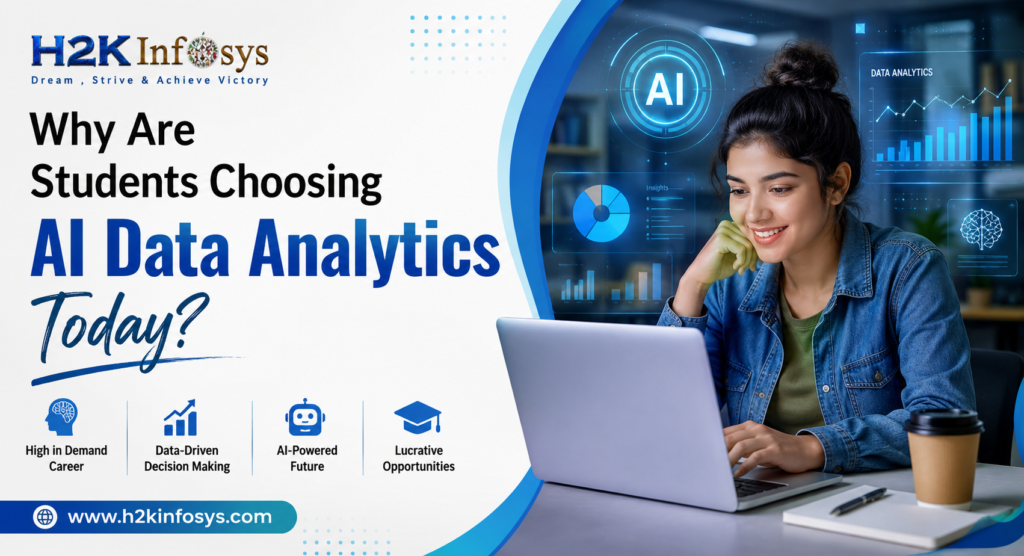
Data Analytics has quietly turned into one of the most in-demand career paths out there, and honestly, it’s not hard to see why. Businesses today run on data almost constantly. Decisions around marketing, customer experience, budgeting, forecasting, product improvements nearly everything is tied to numbers now. Whether it’s healthcare, banking, sports, e-commerce, or even streaming platforms, companies are looking for people who can actually understand all that data and turn it into something useful.
And the demand feels very real right now. In a lot of cases, companies are hiring analysts faster than training programs can supply them.
A few years ago, people mostly linked analytics jobs with giant tech companies. That idea has changed a lot. These days, even mid-sized businesses want professionals who can read dashboards, spot patterns, and explain what the numbers are saying in plain English. Once you notice it, you kind of see analytics everywhere restaurants tracking customer habits, hospitals predicting patient flow, online stores studying shopping behavior before launching ad campaigns.
That shift is a big reason why Data Analytics stopped being viewed as just another “tech skill” and started becoming a genuine long-term career option.
The Demand for Data Analytics Professionals Keeps Growing
Organizations are collecting massive amounts of information every single day. But collecting data alone doesn’t really solve anything. Businesses still need people who can interpret the information properly and connect it to real decisions.
That’s where analysts become valuable.
Right now, employers are actively searching for people with skills like:
- SQL
- Excel
- Python
- Power BI
- Tableau
- Data visualization
- Business reporting
- Predictive analytics
One thing that’s interesting lately is how much hiring priorities have shifted. Companies still value degrees, sure, but practical skills often matter more now. Someone who completes a solid Data Analytics course and has hands-on project experience can sometimes stand out faster than someone who only understands theory.
I remember reading a hiring discussion online where a retail manager mentioned they preferred candidates who could explain business insights clearly instead of just writing technical code all day. That stuck with me a little because it reflects what companies actually need now people who can bridge business and data.
Data Analytics Is No Longer Limited to Tech Companies
This is probably one of the biggest reasons so many people are moving into the field.
You don’t need to work for a Silicon Valley company to build a successful Data Analytics career anymore. Analytics jobs are showing up across industries that traditionally weren’t considered “tech-focused.”
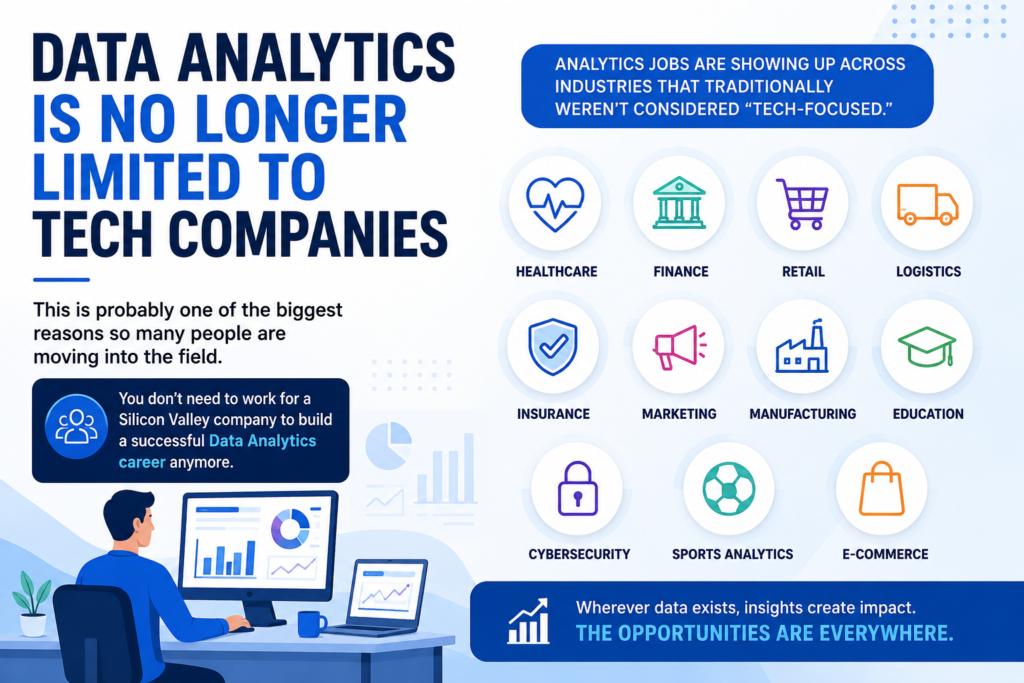
Right now, companies hiring analysts include:
- Healthcare
- Finance
- Retail
- Logistics
- Insurance
- Marketing
- Manufacturing
- Education
- Cybersecurity
- Sports analytics
- E-commerce
Hospitals use Data Analytics to manage patient demand and staffing schedules. Retail brands study buying behavior before launching promotions. Streaming services track viewing patterns to improve recommendations. Even small businesses now rely on reports and dashboards more than people realize.
A local business owner might never say the words “advanced analytics,” but they still want insights that help increase revenue or reduce waste. That’s analytics too, just in a more practical form.
And honestly, that’s part of what makes this field feel stable compared to some fast-moving tech trends that disappear after a couple of years.
Higher Salaries Are Pulling More People Toward Analytics
Let’s be realistic for a second salary growth plays a huge role here.
Entry-level Data Analytics professionals in many U.S. cities are already earning competitive salaries, especially when they combine business understanding with tools like SQL, Tableau, Power BI, and Python. After gaining some experience, many move into positions such as:
- Data Analyst
- Business Analyst
- BI Analyst
- Reporting Analyst
- Product Analyst
- Analytics Consultant
What surprises many beginners is how quickly salaries can improve once they build real-world experience.
A lot of people join a Data Analytics course thinking the work will mostly involve spreadsheets. Then they realize businesses are willing to pay extremely well for professionals who can automate reporting, explain trends clearly, and help leadership make smarter decisions.
Which makes complete sense when you think about it. Better insights usually lead to better business outcomes.
Remote Work Changed the Industry Quite a Bit
Another major reason Data Analytics became more popular is remote work.
Once companies realized analysts could work effectively from almost anywhere, hiring practices shifted fast. Since most analytics work happens through dashboards, cloud systems, reporting tools, and databases, businesses became much more comfortable hiring talent outside their immediate location.
That created opportunities for:
- Career changers
- Working professionals
- Parents returning to work
- International learners
- Students entering tech careers
A lot of learners now prefer Data analyst online classes because they can study while continuing their jobs or managing family responsibilities.
That flexibility really changed things.
A few years ago, switching into analytics often meant quitting your job or attending college full-time, which wasn’t practical for many people. Now learners can build skills during evenings or weekends without completely rearranging their lives.
Why Data Analytics Feels Easier for Beginners
Compared to some highly specialized software engineering fields, Data Analytics often feels more approachable for newcomers.
You don’t necessarily need deep programming knowledge right away. Most people begin with things like:
- Excel reporting
- SQL basics
- Data cleaning
- Dashboard creation
- Visualization tools
Then gradually move toward:
- Python
- Automation
- Predictive analytics
- Basic machine learning
That gradual learning curve makes the field feel less overwhelming.
It’s also why Data analyst online classes attract professionals from completely different backgrounds like healthcare, finance, operations, sales, and customer service. Many people realize they can transition step by step instead of trying to become advanced programmers overnight.
How H2K Infosys Helps Learners Build Practical Skills
H2K Infosys has become a recognized training provider for learners who want practical Data Analytics experience instead of purely theoretical lessons.
One thing students often mention about H2K Infosys is the focus on hands-on learning and real-world project exposure. That matters a lot because employers increasingly ask candidates to explain business scenarios during interviews rather than simply answer technical questions.
The Data Analytics course offered by H2K Infosys covers tools companies actively use today, including:
- SQL
- Excel
- Tableau
- Power BI
- Python
- Data visualization
- Reporting methods
- Business intelligence concepts
The training structure also feels manageable for beginners. Instead of overwhelming students immediately, the learning path usually builds gradually from foundational concepts into more advanced analytics topics.
A lot of working professionals especially appreciate the flexibility of the Data analyst online classes because balancing a job while learning new skills can get exhausting sometimes.
Real-World Projects Matter More Than Ever
One noticeable change happening lately is that employers care much more about practical problem-solving than memorized theory.
Recruiters now ask questions like:
- “How would you clean messy datasets?”
- “How would you present insights to leadership?”
- “What would you look for when analyzing customer behavior?”
That’s why project-based learning has become such an important part of Data Analytics training.
At H2K Infosys, students often work on scenarios that resemble actual workplace reporting situations rather than only solving textbook exercises.
That practical experience helps learners:
- Build stronger portfolios
- Improve interview confidence
- Understand reporting workflows
- Learn dashboard storytelling
- Develop communication skills
And honestly, communication is becoming just as important as technical knowledge in analytics jobs. Companies don’t just want charts and reports they want analysts who can explain what the data actually means.
AI Is Increasing the Need for Data Analytics Professionals
A lot of people assume AI will completely replace analysts someday. Realistically, the situation feels more nuanced than that.
AI can automate reporting tasks and process information faster, absolutely. But businesses still need humans to:
- Interpret results
- Validate data quality
- Understand business context
- Explain findings clearly
- Make strategic recommendations
In many ways, AI is actually increasing demand for skilled Data Analytics professionals because organizations need cleaner datasets, better reporting systems, and people who can verify whether AI-generated insights are even accurate.
That human judgment layer still matters a lot.
Why Data Analytics Offers Long-Term Stability
Technology changes constantly, but data-driven decision-making isn’t disappearing anytime soon.
Companies may switch software platforms or dashboard tools over the years, but they’ll always need professionals who understand:
- Customer behavior
- Data trends
- Forecasting
- Performance metrics
- Business intelligence
That’s one reason many professionals see Data Analytics as a stable long-term career rather than a temporary industry trend.
The field also opens doors into multiple career paths later on, including:
- Analytics management
- Business intelligence
- Data engineering
- AI analytics
- Product analytics
- Consulting
So people entering the industry aren’t boxed into one narrow role forever.
Why Many Learners Choose H2K Infosys
A lot of students searching for a trusted Data Analytics course want more than prerecorded lessons. They want mentorship, project experience, interview support, and guidance that actually prepares them for hiring expectations.
H2K Infosys focuses on helping students become job-ready through:
- Instructor-led sessions
- Real-time projects
- Resume support
- Mock interviews
- Flexible schedules
- Career-focused learning
The structure of the Data analyst online classes is especially useful for beginners transitioning from non-technical careers.
And honestly, that kind of support matters more than people sometimes expect when changing industries completely.
Final Thoughts
The reason Data Analytics has become such a strong career choice is actually pretty simple — businesses now depend on data for nearly every major decision they make.
That reliance keeps creating demand for professionals who can analyze information, explain insights clearly, and help organizations improve results.
For people trying to enter the field, practical learning matters far more today than memorizing theory alone. A well-structured Data Analytics course combined with hands-on projects and real-world exposure can genuinely improve career opportunities.
With flexible Data analyst online classes, practical project experience, and industry-focused learning, providers like H2K Infosys are helping aspiring professionals build skills employers are actively searching for in today’s increasingly data-driven world.