Introduction
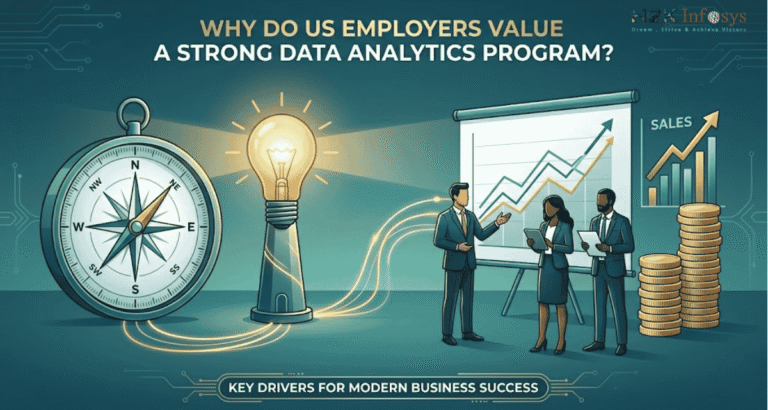
Let’s not overcomplicate it: US employers want a strong Data Analytics Program because it’s the difference between flying blind and actually seeing what’s coming next. In today’s world, data isn’t just a buzzword; it’s the secret sauce for smarter, faster, and (honestly) more profitable decision-making.
If you’re thinking about jumping into a Data Analytics Program and wondering if it’s worth your time, here’s the real scoop on why businesses care, how it impacts your career, and how the right program can open doors.
The Real Reason US Employers Are Obsessed with Data Analytics
It’s everywhere: retailers tracking shopping trends, hospitals predicting patient surges, banks monitoring fraud in real time. In 2026, every major US company depends on analytics to:
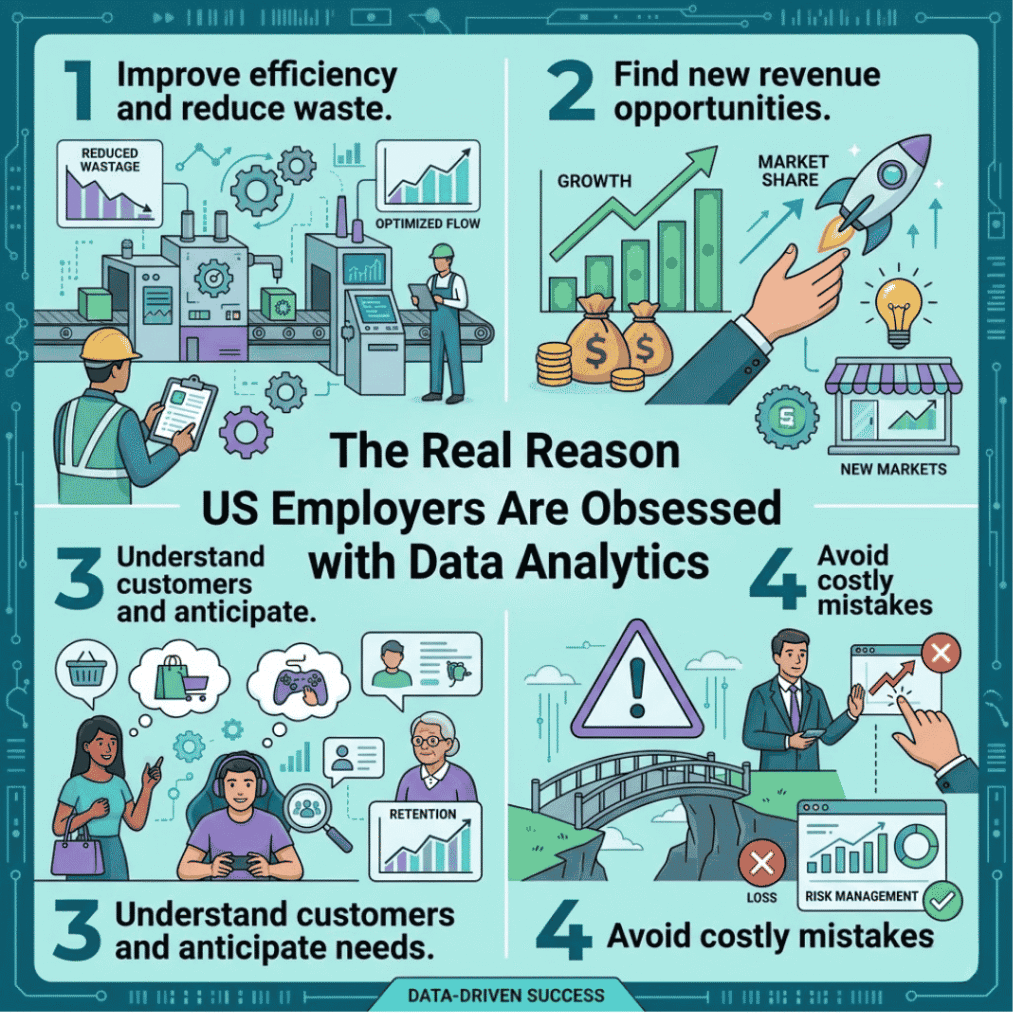
- Improve efficiency and reduce waste.
- Find new revenue opportunities.
- Understand customers and anticipate needs.
- Avoid costly mistakes
I’ve seen it firsthand: a buddy of mine worked in logistics. Once he completed a data analyst course online, he started flagging bottlenecks management hadn’t even noticed before. Pretty soon, he wasn’t just “the numbers guy”; he was the go-to for solving real business problems.
Why Data Analytics Skills Matter More Than Ever in 2026
This isn’t hype. The job market has shifted, and companies want people who can:
- Ask the right business questions.
- Pull and clean messy data.
- Build dashboards and reports everyone can understand
- Translate insights into business action.
It’s not just tech companies, either. Healthcare, retail, finance, logistics: if you can wrangle data and explain what it means, you’re valuable.
Current Trends
- Remote work: Data Analytics Program give access to top skills from anywhere.
- AI adoption: As AI grows, companies need humans to interpret, validate, and communicate insights.
- Cross-industry demand: Even fields like HR and supply chain are hiring analysts in record numbers.
What Does a Strong Data Analytics Program Actually Teach You?
Let’s be real, watching random YouTube tutorials doesn’t cut it. What employers (and you) need is:
Technical Skills
- SQL querying
- Power BI/Tableau dashboards
- Python basics for analytics
- Advanced Excel reporting
- Data visualization
Business & Communication Skills
- Explaining trends and patterns to non-technical teams
- Connecting insights to real business goals
- Presenting clear recommendations
Real-World Projects
If your Data Analytics Program doesn’t include hands-on, portfolio-worthy projects run. Employers want proof, not just certificates.
How a Data Analytics Program Boosts Your Career
When you finish a structured Data Analytics Program, you’re not just “upskilled”; you’re job-ready.
I’ve watched people go from routine reporting roles to team leads because they learned to automate dashboards, forecast sales, or present insights that actually change strategy.
Typical Roles After Training
- Data Analyst
- Business Intelligence Analyst
- Operations Analyst
- Marketing/Product Analyst
- Reporting Analyst
Salary Ranges in 2026
| Junior Data Analyst | 65,000–90,000 |
| Business Analyst | 80,000–110,000 |
| BI Analyst | 90,000–125,000 |
| Senior Analytics Specialist | $130,000+ |
Remote options are everywhere, and the need for real human analysis isn’t going away, even as AI gets smarter.
Common Mistakes to Avoid in Data Analytics
- Ignoring business context: Analytics is about solving business problems, not just making pretty charts.
- Avoiding SQL: It’s foundational daily practice pays off.
- No project portfolio: Even just 2–3 solid projects impress recruiters.
Why Programs Like H2K Infosys Stand Out
Self-study is great, but most people hit a wall. Structured programs like those from H2K Infosys offer:
- Step-by-step learning guidance
- Real project experience (not theory only)
- Mentors and instructors support Interview prep and resume
- Career coaching and networking
It’s a lifesaver of a structure, especially if you’re trying to balance work, family or a career switch.
Real-World Scenario
Picture this: You’re in a customer service role, constantly exporting Excel reports. After a Data Analytics Program, you build a dashboard that tracks customer churn in real time. Suddenly, you’re presenting to leadership and maybe even moving into an analyst position. This kind of transition happens all the time.
What to Look for in a Data Analytics Program
- Hands-on, real business projects
- Current industry tools (SQL, Power BI, Tableau, Python, Excel)
- Career support (mock interviews, resume reviews)
- Flexibility for working professionals
- Curriculum that mirrors real workplace challenges
H2K Infosys checks all these boxes, mixing technical training with practical, career-focused support.
Related Posts You May Also Like
* Building a Data Analytics Portfolio [blocked]
* Power BI vs Tableau: Which One Should You Learn? [blocked]
* US Data Analyst Career Paths [blocked]
These topics let you extend your expertise and continue to grow.
FAQs
Do I need a tech background for a Data Analytics Program?
No, many programs (like H2K Infosys) are beginner-friendly and teach everything step by step.
How long to become job-ready with a data analytics program?
Most folks are ready for analyst roles after 6–12 months of structured training plus hands-on practice.
Which tools are most important in the field?
SQL, Excel, Power BI/Tableau, and Python are the top skills for 2026.
Are analytics jobs still in demand despite AI?
Absolutely, AI creates more data, but humans are still needed to interpret and explain it.
Can I switch careers into analytics from a non-technical background?
Yes! Many people move from finance, marketing, ops, or customer service into analytics every year.
Final Thoughts
Here’s the honest truth: US employers value a strong Data Analytics Program because it’s the bridge between raw numbers and real business growth. If you want to stand out whether you’re a total beginner or looking to level up, structured, project-based courses like those at H2K Infosys can make all the difference.
If you’re serious about building a long-term, high-impact analytics career, investing in the right training isn’t just smart; it’s essential. The right Data Analytics Program can transform your skillset, your confidence, and your future opportunities.