A job-oriented Data Analytics Course is designed to equip learners with the skills to meet real-world job requirements, not just theoretical knowledge.
The best programs provide students with the practical tools, real business problem solving and hands-on experience that employers are actively seeking in today’s hiring market.
The demand for data professionals remains strong across industries. More data is being collected than ever before. That said, businesses still need skilled analysts to convert that data into meaningful business decisions. That is why selecting the right Data Analytics Course has become more important than just getting a certificate.
Why employers want more than just basic analytics knowledge
Taking an online course and learning some analytics concepts may have been enough to stand out a few years back. Now it’s different. Now the hiring managers are looking for someone who can work with actual datasets, create reports, dashboards and communicate insights effectively.
While checking out some job descriptions lately one thing stood out. Employers are always looking for real-world experience in tools like Excel, SQL, Power BI, Tableau and Python. These technologies should be part of the modern Data Analytics Course to be part of everyday analytics work.
Organisations are also adopting the use of AI-assisted analytics tools, which makes it more important than ever that professionals understand how to interpret data, not just automate it.
Key Considerations for a Job-Oriented Data Analytics Course
Not all training programs provide career-ready skills. A really job-oriented Data Analytics Course usually contains some very important things.
Business Cases and Real Life Projects
Students learn best when working on real business problems. Rather than working through textbook examples, learners study customer behaviour, sales trends, operational metrics or financial performance data.
In these projects the students learn how analytics is applied in actual organisations. Employers value project experience as an example of practical problem-solving ability.
Tools for the Industry
A good Data Analytics Course should offer hands-on experience with tools that employers frequently use, such as:
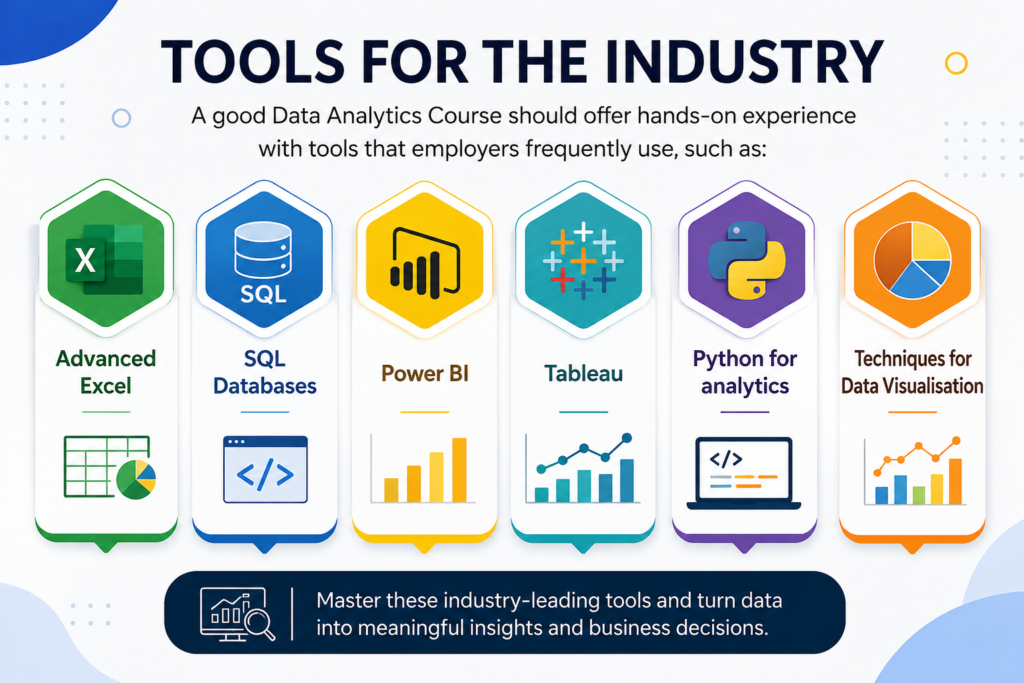
- Advanced Excel
- SQL Databases
- Power BI
- Tableau
- Python for analytics
- Techniques for Data Visualisation
Knowing how to use these tools helps students feel comfortable in their interviews and prepared to take on workplace responsibilities from day one.
Building a Portfolio
One thing I learned from recruiters is that portfolios seem to carry more weight than certificates alone.
A good Data Analytics Course encourages learners to create project portfolios that showcase dashboards, reports and business insights. These examples allow employers to evaluate practical skills, not just resume.
How H2K Infosys Offers Industry-Focused Analytics Training
Industry aligned training is one of the reasons why many aspiring analysts consider H2K Infosys. The training methodology is not only theoretical concepts but also practical exercises, practical assignments, and real-life scenarios.
Students in the Data Analytics certification program learn tools and workflows that are common in the professional world. This bridges the gap between learning and employment.
Hands-on Project Experience with H2K Infosys
One big challenge for beginners is to get practical experience before they get their first analytics job. To solve this problem, H2K Infosys has added project based learning in its curriculum.
Business datasets provide students with an opportunity to apply the concepts learned in the Data Analytics Course and develop confidence in the application of data analysis techniques.
The experience also enhances learners’ understanding of the role of analysts in decision-making processes in organisations.
Career Success: Training Plus Support
Another thing that makes H2K Infosys stands out is the focus on career preparation. Technical skills are important, but interview preparation, resume writing and professional mentoring can be the key to a successful job search.
Many learners find a more holistic route to analytics employment when technical training is combined with career support.
Data Analytics Certification Importance
Is there still a value for Data Analytics certification when employers want practical skills?
The truth is that certifications are best complemented by experience. A formal Data Analytics certification is a mark of commitment to learning and confirms foundational knowledge. Project-based and practical experience-based certifications can add a lot of value to a candidate’s profile.
Certification is often seen by recruiters as evidence that candidates have invested time in developing relevant technical skills.
Current Trends Impacting the Analytics Job Market
The analytics space continues to evolve rapidly.
Businesses are increasingly incorporating artificial intelligence into reporting and decision-making processes. These technologies aren’t replacing analysts, but changing how they work. Now, analysts are expected to interpret and validate the results produced by AI and communicate the findings to stakeholders.

A modern Data Analytics Course thus needs to equip students with both technical analytics skills and business communication skills.
Organisations are also increasingly focused on data storytelling. It’s not enough to just make charts anymore. Professionals need to make sense of what the data says and how leaders should react to that insight.
What Beginners Should Look For Before Signing Up
When selecting a training provider, consider the following questions:
- Does Data Analytics Course include Real-Life Projects?
- Do you teach with industry standard tools?
- Do you assist with portfolio building?
- Will the program prepare you for interviews?
- Are the teachers experienced professionals?
- Does it have an accredited Data Analytics certification?
Answering these questions can help to identify programs that really prepare students to work.
Final Thoughts
Today, the job-oriented nature of a Data Analytics Course is determined by its ability to connect learning with real workplace expectations. Employers want professionals who can analyse data, solve business problems, present insights and work with industry-standard tools with confidence.
These needs are met by the programs offered by H2K Infosys, which impart hands on training, practical projects, and career guidance. This approach along with a reputable Data Analytics certification helps students build the skills that are most desirable by employers in the current competitive analytics industry.
If you are looking to change careers or are new to the field, opting for a job-oriented Data Analytics Course can be one of the smartest investments for long-term career growth.