Introduction to Python Frameworks
Python frameworks have become the backbone of software development in the modern tech landscape. They streamline the development process, enabling developers to build robust applications faster and more efficiently. Python, with its simplicity and powerful capabilities, offers a variety of frameworks that cater to different development needs, including web development, machine learning, data science, and automation.
In this blog post, we will explore the most widely used Python frameworks, their real-world applications, and how they can significantly impact your career when you gain expertise in them through a Python certification course online.
Why Are Python Frameworks Important?
Python frameworks are pre-built libraries that provide developers with the structure and tools needed to build applications quickly without starting from scratch. These frameworks are essential for ensuring that the development process is faster, easier, and less error-prone. Some key advantages of using Python frameworks include:
- Faster Development: Python frameworks provide ready-to-use modules, saving time and effort.
- Code Reusability: A framework’s design encourages the reuse of code, which helps in building applications more efficiently.
- Security: Many frameworks come with built-in security features, ensuring the application is safe from common vulnerabilities.
- Scalability: Frameworks are often designed with scalability in mind, allowing your application to grow without major issues.
For developers looking to deepen their understanding of these frameworks, enrolling in a best Python certification course can be a great way to gain hands-on experience and real-world insights into their use.
The Most Popular Python Frameworks
1. Django
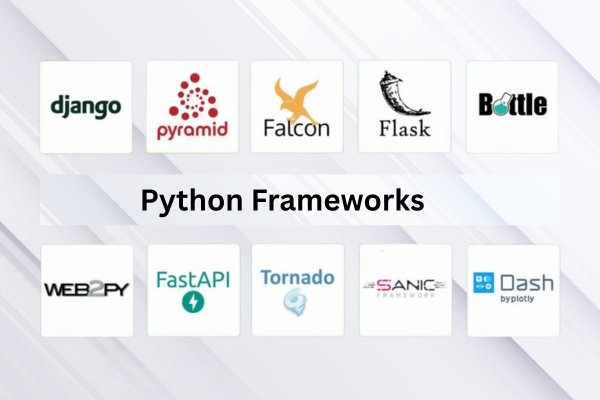
Django is a high-level, open-source web framework for Python that emphasizes rapid development and clean, pragmatic design. It is one of the most popular Python frameworks, known for its “batteries-included” philosophy, meaning it comes with all the essential tools needed for developing web applications.
Real-World Usage of Django
Django is widely used in developing content management systems (CMS), social networks, and scientific computing platforms. Notable companies like Instagram, Pinterest, and Spotify use Django for various purposes, including handling high volumes of traffic and supporting millions of users.
Key Features:
- Built-in admin interface for easy management
- Robust ORM (Object-Relational Mapping) system
- High scalability and security
- Easy integration with other Python libraries
By gaining expertise in Django through a Python certification course, developers can learn how to create highly efficient web applications that scale with ease.
2. Flask
Flask is a micro-framework that provides the essentials for building web applications. Unlike Django, which comes with everything you need to get started, Flask is minimalistic and leaves the choices to the developer. It is lightweight, flexible, and perfect for smaller projects or applications where full-stack capabilities aren’t required.
Real-World Usage of Flask
Flask is often used in applications where flexibility is essential, including RESTful APIs, microservices, and lightweight web apps. Companies like Netflix and Airbnb use Flask for its speed and ability to scale horizontally.
Key Features:
- Lightweight and minimalistic design
- Easy to integrate with various extensions and tools
- Ideal for small to medium-sized applications
Flask allows developers to build applications faster, and Flask-based projects are highly regarded in both the academic and professional sectors.
3. Pyramid
Pyramid is another Python framework that provides developers with the flexibility to choose the tools they need for building web applications. It’s designed for both simple and complex applications, offering high scalability while maintaining simplicity.
Real-World Usage of Pyramid
Pyramid is frequently used by developers building APIs or large-scale applications where customization is essential. SurveyMonkey and Mozilla are examples of companies that use Pyramid to handle their complex web applications.
Key Features:
- Versatile with a variety of plugins
- Supports both small and large applications
- Ideal for custom web applications
Pyramid’s flexibility makes it a great choice for developers who want full control over their application’s architecture.
Python Frameworks for Data Science and Machine Learning
4. TensorFlow
TensorFlow is an open-source framework developed by Google for machine learning and artificial intelligence. It’s one of the most widely used frameworks in AI development, especially in deep learning applications.
Real-World Usage of TensorFlow
TensorFlow powers many high-performance AI applications such as Google Search, speech recognition, and image classification. Major organizations like Google, Intel, and Uber leverage TensorFlow to build advanced AI-powered solutions.
Key Features:
- Open-source library for machine learning and deep learning
- Extensive support for neural networks
- Strong community support and development
For those pursuing a Python certification course online, gaining knowledge in frameworks like TensorFlow can be a significant asset, especially in AI-driven industries.
5. PyTorch
PyTorch is another powerful machine learning library that is often used for deep learning applications. Developed by Facebook, PyTorch has become popular due to its simplicity and flexibility.
Real-World Usage of PyTorch
Companies like Tesla and Facebook use PyTorch for its flexibility in building and deploying deep learning models, making it a staple in AI and machine learning research.
Key Features:
- Provides dynamic computation graphs
- Supports deep learning and neural networks
- Easy to integrate with Python libraries
PyTorch is highly favored by researchers due to its ease of use and flexibility, making it an excellent tool for those exploring machine learning.
Choosing the Right Python Framework for Your Career
Choosing the right framework is essential for advancing your career in Python development. Whether you’re focusing on web development, data science, or machine learning, each framework has its specific use case. Here’s how you can make the right choice:
- Django and Flask are great for web development, with Django being perfect for large projects and Flask suited for smaller, more flexible projects.
- TensorFlow and PyTorch are ideal for machine learning enthusiasts who want to dive deep into AI-driven development.
- Pyramid is great for those who require full control over their app’s architecture.
Incorporating a Python certification course into your learning journey will ensure that you master these frameworks with a structured approach and real-world projects.
How to Get Started with Python Frameworks
Starting your journey with Python frameworks can be both exciting and overwhelming. Here’s how you can dive into learning them effectively:
- Choose the Right Framework: Decide on a framework based on your area of interest (web development, machine learning, etc.).
- Enroll in a Python Certification Course: Choose a Python certification course online to get hands-on experience with real-world projects and structured learning.
- Practice with Projects: Start building small projects using the chosen framework to understand its features and how they interact with each other.
- Join a Community: Engage with online Python communities to learn from experienced developers and get your doubts cleared.
Conclusion
Python frameworks play a crucial role in simplifying the development process and enabling developers to build powerful applications. Whether you are interested in web development with Django and Flask or venturing into machine learning with TensorFlow and PyTorch, Python frameworks provide the tools needed to create high-performance solutions.
Enrolling in a best Python certification course can help you master these frameworks and open up a world of opportunities in the tech industry. Don’t miss out on the chance to gain hands-on experience and advance your career.
Ready to dive deeper into Python frameworks? Enroll now at H2KInfosys and start your journey with Python certification online to boost your career in tech!