

Understanding the significance of Endurance Testing is crucial in today’s software development landscape, especially as businesses strive to enhance their software performance and reliability. In today’s fast-paced digital world, every business relies on software to deliver value to customers. But with increasing complexity, even the smallest defects can lead to major losses, poor user experience, and brand damage. This is why companies across industries now depend on skilled Quality Assurance professionals to ensure that software applications are reliable, secure, and deliver the best performance. As a result, Quality Assurance software testing courses have become one of the most in-demand training paths for aspiring IT professionals.
If you are planning to build a career in QA or switch into the field from a non-IT background, enrolling in a Software testing and quality assurance course can be the turning point. This comprehensive guide explains everything you need to know. You will learn what QA means, what skills you need, what types of testing you will learn, job roles, salary trends, and how QA training programs prepare you for a successful career.
Introduction: Why Learn Quality Assurance Today?
Quality Assurance software testing has moved from being optional to absolutely mandatory for organizations. With thousands of applications being released every day, companies demand software that is bug free, user friendly, secure, and high performing. QA testers ensure that software works as expected before it reaches the customer.
More than 70 percent of IT companies now hire trained QA professionals. Job roles in QA are expanding because organizations cannot afford quality failures. For learners, this means a growing demand for skilled testers and multiple career opportunities in both manual and automation testing.
A structured Quality Assurance software testing course gives you the foundation, industry tools, real-time projects, and placement readiness required to succeed in this field.
What Is Quality Assurance in Software Testing?
Quality Assurance, often called QA, focuses on preventing defects and ensuring that software applications meet quality standards. QA testers perform systematic testing, identify errors, and ensure that applications work correctly across different devices, browsers, and user environments.
A software testing and quality assurance course teaches learners:
- How software is built
- How to identify functional and non-functional issues
- How to test applications manually and with automation tools
- How to document test cases, defects, and project artifacts
- How to work in Agile project environments
- How to collaborate with developers, Business Analysts, and project managers
The goal of QA is not just finding bugs but improving the overall software development process.
Who Should Enroll in Quality Assurance Software Testing Courses?
One of the best things about QA is that anyone can learn it. You do not need coding experience unless you move into automation testing later. The field is open to:
- Fresh graduates from any educational background
- Working professionals looking for a career change
- Non-IT professionals switching into tech
- Homemakers restarting their career
- IT professionals looking to specialize
- Students preparing for job placement
Because QA requires analytical thinking, attention to detail, and communication skills, it is accessible for many learners.
What You Learn in a Software Testing and Quality Assurance Course
A strong QA software testing course covers the full testing lifecycle, tools, and industry practices. Below is an overview of what learners typically gain through structured training.
Software Development Life Cycle and Testing Life Cycle
Understanding how software is built helps testers design effective test scenarios. A course teaches:
- SDLC models including Agile, Scrum, Waterfall
- Test planning
- Entry and exit criteria
- Test levels and testing phases
- QA documentation and tracking
You learn how testing fits into the overall development process.
Manual Testing Concepts
Manual testing forms the base of QA. You learn:
- Functional testing
- System testing
- Regression testing
- Smoke and sanity testing
- Usability testing
- Exploratory testing
You learn how to test software step by step, identify defects, and document them clearly.
Testing Documentation Skills
QA testers create important project documents such as:
- Test plans
- Test scenarios
- Test cases
- Bug reports
- Traceability matrices
- Test summary reports
Training programs teach standard templates and documentation formats followed in real companies.
Defect Tracking and Test Management Tools
Modern QA relies on tools for defect tracking and test execution. A software testing and quality assurance course helps you learn tools like:
- JIRA
- Bugzilla
- TestRail
- Quality Center ALM
- Zephyr
These tools help you manage test cycles and collaborate with team members.
SQL and Database Testing
Since most applications use databases, QA testers must understand SQL basics. QA courses teach:
- Writing SQL queries
- Validating data
- Joining tables
- Performing backend data verification
This skill gives you a strong advantage in QA interviews and job roles.
API Testing
With increasing use of microservices and integrations, API testing has become a core QA skill. You learn tools like:
- Postman
- Swagger
- REST API testing methods
API testing skills make you more competitive in the job market.
Automation Testing Tools (Optional but In Demand)
After learning manual testing, many students upgrade to automation testing tools like:
- Selenium
- Python or Java based automation
- TestNG
- Cucumber BDD
Automation testing is one of the fastest growing QA job roles. While it requires coding, most training programs teach automation from scratch.
Main Goals of Endurance testing:
- The prime goal of endurance testing is to check for memory leaks.
- Discovers how system performs under the sustained usage.
- To make sure that after a long period the system response time will remain the same or get better than the start of the test.
- To decide the number of users /or transactions, if a given system will support and meets performance goals.
- To handle the future loads: we need to understand how many additional resources are required to support usage in future.
- Endurance testing is generally done by either overloading the system or may be by reducing certain system resources and verifying the consequences.
What we have to monitor in Endurance testing?
In endurance testing the things that are tested
- Test memory leakage- constant checks are done to validate if there are any memory leakage in the application, which can cause crashing of the system or OS.
- Test connection closure in between the layer of the system
- Test database connection close successfully-If database connection isn’t closed, it may result in system crash.
- Test response time- System is tested always for the response time because application becomes less efficient as a result of the long use of the system.
Jmeter in Endurance testing:
Consider an example where the endurance testing is performed in order to check the memory leakage by analyzing the heap memory used by the application.
- Add a dummy sample in the Apache Jmeter software
- some listeners
- create more number of threads, specify the thread ramp up time and duration
and execute the test for 5 minutes
- we have to use the Visual VM which comes in JDK package to monitor the heap memory while starting the test.
- when we run the tests on the Java VM, we can get the reports of CPU memory usage etc.
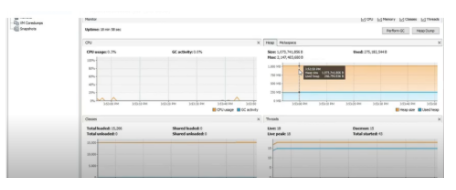
- we can see the garbage collector which monitors the leakage of the heap
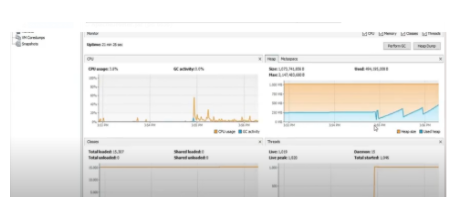
We will save the file. Now the test has been completed and the heap leakage has been reduced.
Conclusion
A Quality Assurance software testing course is one of the best career paths for beginners, non-IT professionals, and learners seeking a stable and rewarding career in technology. The demand for QA professionals continues to rise, and companies seek trained testers who can ensure reliable, user friendly, and high-quality software.
When you enroll in a Software testing and quality assurance course, you gain essential testing skills, practical project experience, tool expertise, and placement support required to stand out in the job market. Whether your goal is to work as a manual tester, automation engineer, or QA analyst, this training prepares you with everything you need to build a long term and successful IT career.























8 Responses
Endurance testing is done to make sure the application is capable enough to handle extended load without any deterioration of response time. It mainly tests for memory leakage, Database connection close.
It is a long process. External load like internet traffic and user actions are applied to check for working of software.
Endurance testing is to test the performance/sustainability of the system during its high usage.
As mentioned in the article about some advantages of endurance testing. There can be few drawback as well.
It is often hard to define how much stress is worth applying.
Endurance Testing could cause application and/or network failures that may result in significant disruption if Test Environment are not isolated. Permanent Data loss or corruption can occur by over-stressing the system.
Endurance testing is non-functional type of testing where the software is tested with very high load which is extended over a significant amount of the time to verify the behavior of software application. The main goal of endurance testing is to make sure that the application is capable enough to handle extended load without compromising of response time and to check for memory leaks.
Endurance testing is non-functional type of testing where the software is tested with very high load which is extended over a significant amount of the time to verify the behaviour of software application under sustained use. The main goal of endurance testing is to make sure that the application is capable enough to handle extended load without any deterioration of response time.
Endurance testing is done to make sure the application is capable enough to handle extended load without any deterioration of response time. It mainly tests for memory leakage, Database connection close.
It is a long process. External load like internet traffic and user actions are applied to check for working of software.
Endurance testing is non-functional type of testing where the software is tested with very high load which is extended over a significant amount of the time to verify the behaviour of software application under sustained use. The main goal of endurance testing is to make sure that the application is capable enough to handle extended load without any deterioration of response time.
Endurance testing is non-functional type of testing where the software is tested with very high load which is extended over a significant amount of the time to verify the behavior of software application under sustained use. The main goal of endurance testing is to make sure that the application is capable enough to handle extended load without any deterioration of response time. This sort of testing is performed at the last stage of the performance cycle. Endurance testing is a long process and sometimes lasts for even up to an year. This may include applying the external load such as internet traffic or may be user actions, this is what makes the endurance.
Main Goals of Endurance testing:
• The prime goal of endurance testing is to check for memory leaks.
• Discovers how system performs under the sustained usage.
• To make sure that after a long period the system response time will remain the same or get better than the start of the test.
• To decide the number of users /or transactions, if a given system will support and meets performance goals.
• To handle the future loads: we need to understand how many additional resources are required to support usage in future.
• Endurance testing is generally done by either overloading the system or may be by reducing certain system resources and verifying the consequences.