AI Engineer vs Machine Learning Engineer refers to a comparison between two closely related technical roles focused on designing, building, and deploying intelligent systems. An AI Engineer typically works across the full spectrum of artificial intelligence applications, including decision systems, automation, and system integration, while a Machine Learning Engineer specializes in developing, training, and deploying machine learning models that enable systems to learn from data. Both roles rely on data, algorithms, and scalable infrastructure, but differ in scope, workflow focus, and enterprise responsibilities
What is AI Engineer vs Machine Learning Engineer?
An AI Engineer is responsible for designing and integrating artificial intelligence systems into real-world applications, such as intelligent automation platforms, conversational systems, recommendation engines, and enterprise decision-support tools. Their work often spans software engineering, data pipelines, model deployment, and system optimization.
A Machine Learning Engineer focuses more narrowly on building, training, validating, and maintaining machine learning models. This role emphasizes data preparation, feature engineering, algorithm selection, model evaluation, and performance tuning in production environments.
In most enterprise environments, these roles overlap, but their day-to-day priorities and technical depth differ based on organizational structure and project goals.
How does AI work in real-world IT projects?
In enterprise IT environments, artificial intelligence systems are rarely standalone. They are part of larger workflows that integrate data sources, applications, security layers, and infrastructure platforms.
Typical AI Project Workflow
- Data Ingestion
- Sources: Databases, APIs, logs, IoT devices, CRM systems, cloud storage
- Tools: Apache Kafka, AWS S3, Azure Data Factory, Google BigQuery
- Data Preparation
- Cleaning, transformation, feature engineering
- Tools: Python (Pandas, NumPy), SQL, Spark, data validation frameworks
- Model Development
- Algorithm selection and training
- Tools: TensorFlow, PyTorch, Scikit-learn, XGBoost
- Testing and Validation
- Accuracy, bias, performance, security testing
- Tools: MLflow, model monitoring platforms
- Deployment and Integration
- API services, microservices, cloud platforms
- Tools: Docker, Kubernetes, REST APIs, CI/CD pipelines
- Monitoring and Maintenance
- Performance drift, data drift, system health
- Tools: Prometheus, Grafana, cloud monitoring services
AI Engineers often manage steps 4 through 6, while Machine Learning Engineers focus deeply on steps 2 through 4.
Why is AI Engineer vs Machine Learning Engineer important for working professionals?
Understanding the distinction helps professionals choose learning paths that align with career goals, technical interests, and enterprise job requirements.
- Organizations increasingly separate model development from system integration
- Cloud-based AI platforms demand skills in deployment, security, and scalability
- Teams often require specialists who can maintain production-grade AI systems
For working professionals, this clarity helps identify whether they should focus on that emphasize model engineering or that include system design and enterprise deployment.
What skills are required to learn AI?
Both roles share a technical foundation, but their skill emphasis varies.
Core Technical Skills (Shared)
- Programming: Python, Java, or C++
- Mathematics: Linear algebra, probability, statistics
- Data handling: SQL, Pandas, data pipelines
- Cloud platforms: AWS, Azure, or Google Cloud
- Version control: Git, CI/CD workflows
Specialized Skills by Role
| Skill Area | AI Engineer | Machine Learning Engineer |
|---|---|---|
| Model Development | Moderate | Advanced |
| System Integration | Advanced | Moderate |
| Cloud Deployment | Advanced | Moderate |
| Data Engineering | Moderate | Advanced |
| API & Microservices | Advanced | Basic |
| Performance Optimization | Advanced | Advanced |
| MLOps & Monitoring | Advanced | Advanced |
How is AI used in enterprise environments?
AI systems in enterprises must meet performance, security, compliance, and scalability standards.
Common Enterprise Use Cases
- Customer support automation (chatbots, ticket routing)
- Fraud detection and risk analysis
- Supply chain forecasting
- Recommendation engines
- Predictive maintenance
- Document processing and classification
Enterprise Constraints
- Data privacy regulations (GDPR, HIPAA, SOC 2)
- System uptime and reliability
- Secure model deployment
- Integration with legacy systems
AI Engineers often design architectures that ensure compliance and system reliability, while Machine Learning Engineers ensure model accuracy and stability under production conditions.
What job roles use AI daily?
AI-Focused Roles
- AI Engineer
- AI Solutions Architect
- Applied AI Developer
- Intelligent Automation Engineer
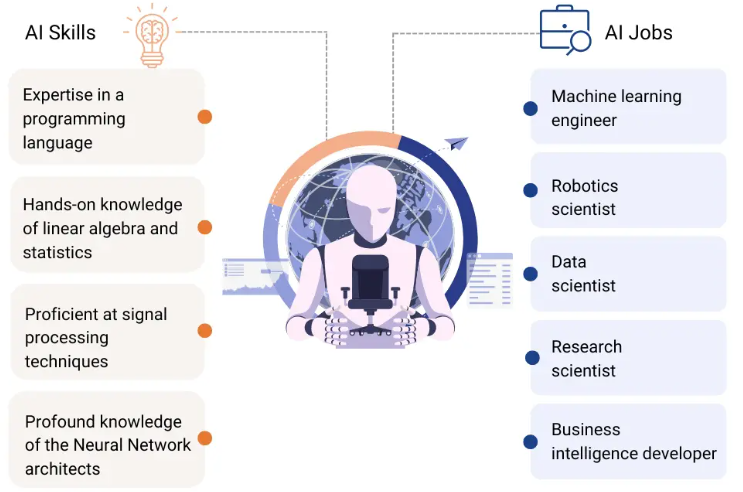
Machine Learning-Focused Roles
- Machine Learning Engineer
- Data Scientist (ML-focused)
- MLOps Engineer
- NLP Engineer
In many organizations, roles evolve based on team size and project scope, blending responsibilities from both categories.
What careers are possible after learning AI?
Professionals who complete structured AI and machine learning courses often progress into roles such as:
- AI Engineer
- Machine Learning Engineer
- Data Scientist
- MLOps Engineer
- AI Consultant
- Automation Architect
- Cloud AI Specialist
These roles exist across industries including healthcare, finance, e-commerce, manufacturing, and enterprise IT services.
Role Comparison: AI Engineer vs Machine Learning Engineer
Responsibilities Overview
| Category | AI Engineer | Machine Learning Engineer |
|---|---|---|
| Primary Focus | System-level AI solutions | Model development and optimization |
| Data Handling | Uses processed data | Prepares and engineers data |
| Model Training | Uses and fine-tunes models | Designs and trains models |
| Deployment | Leads deployment and integration | Supports deployment |
| Monitoring | Oversees system health | Oversees model performance |
| Collaboration | Works with DevOps and product teams | Works with data teams |
Common Tools and Frameworks
Development Tools
- Python, R, Java
- Jupyter Notebook, VS Code
ML Frameworks
- TensorFlow
- PyTorch
- Scikit-learn
- Keras
MLOps and Deployment
- Docker
- Kubernetes
- MLflow
- Kubeflow
Cloud AI Platforms
- AWS SageMaker
- Azure Machine Learning
- Google Vertex AI
AI Engineers typically spend more time with containerization and cloud services, while Machine Learning Engineers focus on modeling libraries and evaluation tools.
Learning Path Comparison
| Learning Stage | AI Engineer Path | Machine Learning Engineer Path |
|---|---|---|
| Foundation | Programming, Math, Data | Programming, Math, Data |
| Intermediate | ML basics, APIs, Cloud | ML algorithms, feature engineering |
| Advanced | MLOps, system design | Deep learning, model tuning |
| Enterprise Skills | Security, scalability | Model lifecycle management |
This structure helps learners choose Best online courses for artificial intelligence or targeted based on their role preference.
Salary Trends (2026 Outlook)
United States (Indicative Ranges)
| Role | Entry-Level | Mid-Level | Senior-Level |
|---|---|---|---|
| AI Engineer | $85,000–$110,000 | $110,000–$140,000 | $140,000–$170,000+ |
| Machine Learning Engineer | $90,000–$115,000 | $115,000–$145,000 | $145,000–$180,000+ |
Factors Affecting Salary
- Industry (finance, healthcare, cloud services)
- Location and remote policies
- Cloud and MLOps expertise
- Security and compliance knowledge
- Production deployment experience
Salaries tend to increase for professionals who can manage both model development and enterprise system integration.
Realistic Project Scenarios
Scenario 1: Customer Support Automation
- Machine Learning Engineer:
- Trains NLP models for intent classification
- Evaluates accuracy and bias
- AI Engineer:
- Deploys chatbot as a cloud service
- Integrates with CRM and ticketing systems
- Monitors performance and uptime
Scenario 2: Predictive Analytics Platform
- Machine Learning Engineer:
- Develops forecasting models
- Performs feature engineering
- AI Engineer:
- Builds APIs for business dashboards
- Sets up monitoring and security layers
Challenges Teams Commonly Face
- Data quality and availability
- Model performance drift
- Infrastructure scaling
- Security vulnerabilities
- Integration with legacy systems
AI Engineers often address infrastructure and system challenges, while Machine Learning Engineers focus on data and model reliability.
Best Practices Followed in Enterprise IT
- Version control for models and data pipelines
- Automated testing for ML models
- Secure API gateways
- Role-based access control
- Continuous monitoring and logging
FAQ: AI Engineer vs Machine Learning Engineer
Is one role better than the other?
Both roles are valuable. The choice depends on whether you prefer system engineering or model development.
Can one person perform both roles?
In smaller teams, professionals often handle both, but large organizations typically separate responsibilities.
Do I need advanced math for AI roles?
Yes, especially for Machine Learning Engineers. AI Engineers may rely more on system and deployment expertise.
Which role is more future-proof?
Both roles are expected to remain relevant as organizations expand AI systems across operations.
What certifications help?
Cloud AI certifications, MLOps training, and structured AI programs support both career paths.
Summary Table: Role vs Skill Mapping
| Skill | AI Engineer | ML Engineer |
|---|---|---|
| Python Programming | High | High |
| Cloud Services | High | Medium |
| ML Algorithms | Medium | High |
| Data Engineering | Medium | High |
| DevOps/MLOps | High | High |
| Security | High | Medium |
Key Takeaways
- AI Engineers focus on system-level design, deployment, and integration.
- Machine Learning Engineers specialize in model development and optimization.
- Both roles share core programming and data skills but differ in enterprise responsibilities.
- Salary growth is influenced by cloud, MLOps, and production deployment expertise.
- Choosing the right learning path depends on whether you prefer engineering systems or developing models.
Call to Action
Explore H2K Infosys AI programs to gain hands-on experience with real-world tools and enterprise workflows.
Build practical skills that support long-term career growth in artificial intelligence and machine learning.