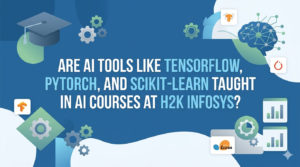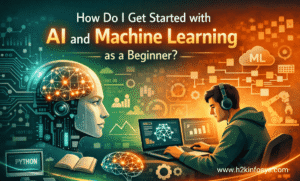
Yes, AI courses at H2K Infosys do cover tools like TensorFlow, PyTorch, and Scikit-Learn, and not just at a surface level. They’re typically woven into hands-on projects so learners actually use them the way professionals do.
If you’ve been exploring an ai course online, you’ve probably noticed something everyone talks about “AI skills,” but not everyone tells you which tools you’ll actually touch. And honestly, that’s what matters when you’re trying to land a job or switch careers.
So let’s get real about it.
What You Actually Learn In AI Courses
From what I’ve seen and from feedback shared by learners H2K Infosys doesn’t treat tools like TensorFlow or PyTorch as optional add-ons. They’re part of the core learning experience.
Here’s how it usually plays out:
- Scikit-Learn comes first
You start simple. Think regression models, classification, clustering. It’s kind of like learning to cook before trying gourmet recipes.
Real-world example? Predicting customer churn or analyzing sales patterns. - TensorFlow gets introduced when things get deeper
This is where neural networks come into play. You might work on:- Image classificationBasic NLP tasksModel optimization
- PyTorch (increasingly important in 2025–2026)
This is interesting PyTorch has become the go-to in research and even production environments lately. If you’ve followed AI news, you’ve probably seen how many generative AI models lean toward PyTorch frameworks. In courses, learners often:- Build neural networks from scratch
- Experiment with deep learning architectures
- Work on mini-projects that feel close to real industry use
And yeah, this isn’t just “watch and forget.” You actually build stuff.
Why These Tools Matter (Especially Now)
Let’s be honest AI isn’t slowing down. If anything, it’s getting more practical.
- Companies are integrating AI into everyday workflows
- Generative AI (like chatbots, copilots) is everywhere
- Even non-tech roles now expect some level of AI understanding
So when you take an artificial intelligence course online, learning tools like these isn’t optional anymore it’s expected.
I remember talking to someone who completed a similar program, and they said something that stuck:
“Knowing theory helped me pass interviews. Knowing TensorFlow helped me get hired.”
That pretty much sums it up.
How H2K Infosys Structures Learning
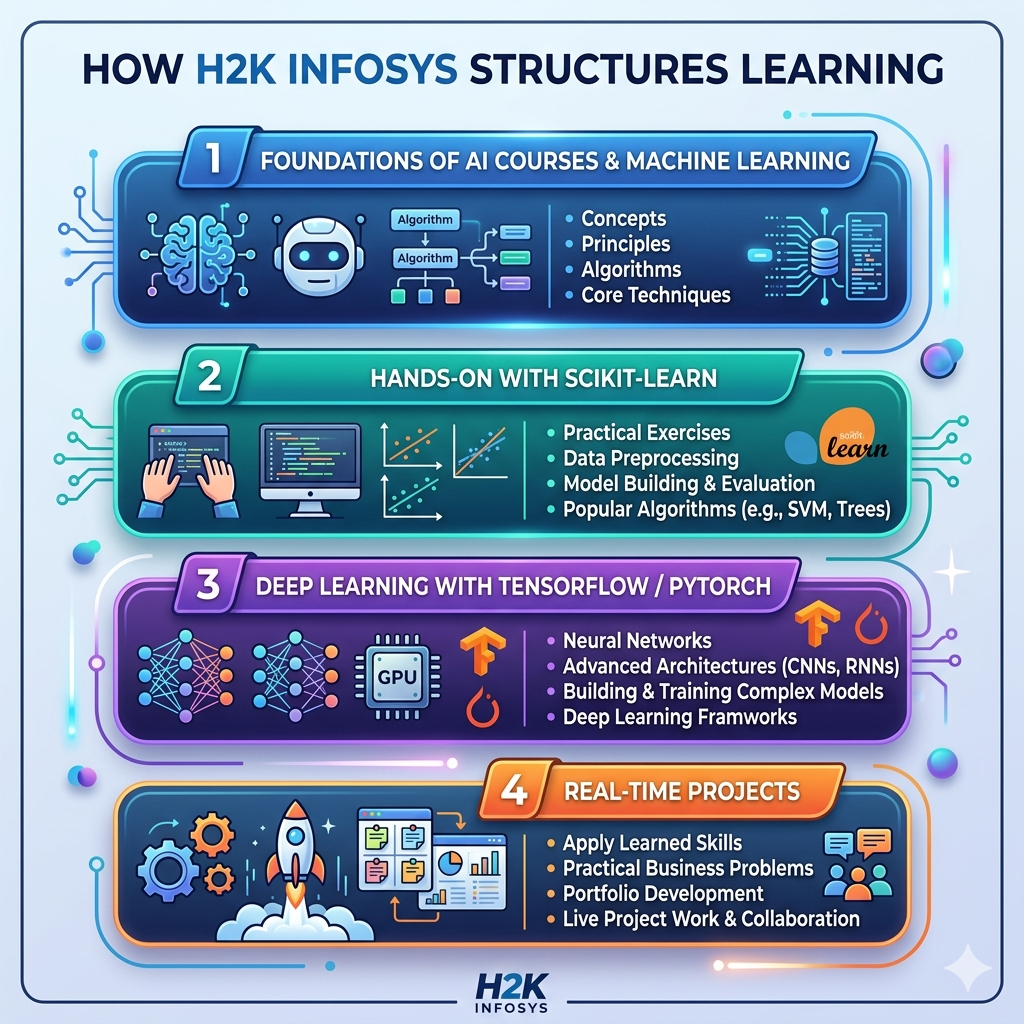
One thing that stands out is the applied approach.
Instead of dumping all concepts at once, the course usually flows like this:
- Foundations of AI Courses & Machine Learning
- Hands-on with Scikit-Learn
- Deep Learning with TensorFlow/PyTorch
- Real-time projects (this is the game changer)
And those projects? They’re not random.
Think:
- Fraud detection models
- Recommendation systems
- Customer behavior prediction
Stuff you can actually talk about in interviews without sounding like you memorized a textbook.
Is It Beginner-Friendly?
yes but with a caveat.
If you’re joining ai online classes with zero background, you might feel a bit overwhelmed in the beginning. That’s normal.
Most learners I’ve seen succeed do two things:
- Spend extra time practicing outside class
- Break things
The good part? Tools like Scikit-Learn are beginner-friendly, so you ease into the harder stuff.
Real-World Relevance
Here’s something worth noting AI tools evolve fast.
Right now (2026), trends are shifting toward:
- Smaller, efficient models
- AI integration into business tools
- Faster deployment pipelines
Courses that still only focus on outdated workflows feel… disconnected.
H2K Infosys seems to stay aligned with current trends by:
- Including modern frameworks
- Emphasizing practical usage
- Preparing learners for real job environments
That’s actually a big deal.
Final Thoughts
If your goal is just to “learn AI concepts,” almost any course will do.
But if you want to:
- Build real models
- Understand industry tools
- Feel confident in interviews
Then yes learning TensorFlow, PyTorch, and Scikit-Learn inside a structured ai course online like the one at H2K Infosys makes a difference.
And honestly? The tools themselves aren’t the hardest part.
The real challenge is using them to solve messy, real-world problems. That’s where good training stands out and where hands-on courses tend to shine.