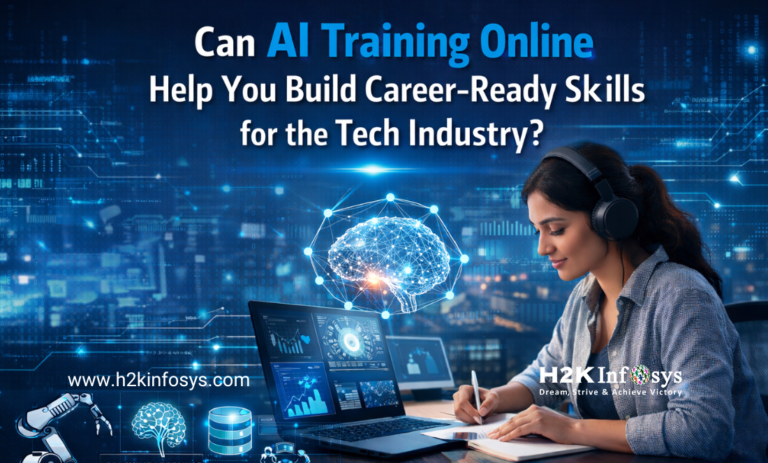
AI training online can indeed help you build career-ready skills for the tech industry. Many online courses and certifications offer a structured learning path designed to provide in depth knowledge of Artificial Intelligence (AI) and its applications in real-world IT projects. At H2K Infosys, these programs are crafted to ensure that learners gain hands-on experience with AI tools and technologies. These courses often cover essential AI concepts, tools, and technologies, helping learners become proficient in solving industry-specific challenges. The right training programs can equip you with the skills needed for various job roles in AI and machine learning, making it a valuable investment for working professionals aiming to transition or advance their careers in the tech industry.
What Is AI Training and How Does It Work?
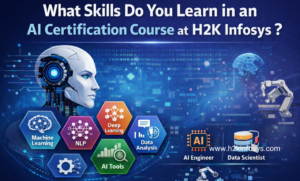
Artificial Intelligence (AI) training refers to learning about algorithms, tools, and techniques used to create machines that can think, learn, and adapt like humans. The process of AI training involves understanding data, developing machine learning models, and applying them to real-world problems. In an online course, AI training covers several key areas such as:
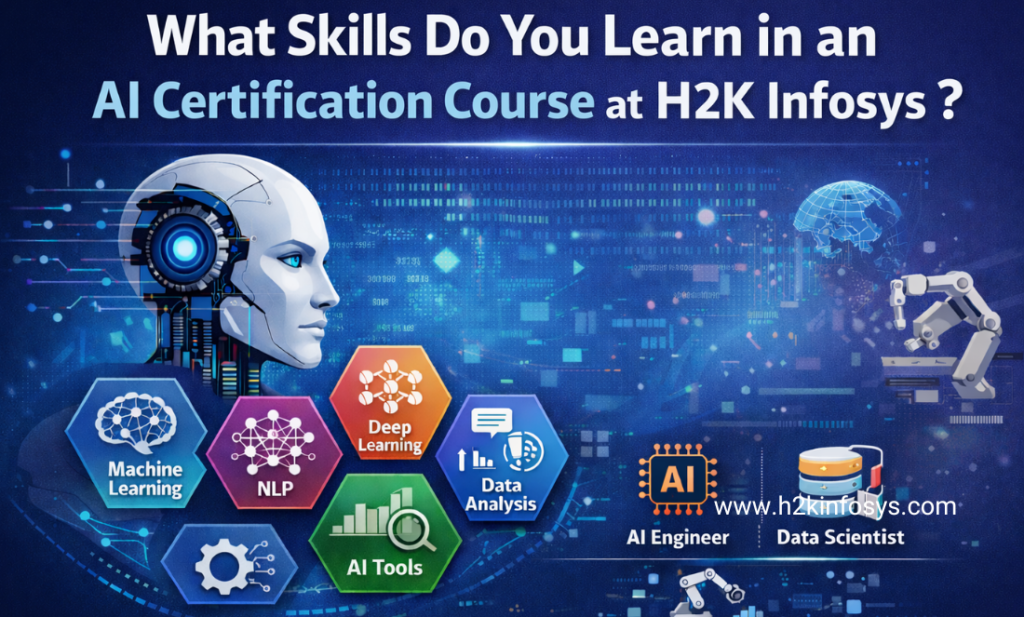
- Machine Learning: Teaching computers to identify patterns in data and make decisions based on those patterns.
- Deep Learning: A subset of machine learning, deep learning involves neural networks and is used for complex problem-solving, such as image recognition.
- Natural Language Processing (NLP): Understanding how computers interpret, process, and respond to human language.
- AI Tools: Learning to use popular tools and frameworks such as TensorFlow, PyTorch, and Keras.
Online AI training generally includes a mix of lectures, hands-on labs, quizzes, and projects designed to provide practical, career-oriented skills. These Online Ai Programs often cater to a variety of learning levels, from beginners to more advanced professionals seeking to specialize in certain aspects of AI.
Why Is AI Training Important for Working Professionals?
For working professionals in the tech industry, AI training is becoming increasingly essential. Here’s why:
- Industry Growth: AI is a rapidly growing field with applications across various industries, from healthcare to finance, retail, and more. Professionals equipped with AI skills are in high demand, making AI training an important step for career advancement.
- Cross-Industry Relevance: AI is being integrated into many sectors. Whether you’re in software development, data analysis, or cybersecurity, understanding how AI can be leveraged in your field will give you a competitive edge.
- Improved Problem-Solving: AI skills allow professionals to automate processes, make data-driven decisions, and optimize operations. Mastering AI will enable you to approach problems from innovative angles and implement cutting-edge solutions.
- Job Security and Opportunities: The demand for AI skills is expected to grow significantly in the coming years, and professionals trained in AI are more likely to secure job roles or promotions in technology-driven companies.
What Skills Are Required to Learn AI?
AI training typically requires a strong foundation in certain areas, particularly for those aiming for advanced roles in machine learning or deep learning. Here’s a breakdown of the key skills needed:

Core AI Skills:
- Mathematics and Statistics: Knowledge of linear algebra, calculus, probability, and statistics is essential for understanding machine learning algorithms.
- Programming: Proficiency in languages like Python and R, which are commonly used in AI development, is crucial. You will also need to understand libraries like NumPy, pandas, and SciPy.
- Data Handling: AI involves working with large datasets. You must be able to clean, manipulate, and analyze data using tools like SQL, Excel, and Python libraries.
- Machine Learning Algorithms: Learning how to implement and optimize different machine learning models, including supervised and unsupervised learning, is fundamental to AI.
Optional but Beneficial Skills:
- Cloud Computing: Familiarity with cloud platforms like AWS, Azure, or Google Cloud can be helpful, especially for deploying AI solutions at scale.
- Big Data Technologies: Skills in handling large volumes of data, using tools such as Hadoop or Spark, are valuable in AI, especially in fields like big data analysis and AI-driven analytics.
How Is AI Used in Real-World IT Projects?
In enterprise IT environments, AI is applied to streamline processes, improve customer experiences, and drive business intelligence. Here are some common use cases where AI plays a significant role:

- Automation of Routine Tasks: AI automates repetitive tasks, such as data entry, scheduling, and email sorting, freeing up employees to focus on higher-value work.
- Predictive Analytics: AI helps businesses predict future trends by analyzing past data, such as forecasting sales, market behavior, or customer demand.
- Customer Support: AI-powered chatbots and virtual assistants are widely used in customer service, providing immediate responses to common queries and solving issues without human intervention.
- Fraud Detection: In sectors like finance, AI algorithms can detect patterns indicative of fraudulent activity, helping organizations reduce risks and prevent losses.
These real-world applications showcase how AI is deeply integrated into daily business operations, making AI skills vital for IT professionals across industries.
What Job Roles Use AI in Their Daily Work?
Several job roles involve the use of AI techniques and tools, ranging from data scientists to AI engineers. Some common job titles in the AI field include:
- Data Scientist: Data scientists use machine learning models to analyze and interpret complex data. They are responsible for building predictive models and algorithms.
- AI Engineer: AI engineers develop and implement AI algorithms, working closely with data scientists to deploy machine learning models.
- Machine Learning Engineer: This role focuses on designing and building machine learning systems that can process and analyze data automatically.
- Business Intelligence Analyst: These professionals leverage AI to interpret business data and provide insights for decision-making.
- AI Product Manager: AI product managers oversee the development of AI-powered products, ensuring that they meet customer needs and business goals.
AI professionals can work across industries such as healthcare, finance, automotive, and technology, and they are often employed by companies that want to leverage AI for better efficiency and innovation.
What Careers Are Possible After Learning AI?
Completing AI Training Online opens up a wide range of career opportunities, depending on your area of interest and expertise. Here are some career paths that can be pursued after completing AI training:
- AI Researcher: Focuses on developing new AI algorithms and models that can solve complex problems or enhance existing solutions.
- AI Software Developer: Builds software applications that incorporate AI functionalities, such as recommendation systems, AI-powered apps, and automation tools.
- Machine Learning Specialist: Specializes in machine learning, including designing and optimizing algorithms for large-scale applications.
- Data Analyst/Scientist: Uses AI to process and analyze large datasets to extract meaningful insights for business decisions.
- AI Consultant: Works with businesses to identify AI solutions tailored to their needs, from automation to predictive analytics.
These roles are not limited to tech companies; industries such as healthcare, finance, retail, and government are also seeking AI professionals to drive innovation.
Frequently Asked Questions (FAQs)
1. Can AI training online help me transition from a non-technical background?
Yes, many online AI programs are designed for beginners and provide step-by-step guidance, covering the fundamentals of programming, data science, and machine learning. While having a technical background can be helpful, it is not a strict requirement for learning AI, especially with the availability of beginner-friendly courses.
2. How long does it take to complete an AI training program online?
The duration of AI training depends on the depth of the course. Introductory programs may take around 3-6 months, while more advanced certifications or degrees could require a year or longer. Online learning platforms often provide flexible schedules, so you can progress at your own pace.
3. What tools will I learn to use in an AI training program?
Common tools taught in AI programs include TensorFlow, PyTorch, Keras, and Scikit-learn for machine learning, as well as platforms like Jupyter Notebook and Anaconda for data analysis and development. Some courses may also include cloud platforms like AWS and Google Cloud for deploying AI solutions.
4. Is it possible to learn AI while working full-time?
Yes, online AI training is flexible and can be done part-time. Many platforms offer self-paced courses, allowing you to balance learning with your work commitments. In fact, practical applications of AI can enhance your work performance in many fields.
Conclusion
AI training online provides valuable, career-ready skills for professionals in the tech industry. With a comprehensive understanding of machine learning, deep learning, and AI tools, you can excel in a variety of roles across industries. Whether you’re looking to transition into AI or enhance your current skill set, investing in AI training is a key step toward professional growth.
Key Takeaways:
- AI training helps professionals build skills in machine learning, data science, and AI applications.
- AI professionals are in high demand across industries such as healthcare, finance, and technology.
- Online courses provide flexibility, allowing professionals to learn at their own pace and apply skills to real-world problems.
If you’re ready to enhance your career with AI training, explore H2K Infosys’s hands-on courses for industry-relevant learning and career growth.